The Ground War
The Marines who kept the Harrier flying — and the ones who made it lethal.
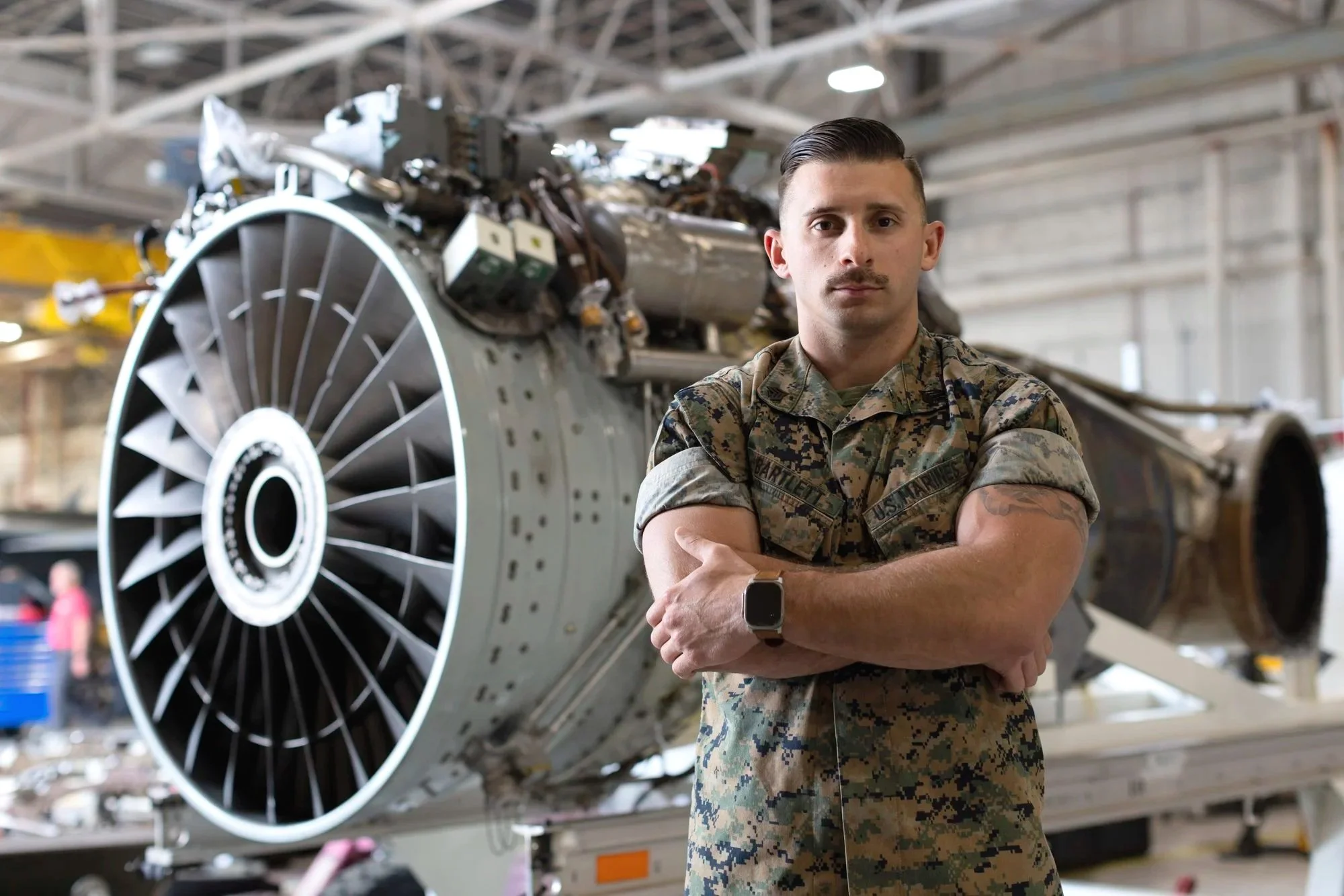
Every Harrier that ever clawed its way off a flight line in a fireball of noise and jet wash owed its entire glorious existence to a pack of enlisted Marines who never once cracked a canopy — grease under the fingernails, hearing fried by a decade of turbine scream, running on cold coffee and spite. They knew that airframe the way a bartender knows a regular’s tell: every rattle, every leak, every ugly little secret bolted into the fuselage.
The AV-8B was a single-seat jet, which is a polite way of saying there was no co-pilot and no second set of hands eight thousand feet up when something let go. So the entire margin of human error got shoved down onto the concrete — onto mechanics, airframers, avionics techs and ordnance Marines who lived their professional lives between sunrise ceremonies and 0100 wrench-turns under a droplight. Nobody wrote poems about them. They just made sure the miracle kept happening on schedule.
The Wrench Turners
Phase inspection every two hundred flight hours, the jet dragged inside and broken down to its bones. An engine out around every thousand. They came off shift covered in fuel and hydraulic fluid and went to midrats like that, because there wasn’t time to be clean.
And they did it without a computer to tell them what was wrong. That was the whole appeal. The Harrier didn’t hand you a fault code — it handed you a symptom and dared you to find it. You learned the jet by ear, by feel, by the particular way one tail number complained.
“There’s no computer to hook up to tell us what’s wrong. We have to figure it out ourselves. I’ve come to literally love the Harrier, because it actually takes a mechanic to fix it — not just somebody to turn wrenches.” — GySgt Brandon Ordway, VMA-223
“Each Harrier had its own personality. You could hear that starter motor pitch a little bit higher for a little too long. It was telling you something if you just listened.” — SSgt Julia Koch, VMAT-203, VMA-223, VX-31
“We went to midrats that night and we were nasty. Covered with fuel, covered with oil, grease all over the place. Working on a Harrier is not a clean job.” — MSgt Rick Campbell (Ret.), avionics, VMA-231, 1971–1993
“It’s just awe-inspiring to sit in there and run that baby up and feel that power. It is just an amazing aircraft.” — MGySgt Bob Enfinger (Ret.), avionics chief, VMA-231
“First of all, I want to give my accolades to the mechanics. Very challenging airplane to maintain. Those guys busted their butt on that airplane — not just the engine, but the airframe.” — Harrier pilot Ben “Lawman” Hancock
Fifty-five years of Marine Harrier aviation, and not one hour of it happened without them.
“After every attack, the Marines in our intelligence section would put together the HUD footage and the Lightning pod footage. We had a playback machine in the ready room, and we'd put the word out to the maintenance and support departments. Over the next 24 hours, maintenance Marines would tear away from whatever job they were on, come into the ready room, and the duty officer would play the tape and talk through what had happened. Getting to see what their hard work was directly producing made all the difference in the world for them." — Skipper Tom “Shine” Gore, VMA-223
On the Line
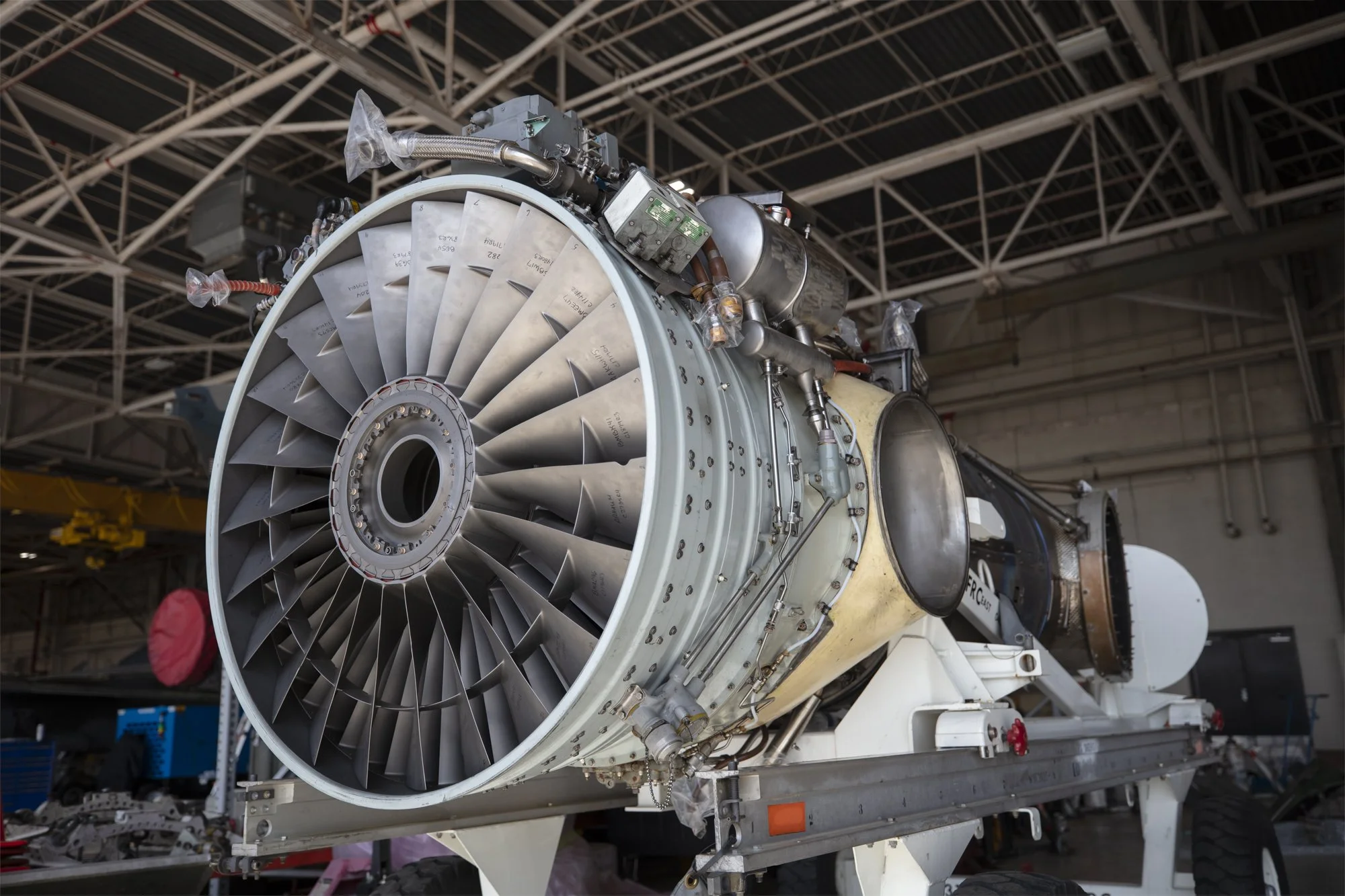
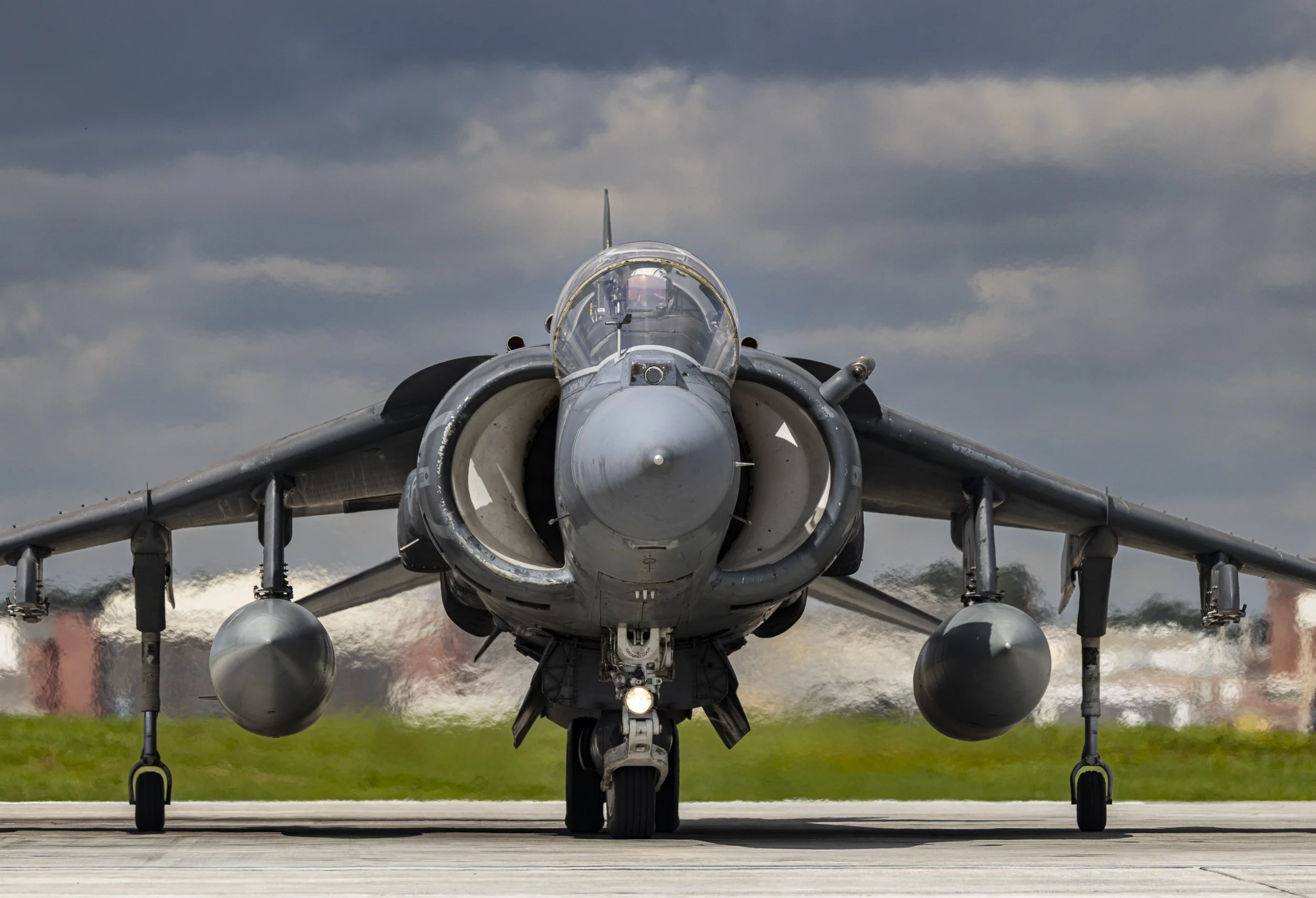
The flight line was its own kind of war. The Harrier was a Hoover and everybody knew it. An F-18’s intakes sit back where nothing can reach them. The Harrier’s sat an arm’s length from whatever some careless person left on a ramp — and the thing hovered, which meant it landed inside its own storm of grit and then inhaled it. One engine. No spare. So every ten flight hours a Marine stood at that intake and inspected all twenty-seven first-stage blades by hand, hunting a nick the size of a fingernail, and the whole squadron walked the line shoulder to shoulder looking for anything that didn’t belong.
That’s the part nobody writes a book about: not the launch, but the hours of bending over, jacking a jet level so a wing could come off, chasing a wire short that took two years to find. Plane captains owned their tail numbers and stood close enough to a running jet to feel it in their chest. For some, their careers started and ended only working on Harriers.
“Any time you have to remove that engine, you’ve got to move that wing. You have to find a level place, you have to jack it up. You need a crane, you need space, you need jacks. Then you’ve got to jack it up two degrees nose-down, so the wing is level.” — MSgt Matthew Blauvelt
“In a squadron that has multiple type/model/series, all the way from the F-18A through G, the H-60s — the Harriers were not the problem child. They were outstanding. And the maintainers … it speaks volumes of their pride in their maintenance.” — SSgt Julia Koch, VMAT-203, VMA-223, VX-31
“This is the end of a legacy. We’re the only ones that do what we do — so having that come to an end is the hard part.” — GySgt Brandon Ordway, VMA-223
The Ordies
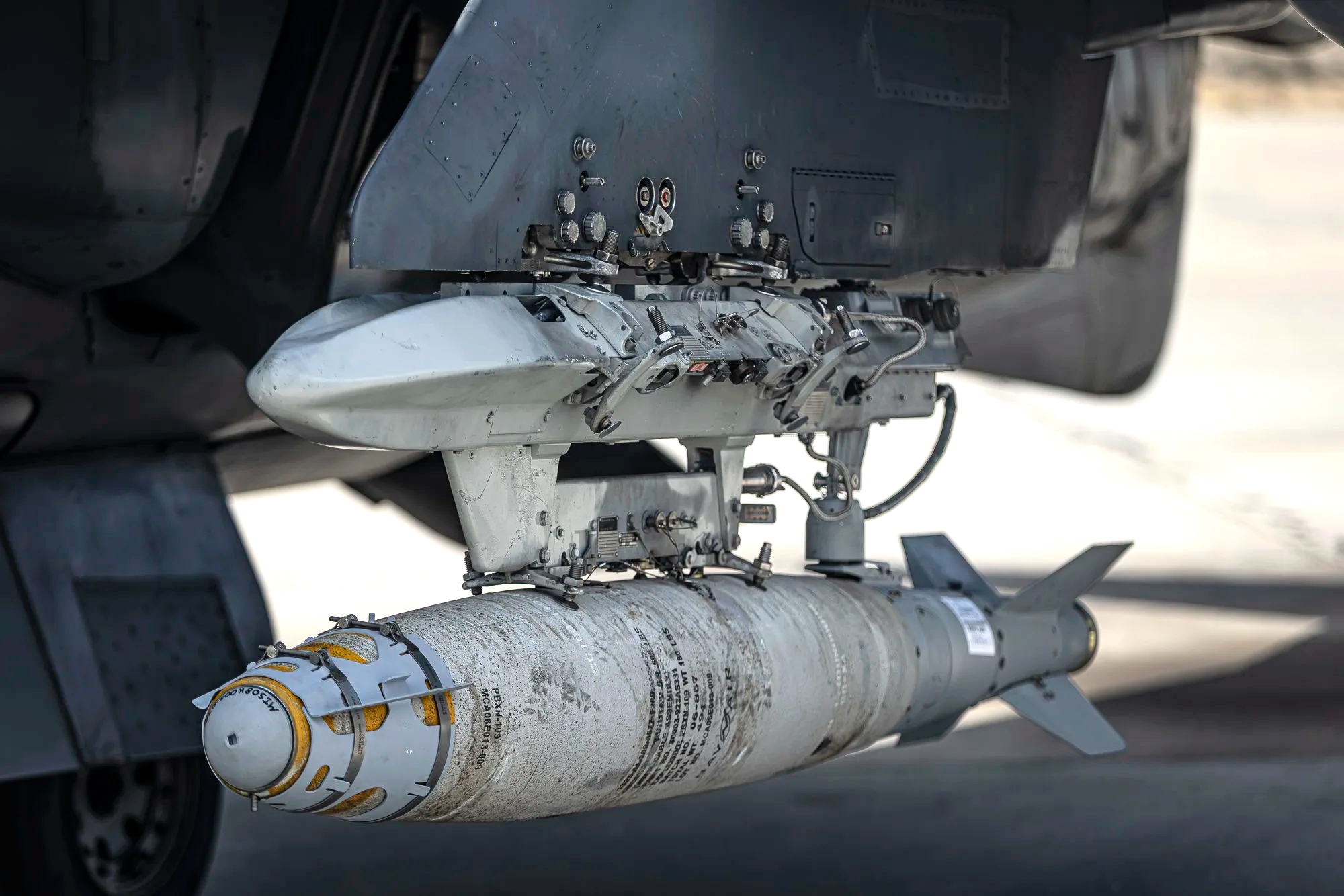
Aviation ordnance is the shop that turns an airplane into a weapon, and on the Harrier they did it the hard way — by hand, under a jet that sat lower to the deck than anything else on the line. A steel bar threaded into the nose fuze well, another through the tail fins, two Marines on each end, and five hundred pounds of general-purpose bomb muscled off a trailer, shuffled under the wing, and locked into the rack. Then the next one. Marines are still paying for it in their backs.
“Two guys on the front, two guys on the back, and you muscle that thing off the trailer, shuffle around, get underneath the aircraft, and lock it in whatever rack you’re putting it in. We hand-humped those bombs. If you’ve ever been under the Harrier, it’s not exactly the easiest place to work.” — Mark Severance, aviation ordnance, VMA-231
“I was a staff [NCO] at the time, and I’m like, all right, I’m going to be on each one of these hand loads. We’re going to do this. And I remember getting to the tenth, and I’m feeling exhausted; my back is tweaked — but I had to finish up five more. And got them all up.” — Dennis Mueller, aviation ordnance
At sea it never stopped. On an amphib the jets were chained to a deck that moved all night, and somebody walked that deck every hour with a flashlight to make sure the chains still held.
“Every night it was an integrity watch. Every hour you had to go out on deck and check all the chains on the aircraft, because the ship’s moving. The higher the seas, the more chains — and you’re out there with a flashlight making sure nothing comes loose. Sometimes they were twelve- or fifteen-point tie-downs.” — Mark Severance, aviation ordnance
“The trust that goes into a jet in pieces, to a nineteen- to twenty-five-year-old who’s working on these things day in, day out — the trust that the pilots have to have in those Marines to be able to do what they were doing to that aircraft.” — Harrier pilot Trevor “Havya” Felter
KICKSTARTER
Campaign Launch
Be the first to reserve a copy of the book
A definitive visual and narrative tribute to the AV-8 Harrier community. More than seventy interviews with the pilots, maintainers, and ordnance Marines who flew, fixed, and armed the jet. A photographic record made over more than three years, through the last sundown flight on June 3, 2026.
CALLSIGN will soon launch a Kickstarter campaign to fund the design and printing of the first edition of Harrier Legacy, a commemorative 136-page deluxe coffee-table softcover book. Every backer reserves a first-edition copy. Higher tiers add special editions, Harrier sundown archival prints, patches, and other exclusive rewards.
The first 48 hours will open with a limited early-bird price, and the waiting list gets notified first. When those special copies are gone, they're gone.
Join the waiting list and be first in line when the campaign opens.