HARRIER SQUADRONS
-
![Black and white emblem with a large ace of spades playing card at the center, surrounded by concentric circles and a banner with the text 'VMA-231' at the bottom.]()
VMA-231
ACE OF SPADES
Marine Attack Squadron 231, the “Ace of Spades,” is the oldest flying squadron in the U.S. Marine Corps, with roots back to 1919 and combat lineage from the Northern Bombing Group in World War I.Over the past century it has evolved through multiple aircraft and designations—from early observation and scout-bombing roles at Midway and Guadalcanal to AV-8B Harrier close air support in modern conflicts—cementing a reputation for pioneering Marine aviation and sustained frontline service.
-
![A cartoon bulldog with wings wearing red boxing gloves and a black and white striped shirt, standing inside a yellow circle with a red border. The text 'VMA - 223' appears above it.]()
VMA-223
BULLDOGS
Marine Attack Squadron 223, the “Bulldogs,” was commissioned on 1 May 1942 at MCAS Ewa, Hawaii, and first saw combat in the Pacific flying F4F Wildcats from Henderson Field during the Guadalcanal campaign.
Over subsequent decades, the squadron transitioned through Corsairs, jets, Skyhawks, and AV-8B Harriers, building a distinguished record from World War II through Vietnam and into modern expeditionary close air support.
-
![NASA emblem with an owl, mountains, and celestial elements: night sky with a crescent moon and stars, daytime sky with clouds, and red mountains, surrounded by a yellow border with 'VMA-513' text.]()
VMA-513
FLYING NIGHTMARES
Marine Attack Squadron 513, the “Flying Nightmares,” was a Marine AV-8B Harrier attack squadron whose lineage began in 1944 as VMF-513, a World War II F6F Hellcat unit that later became a pioneering Marine night‑fighter and jet squadron in the Korean War.
Over nearly 70 years it evolved through night‑fighter, fighter‑attack, and Harrier roles, earning its nickname for devastating night operations before decommissioning in 2013 after distinguished service from Okinawa and Korea to Vietnam, Desert Storm, Afghanistan, and Iraq.
-
![Blacksheep military insignia featuring a black sheep with a shell behind its head, a flying aircraft at the top, a black diagonal stripe, a semi-circle of stars, and the text 'VMA-214 BLACKSHEEP' at the bottom.]()
VMA-214
BLACK SHEEP
Marine Attack Squadron 214, the “Black Sheep,” traces its origins to VMF-214 in World War II, where Pappy Boyington’s Corsair‑equipped misfits became legendary for aggressive fighter operations in the South Pacific and earned a Presidential Unit Citation.
In the postwar era the squadron transitioned into an attack role as VMA-214, flying jets and later AV-8B Harriers in Korea, Vietnam, and modern conflicts while preserving the Black Sheep reputation for high-tempo, front‑line close air support.
-
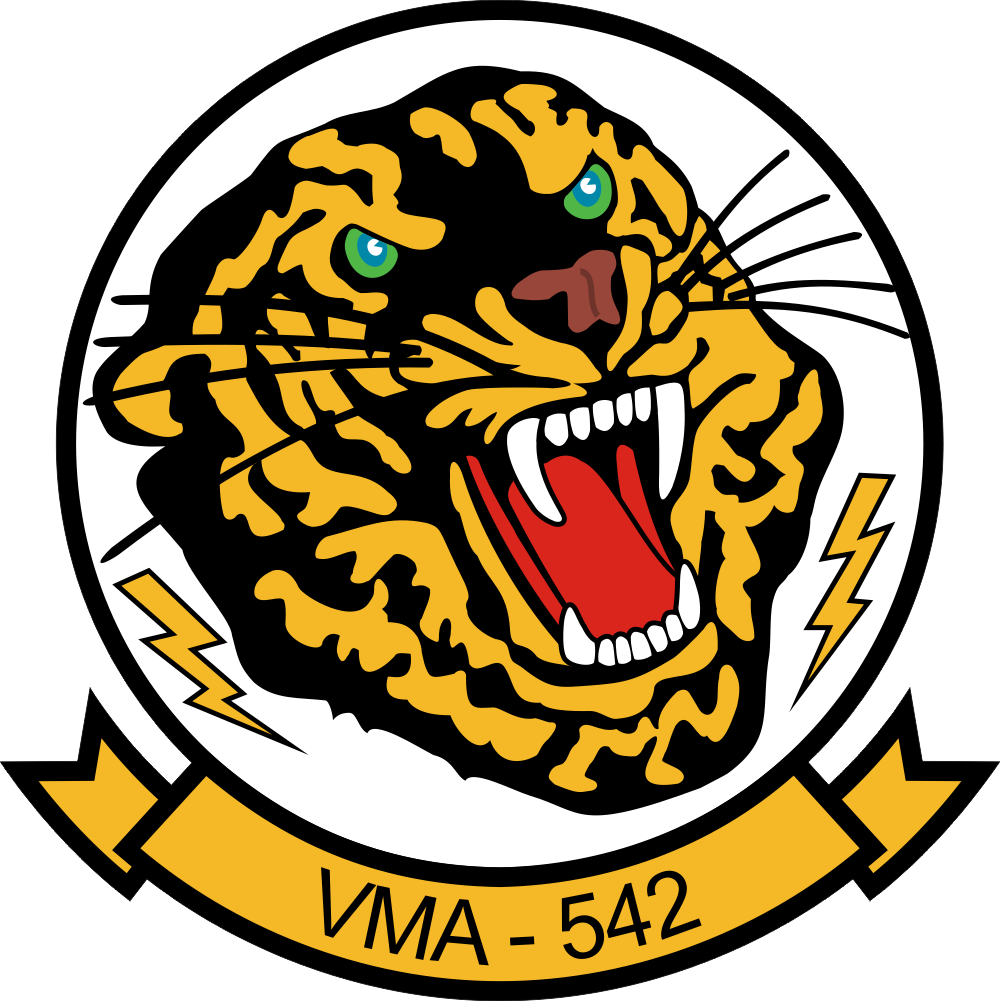
![A logo featuring a fierce tiger's head with green eyes, open mouth revealing sharp teeth and a red tongue, surrounded by yellow lightning bolts, and a yellow banner with the text "VMA-542" underneath.]()
VMA-542
TIGERS
Marine Attack Squadron 542, the “Tigers,” began in 1944 as a Marine night‑fighter Hellcat unit, later flying F3D Skyknights and F-4 Phantoms in Korea and Vietnam before transitioning to AV-8 Harriers and becoming one of the Corps’ premier V/STOL light attack squadrons.
Redesignated VMFA-542 with the F-35B, the Tigers have carried their close air support and strike legacy from Desert Storm and Afghanistan into the fifth‑generation era, recently completing high‑tempo F-35 combat deployments from the U.S. East Coast.
-
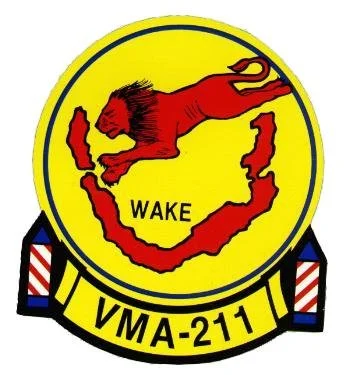
![The emblem of VMA-211, a U.S. Marine Corps squadron, featuring a red lion on a yellow background with a red outline of a map, the word 'WAKE' and the squadron designation 'VMA-211' at the bottom.]()
VMA-211
AVENGERS
Marine Attack Squadron 211, the “Avengers,” is one of the Marine Corps’ oldest squadrons, famed for its heroic stand at Wake Island in December 1941 when a handful of F4F Wildcats fought a vastly superior Japanese force.
Postwar it evolved through Skyhawks and AV-8B Harriers, seeing heavy combat from Vietnam through Afghanistan, Iraq, and the 2012 Camp Bastion attack, before transitioning to the F-35B as VMFA-211 and carrying its Wake Island Avengers legacy into fifth‑generation operationshere.
-
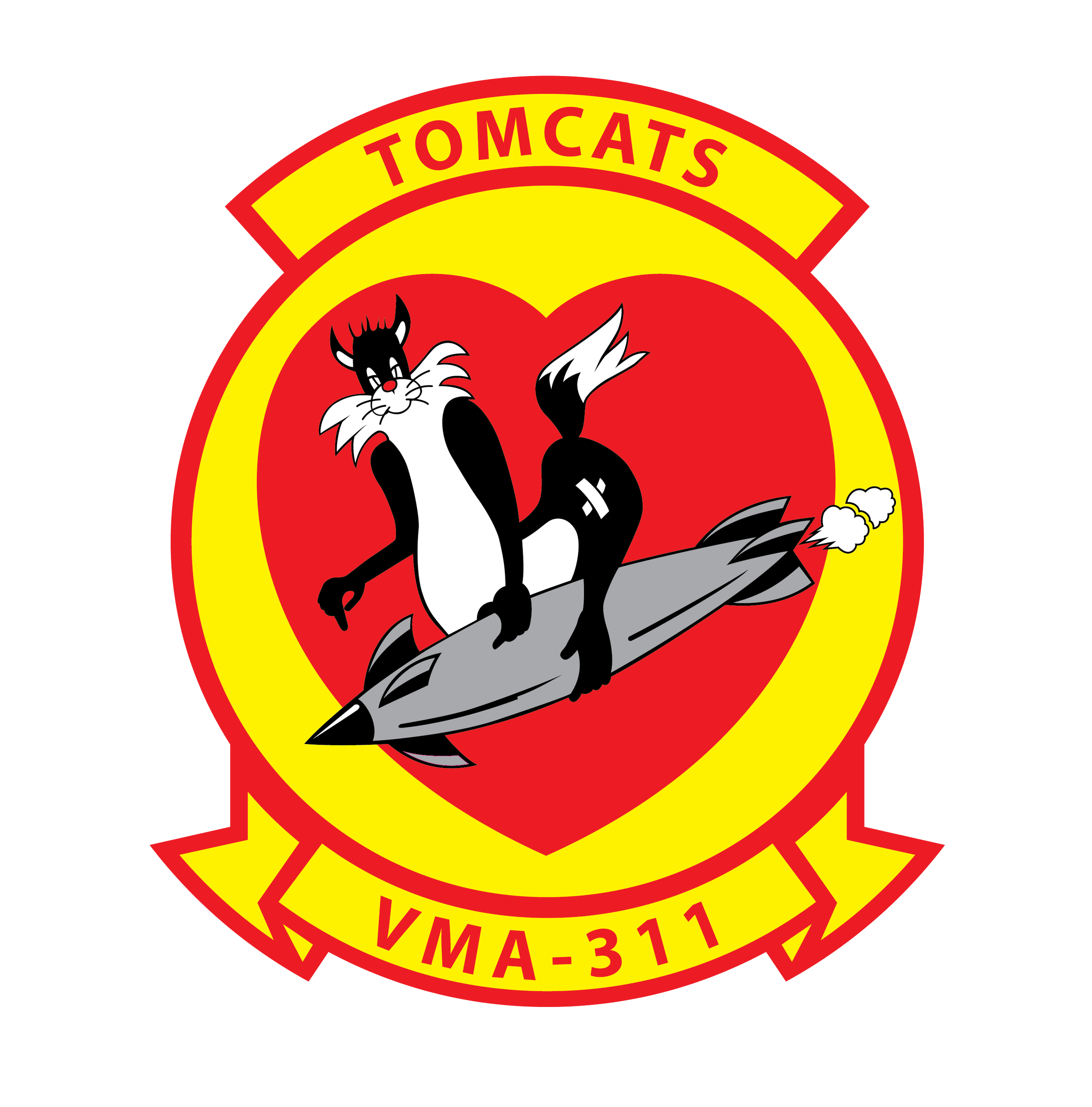
![VMA-311 Tomcats]()
VMA-311
TOMCATS
Marine Attack Squadron 311, the “Tomcats,” was commissioned in 1942 and first made its name flying F4U Corsairs in the Pacific, pioneering Marine fighter dive‑bombing and later becoming the first land‑based Marine jet squadron in combat during Korea.
Over the following decades it evolved through Panthers, Skyhawks, and AV-8B Harriers, racking up record combat sortie counts in Vietnam, earning multiple Attack Squadron of the Year awards, and achieving several “firsts” in Desert Storm, Afghanistan, and Iraq before its legacy continued in the F-35 era.
-
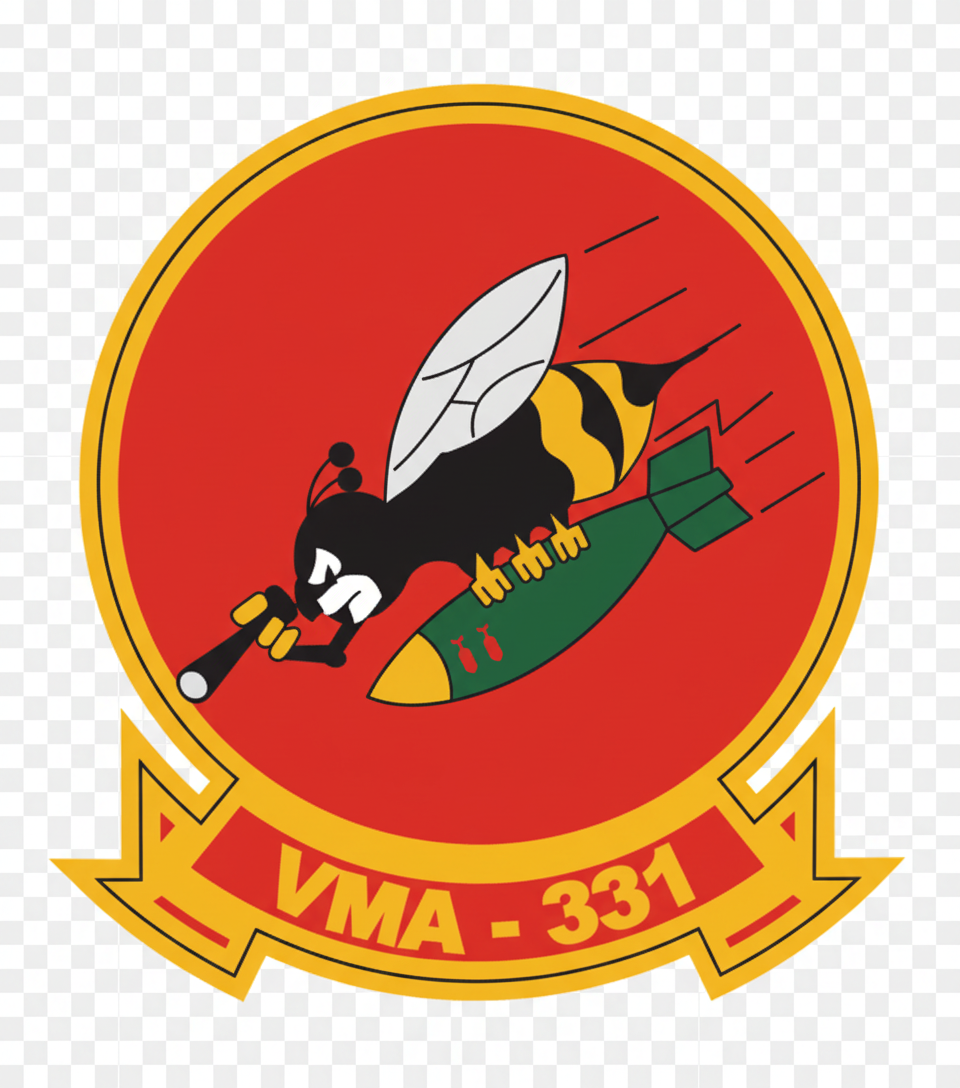
![VMA-331 Bumblebees]()
VMA-331
BUMBLEBEES
Marine Attack Squadron 331, the “Bumblebees,” began in 1943 as VMSB-331 flying SBD Dauntless dive bombers in Central Pacific campaigns, later redesignated and transitioning through Corsairs and jets as it shifted from scout‑bomber to fighter‑bomber and attack roles.
In the Harrier era it became the first fully operational AV-8B squadron and the first Marine attack unit to fly AV-8B combat sorties from an amphibious assault ship during Desert Storm, before being deactivated in 1992 as part of the post–Cold War drawdown.