HARRIER LEGACY PROJECT
“Runways optional” wasn’t a punchline.
It was a revolution.
“The U.S. Marine Corps took that revolution and made it a doctrine. It was a promise to the rifleman: close air support would be there, even when infrastructure wasn’t.” — Capt. David Halpern, Commodore, Naval Test Wing Pacific.
For fifty-five years, the Marine Corps kept that promise with the AV-8 Harrier.
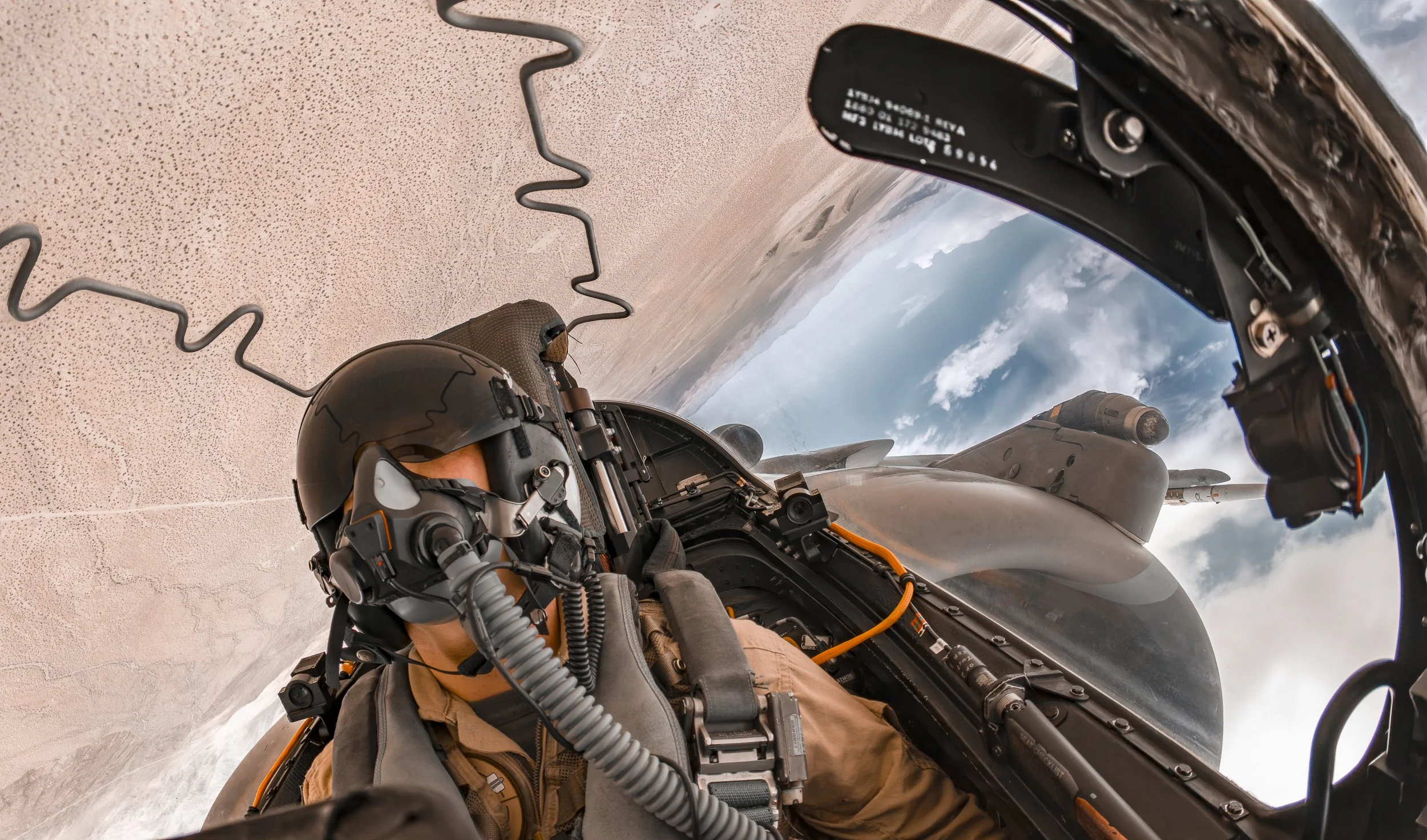
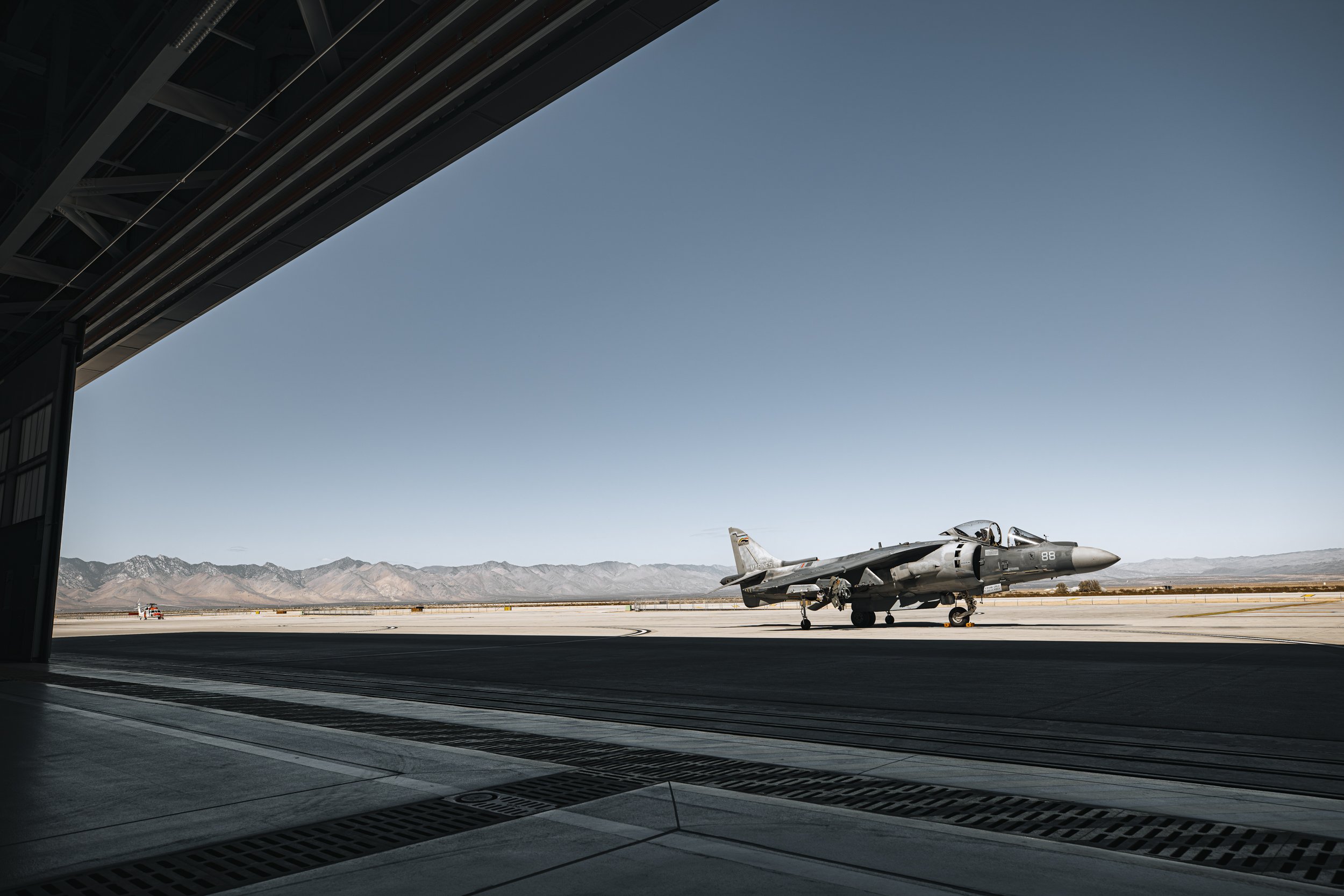
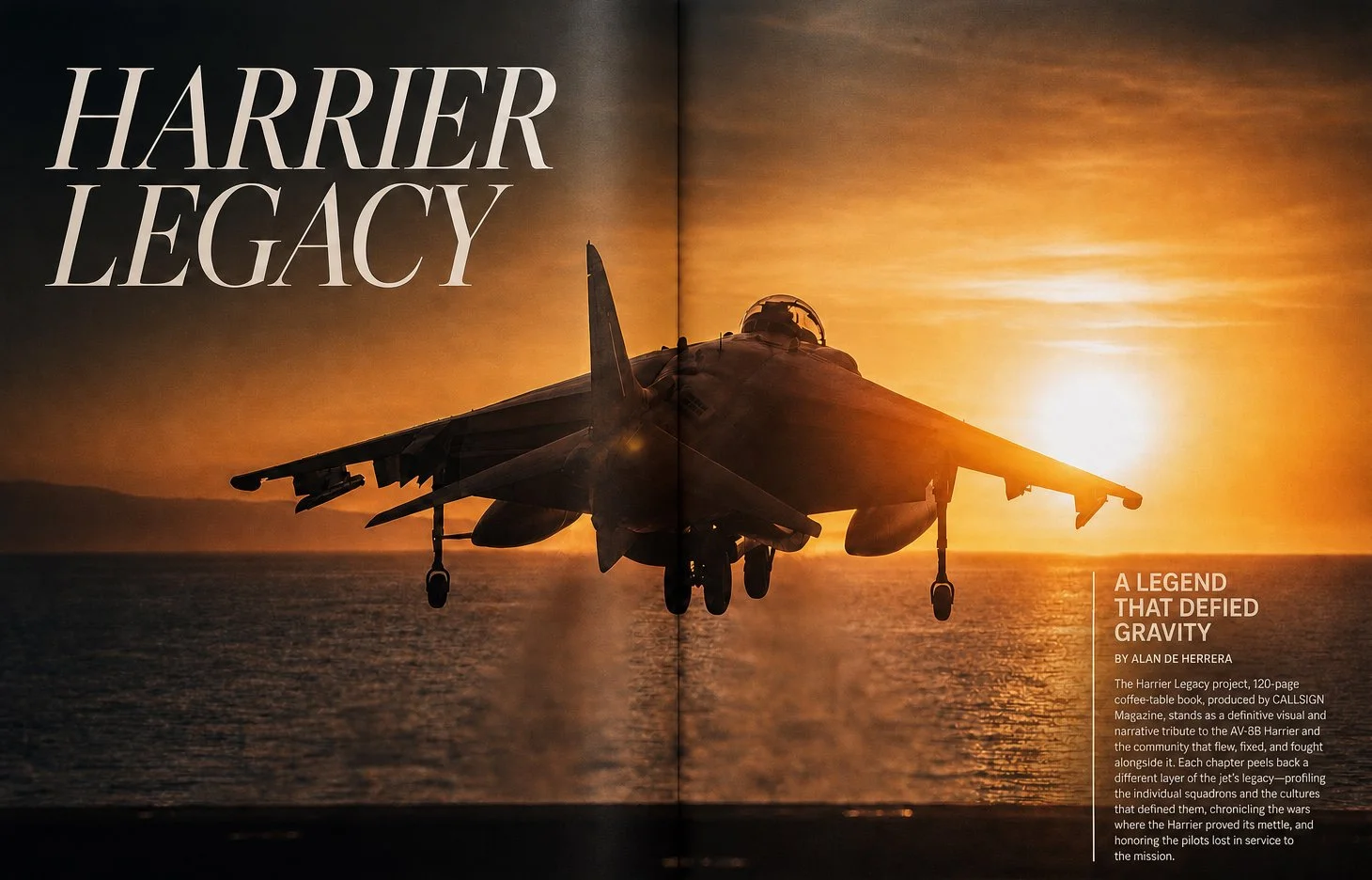
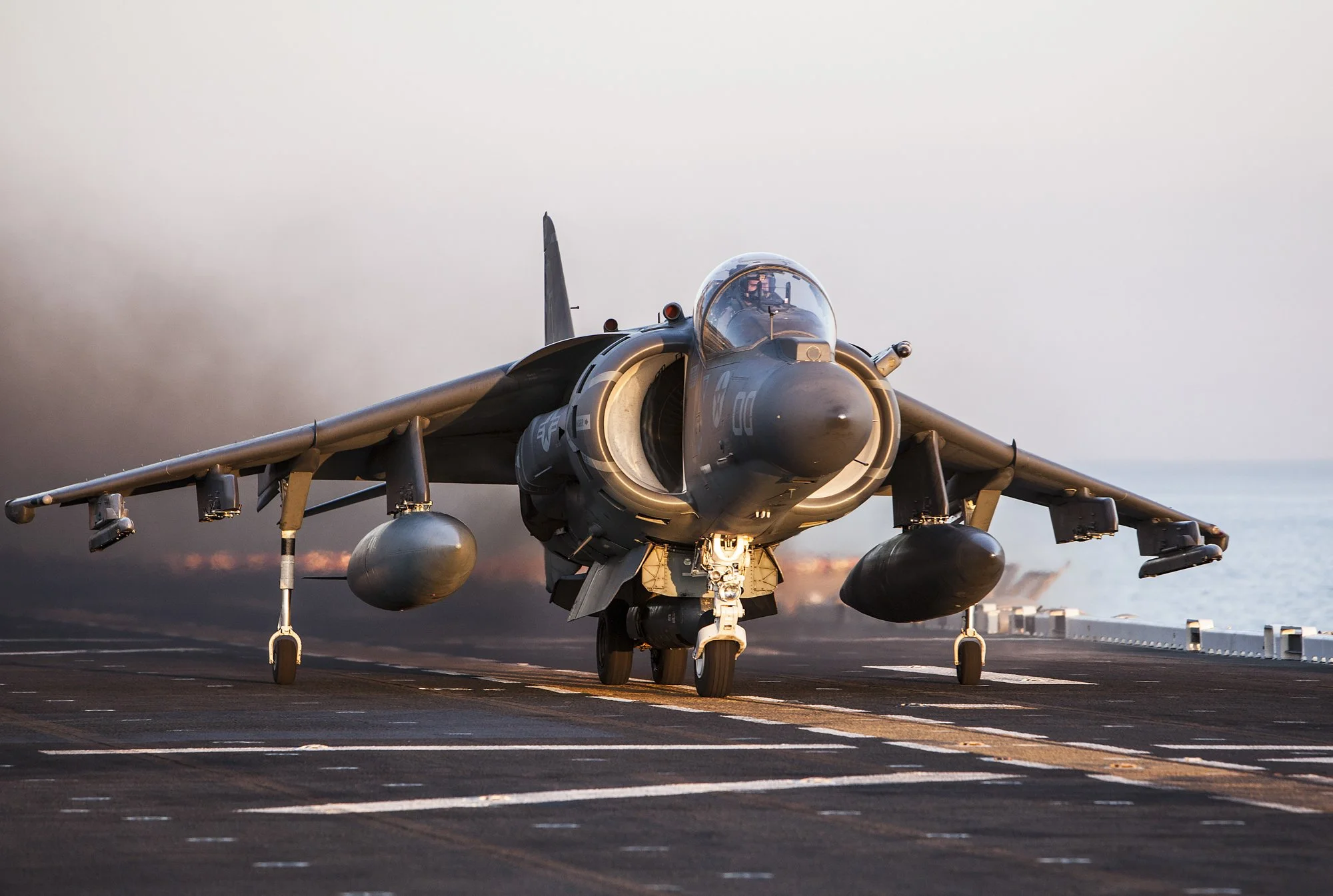
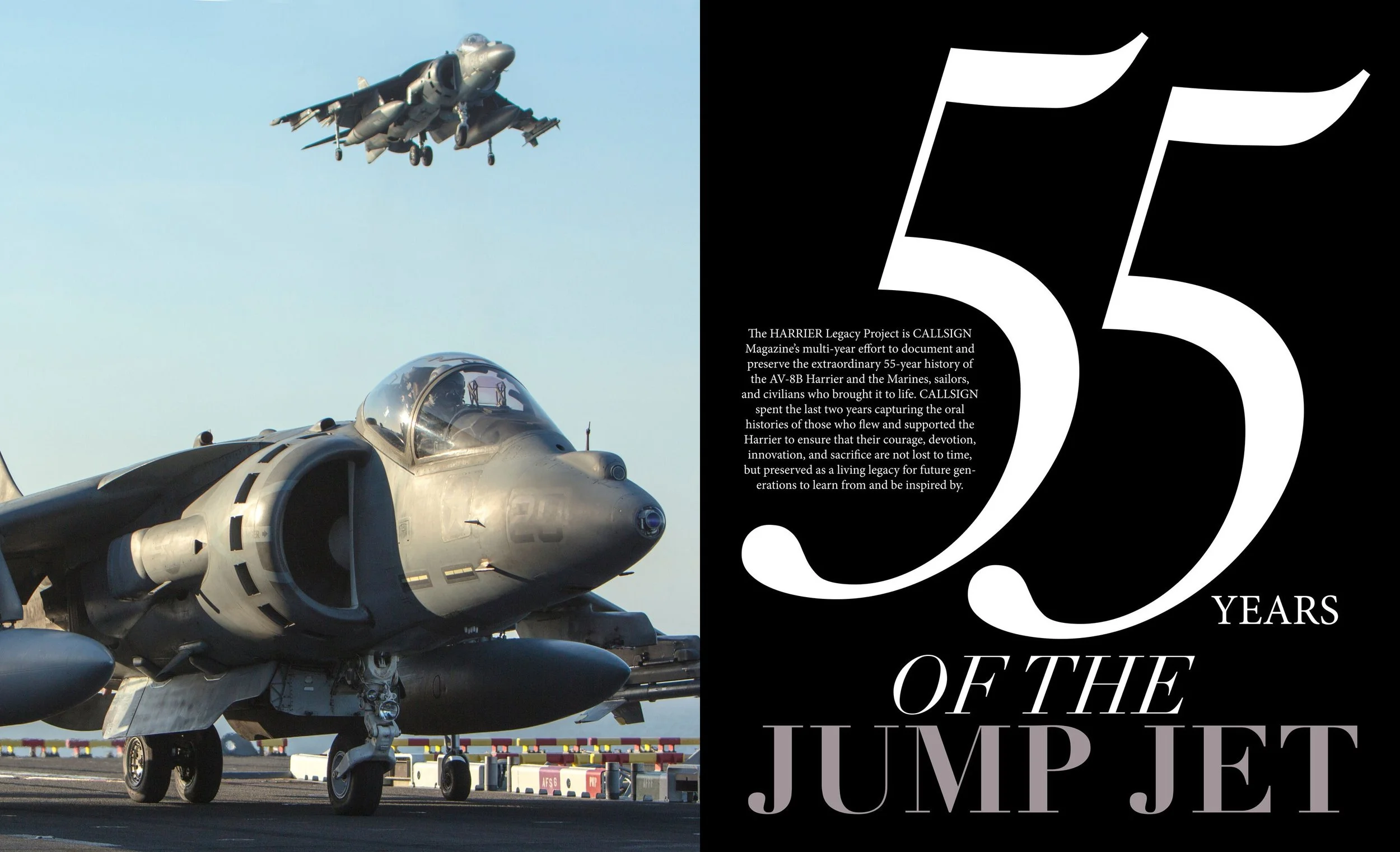
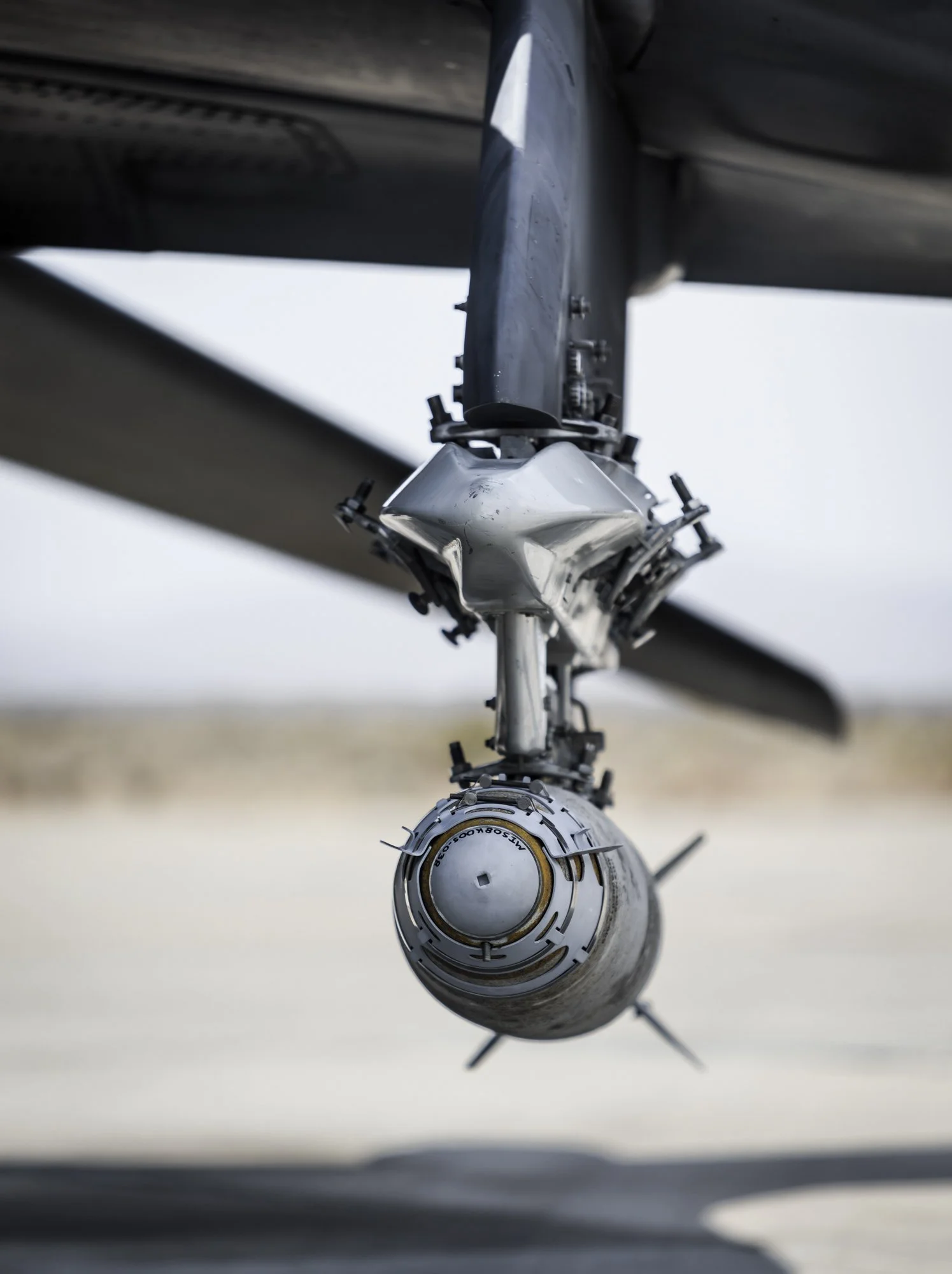
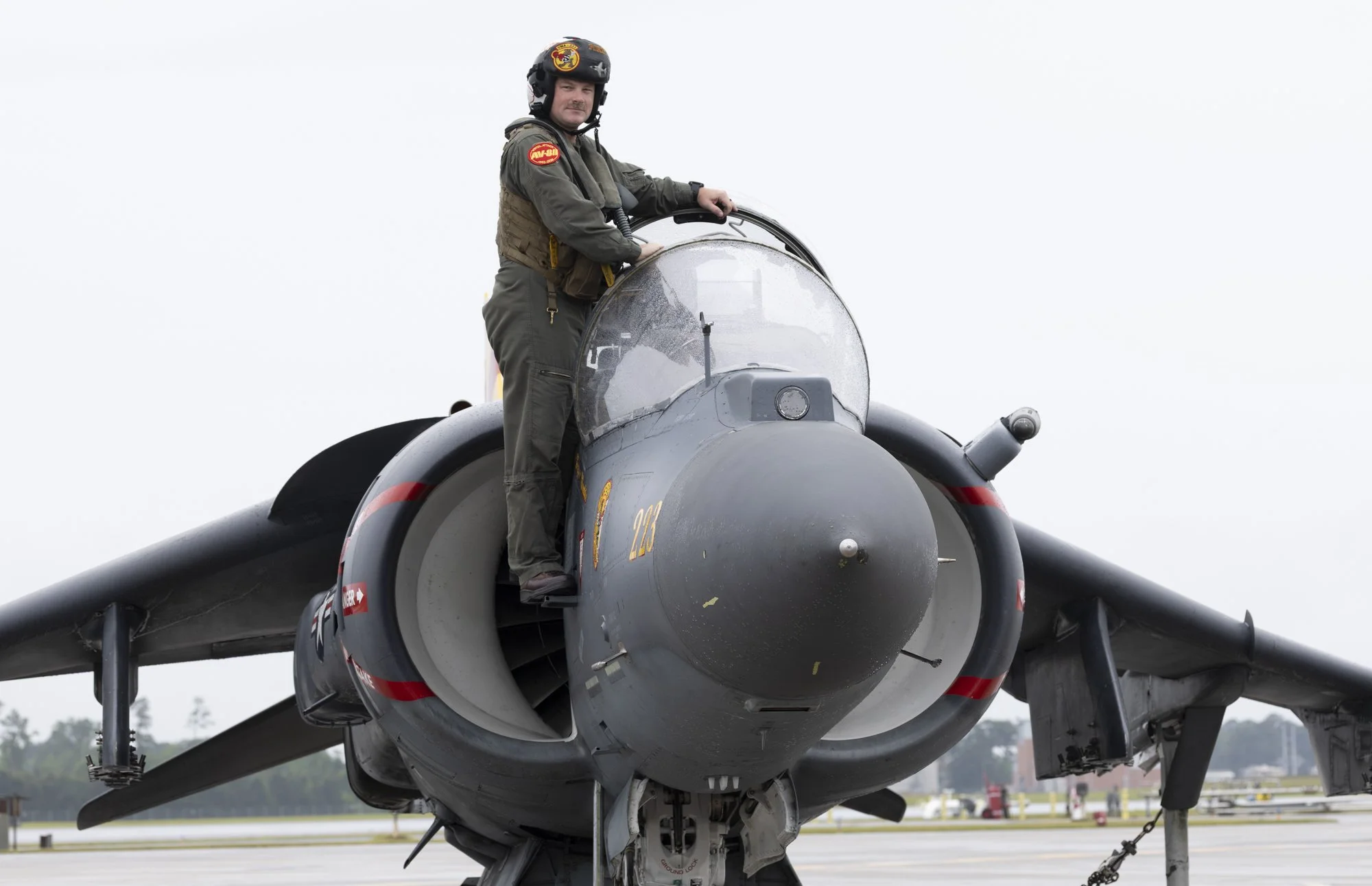
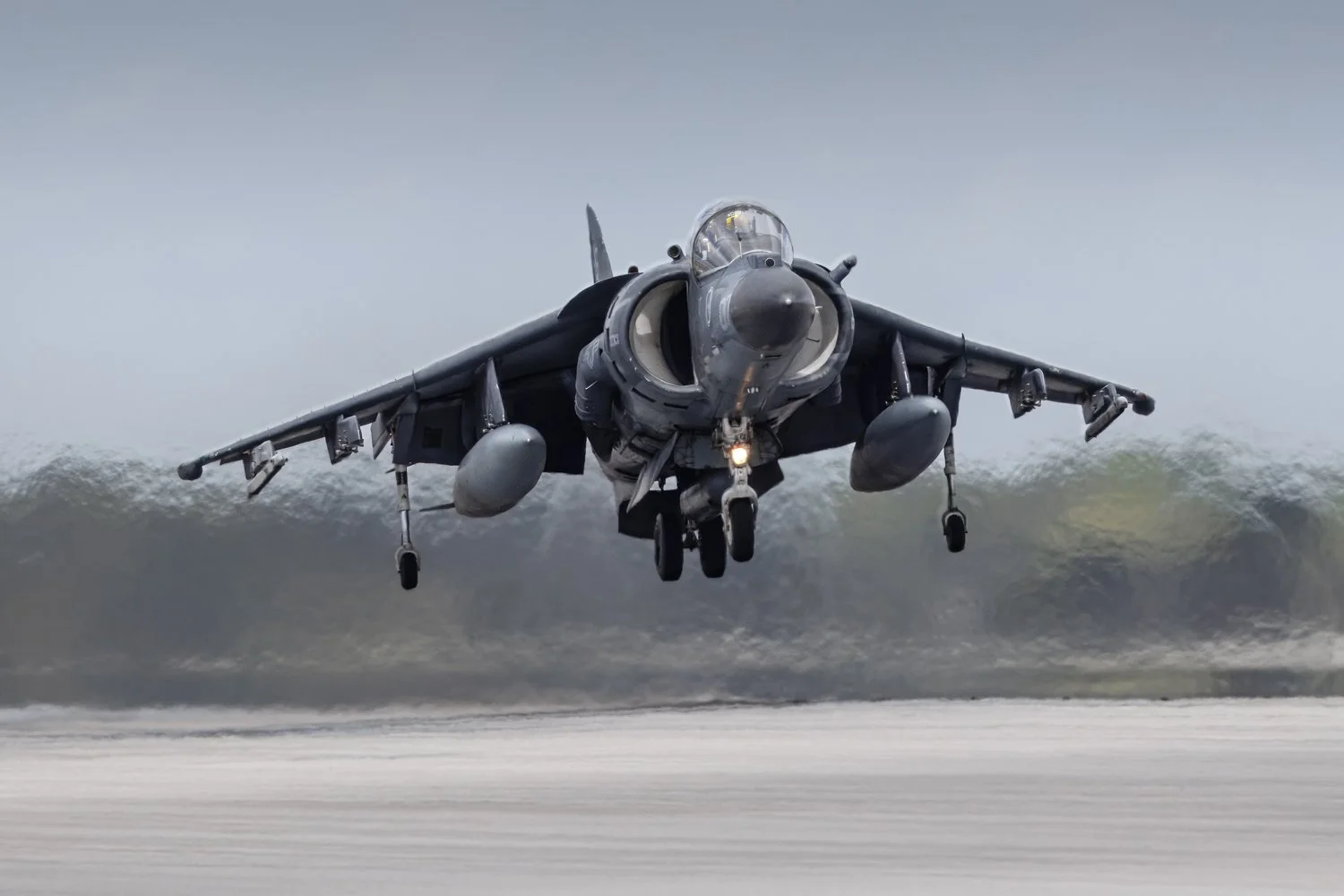
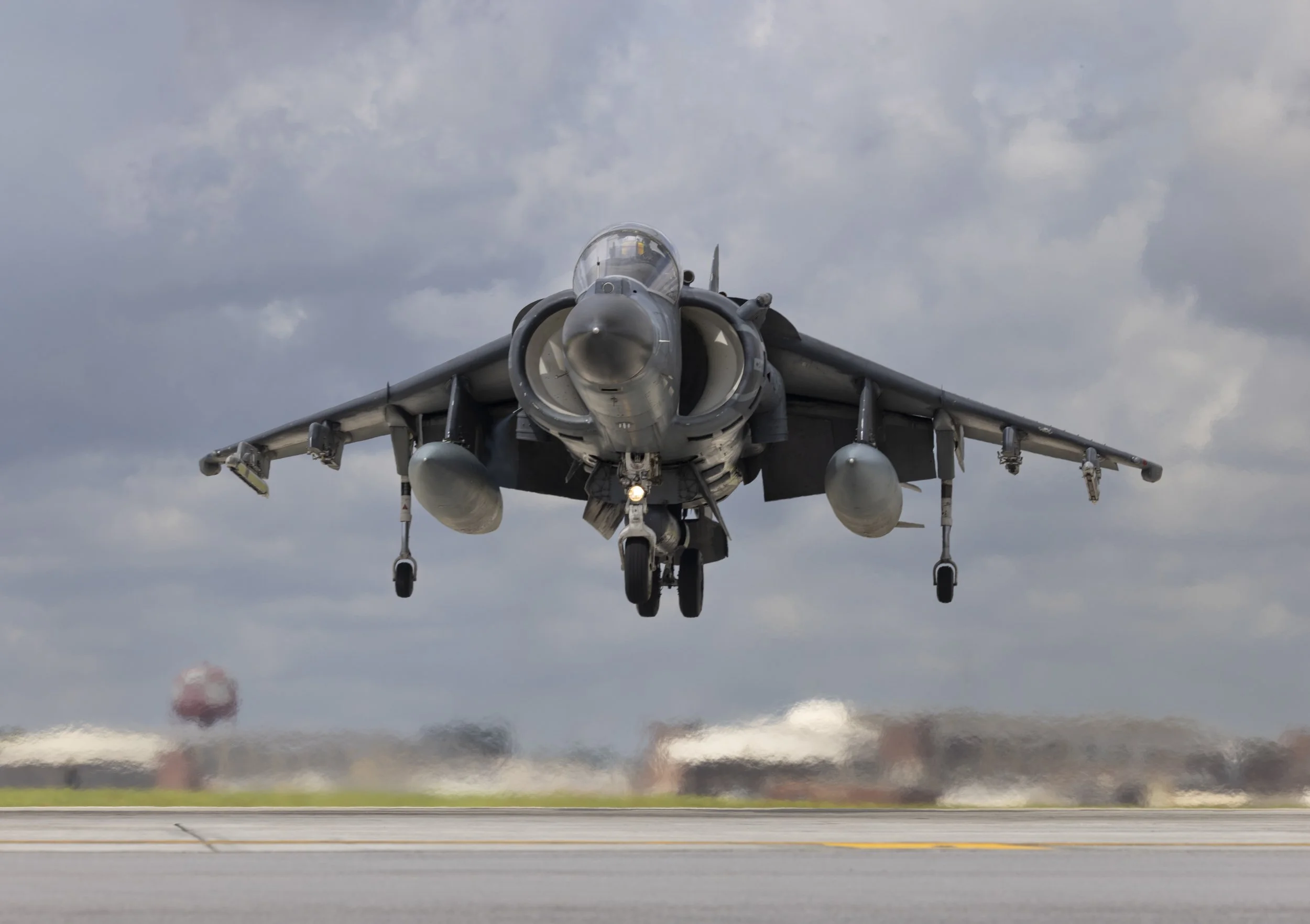
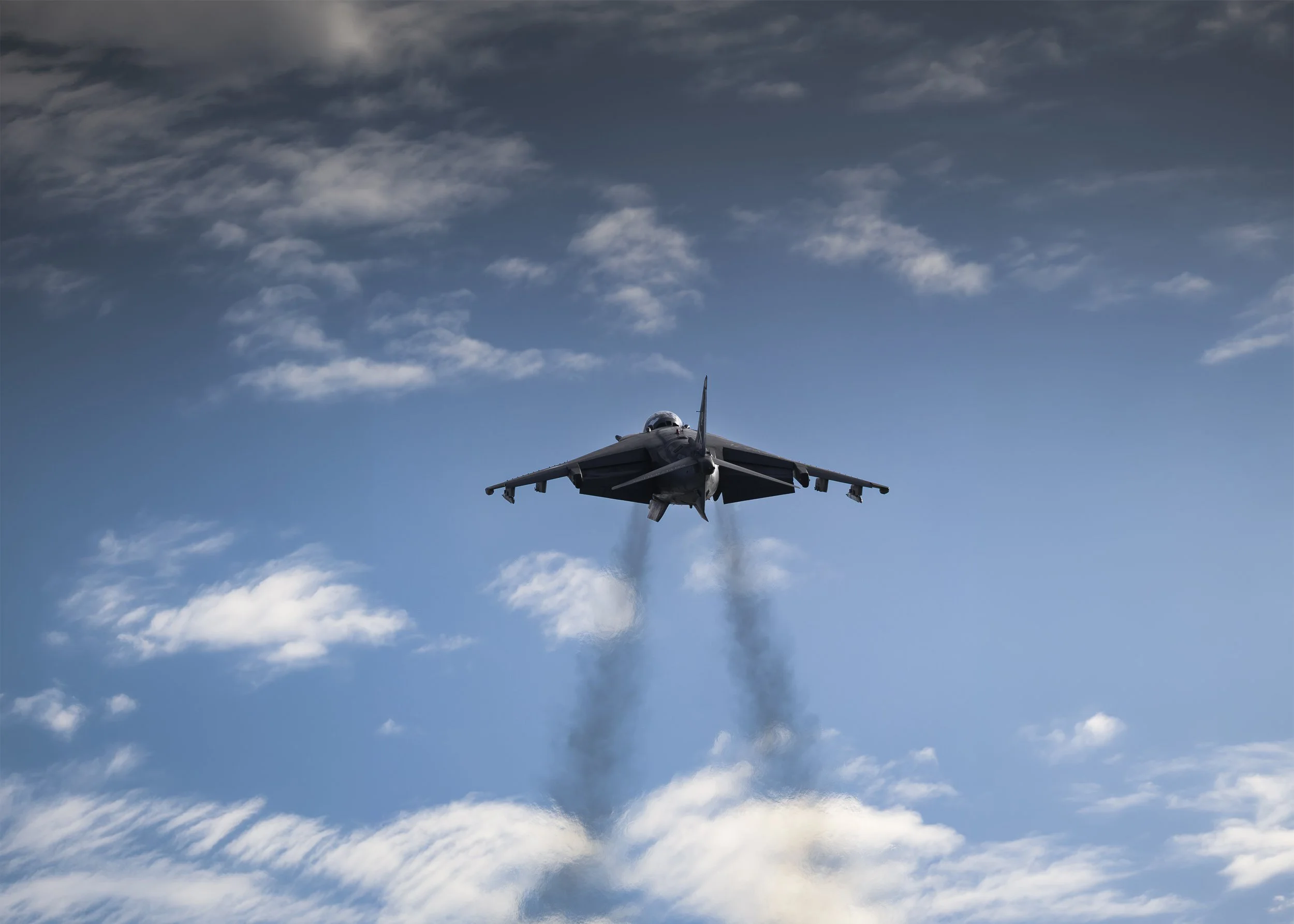
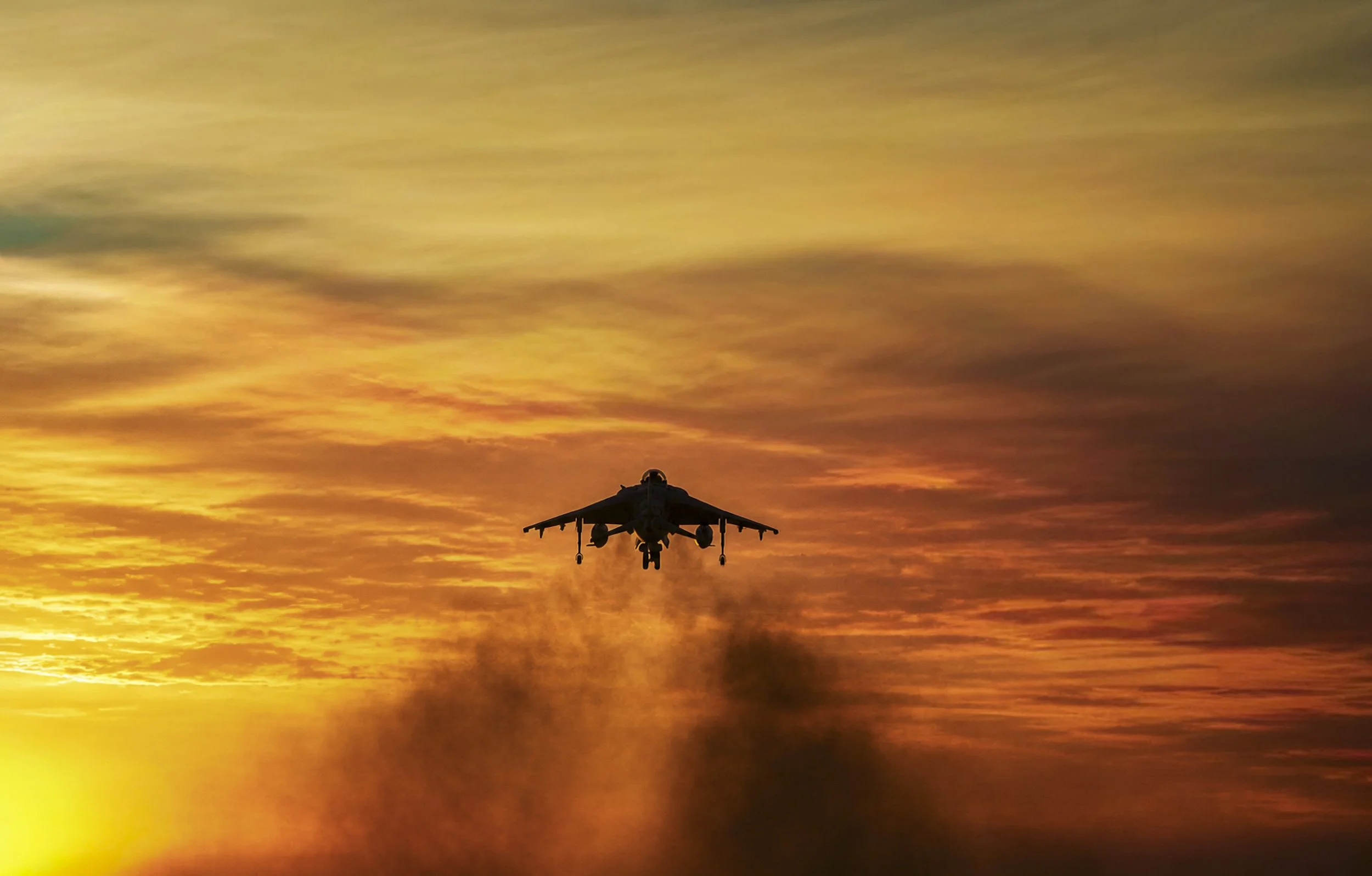
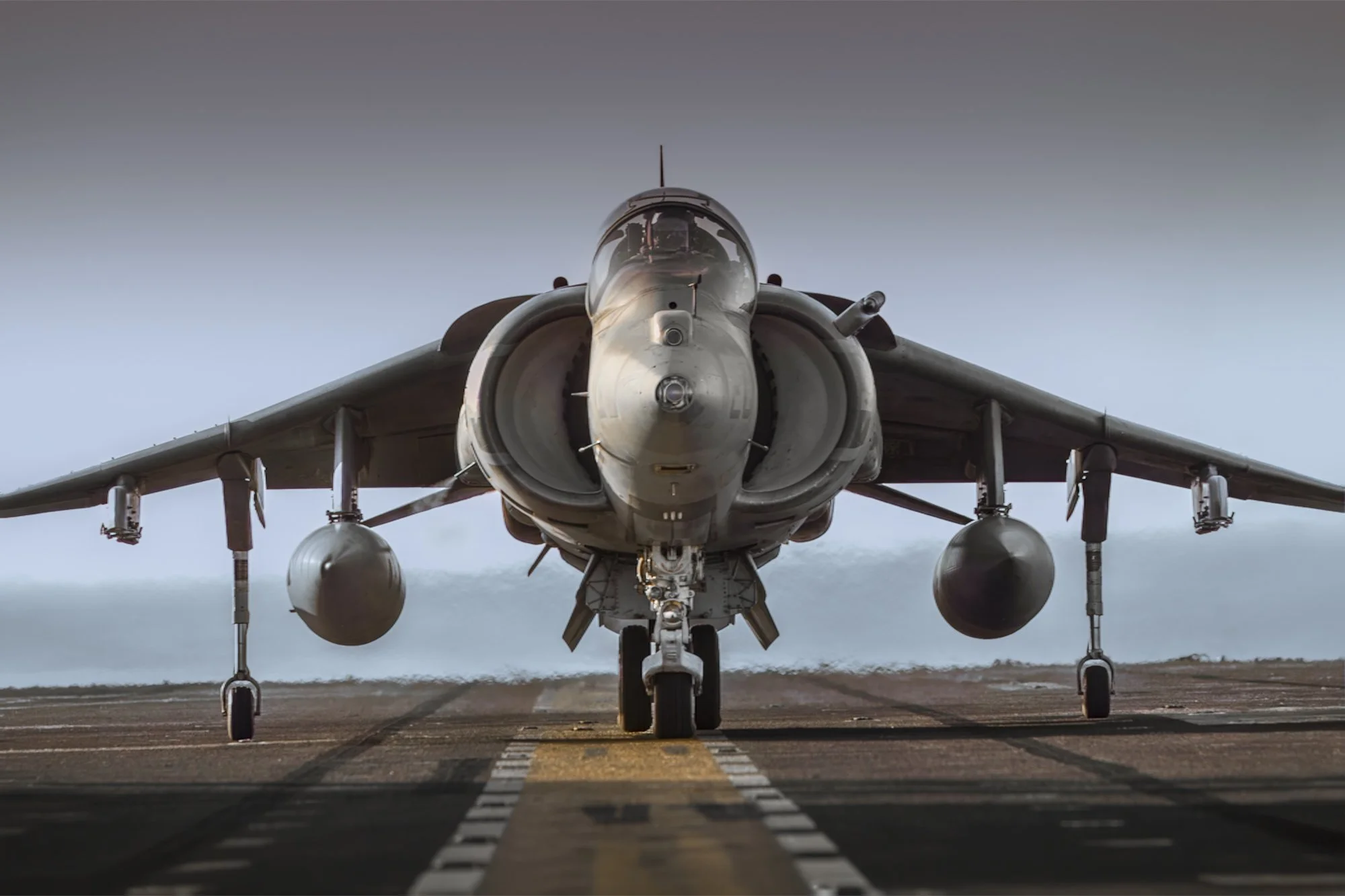
Stocky, short-winged, single-seat, single-turbofan engine — a light-attack brawler with a storied reputation of being dangerous. Bombs slung low, a 25mm cannon in its belly. It was a crazy idea that broke conventions, an audacious challenge hurled at the laws of physics and the staid minds of aviation orthodoxy.
The Harrier was all straightforward, mechanical controls — no computers, no fly-by-wire. A pilot’s airplane: linkages, chains, and cables. Pure stick-and-rudder flying. The kind of machine that didn’t forgive mistakes — it punished them.
From those who flew it
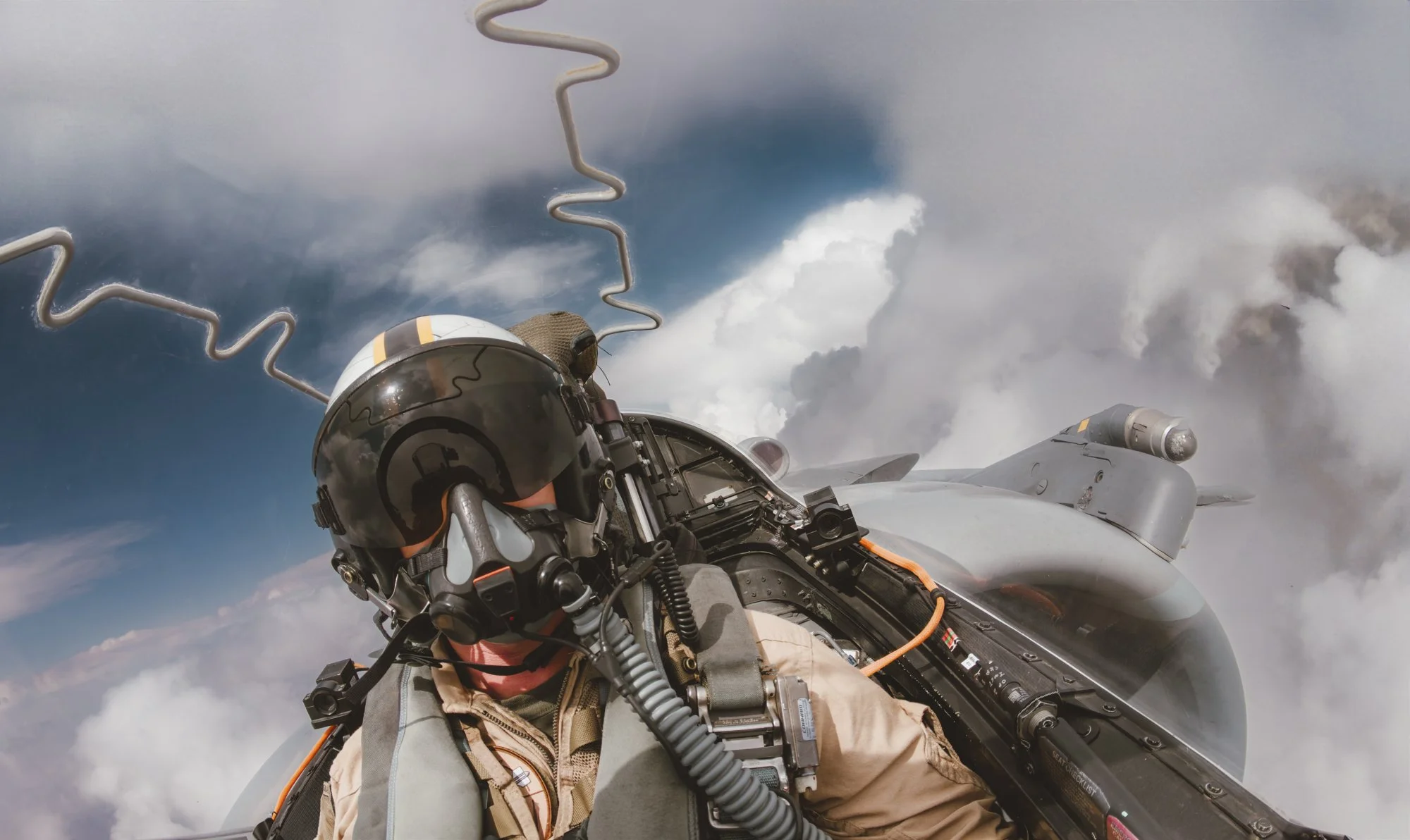
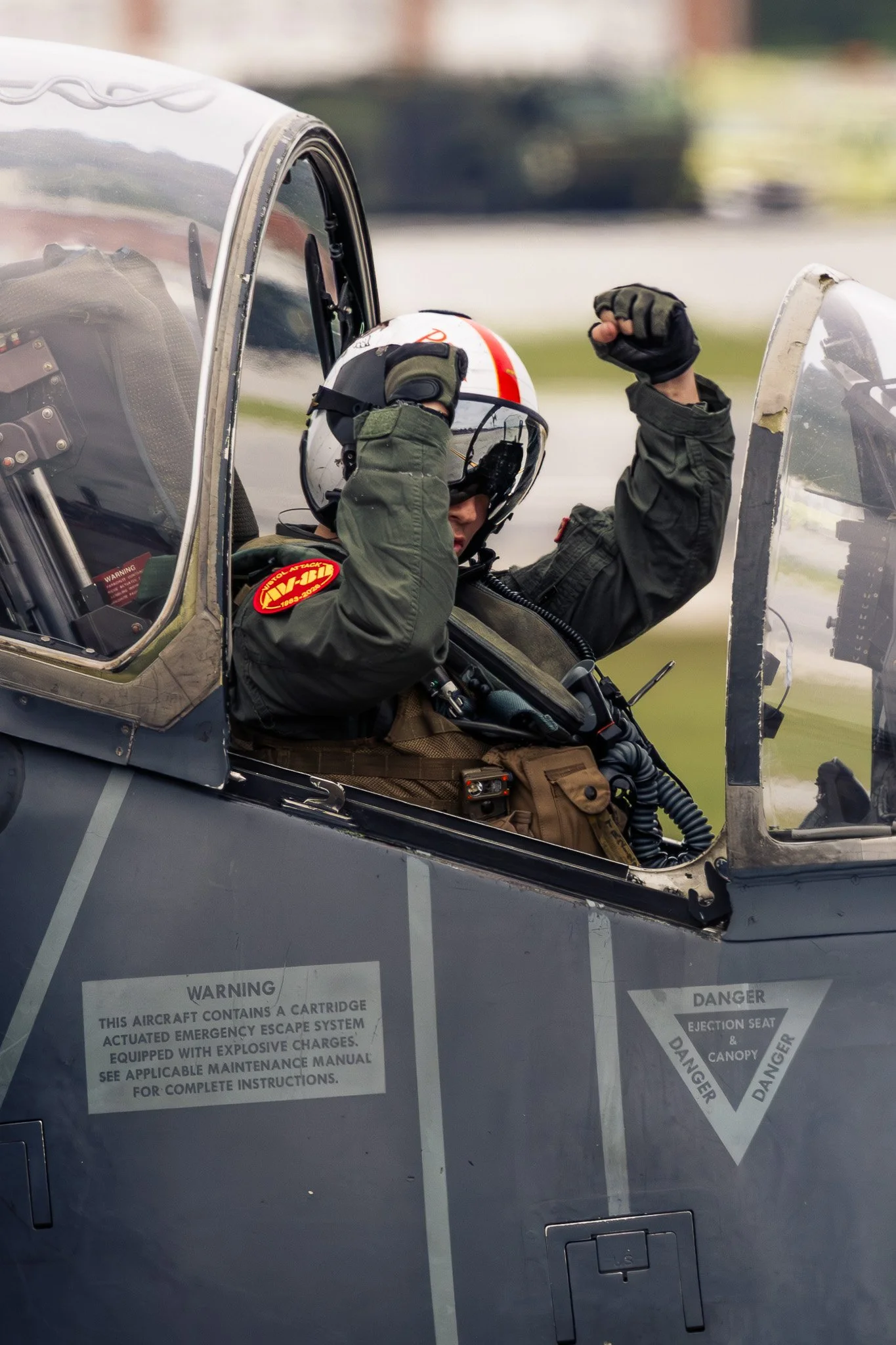
“It was a really hard jet to master,” said retired pilot Ben “LAWMAN” Hancock. “You had to have a very smart left hand — because that hand controlled the throttle, the power, and the nozzles.”
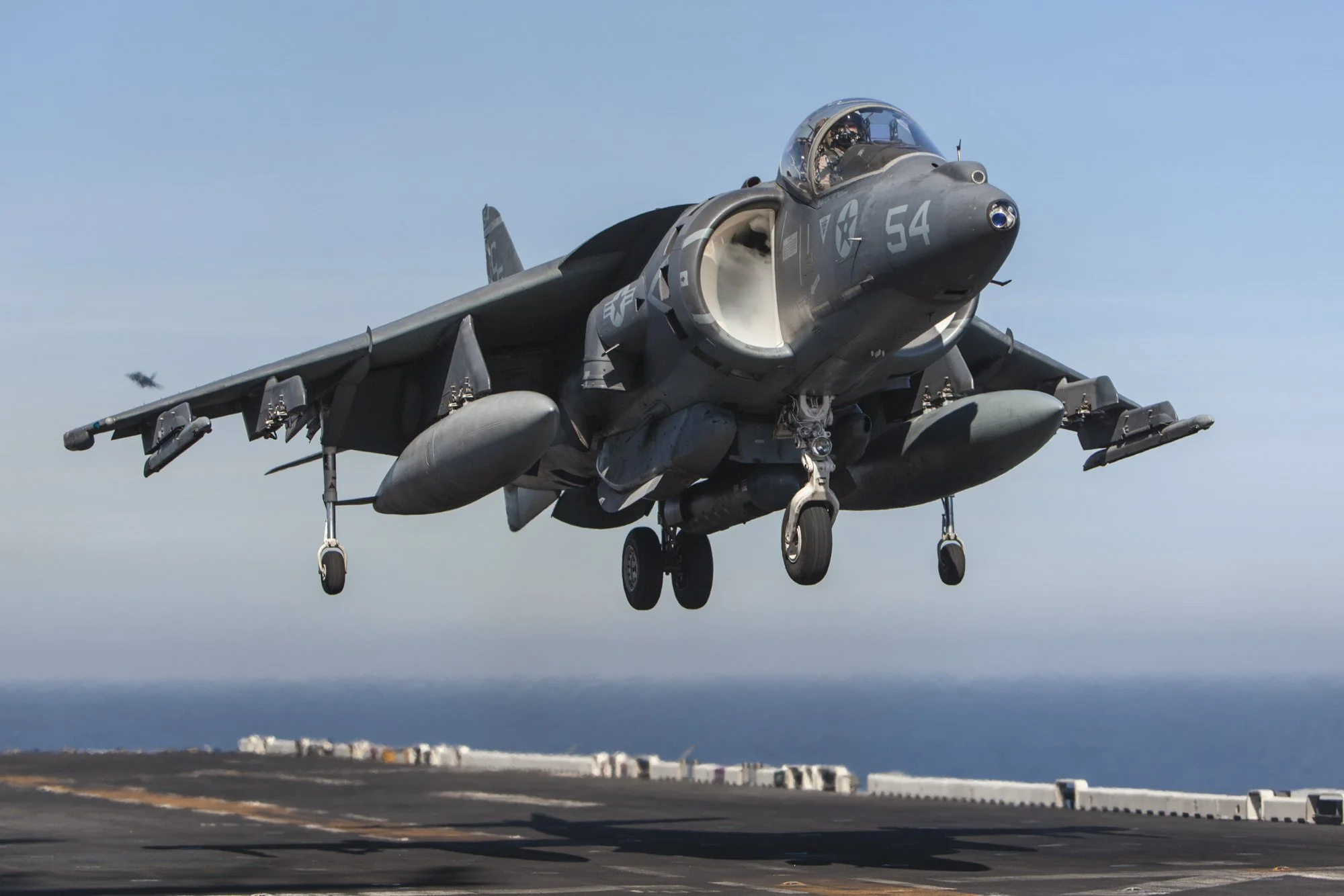
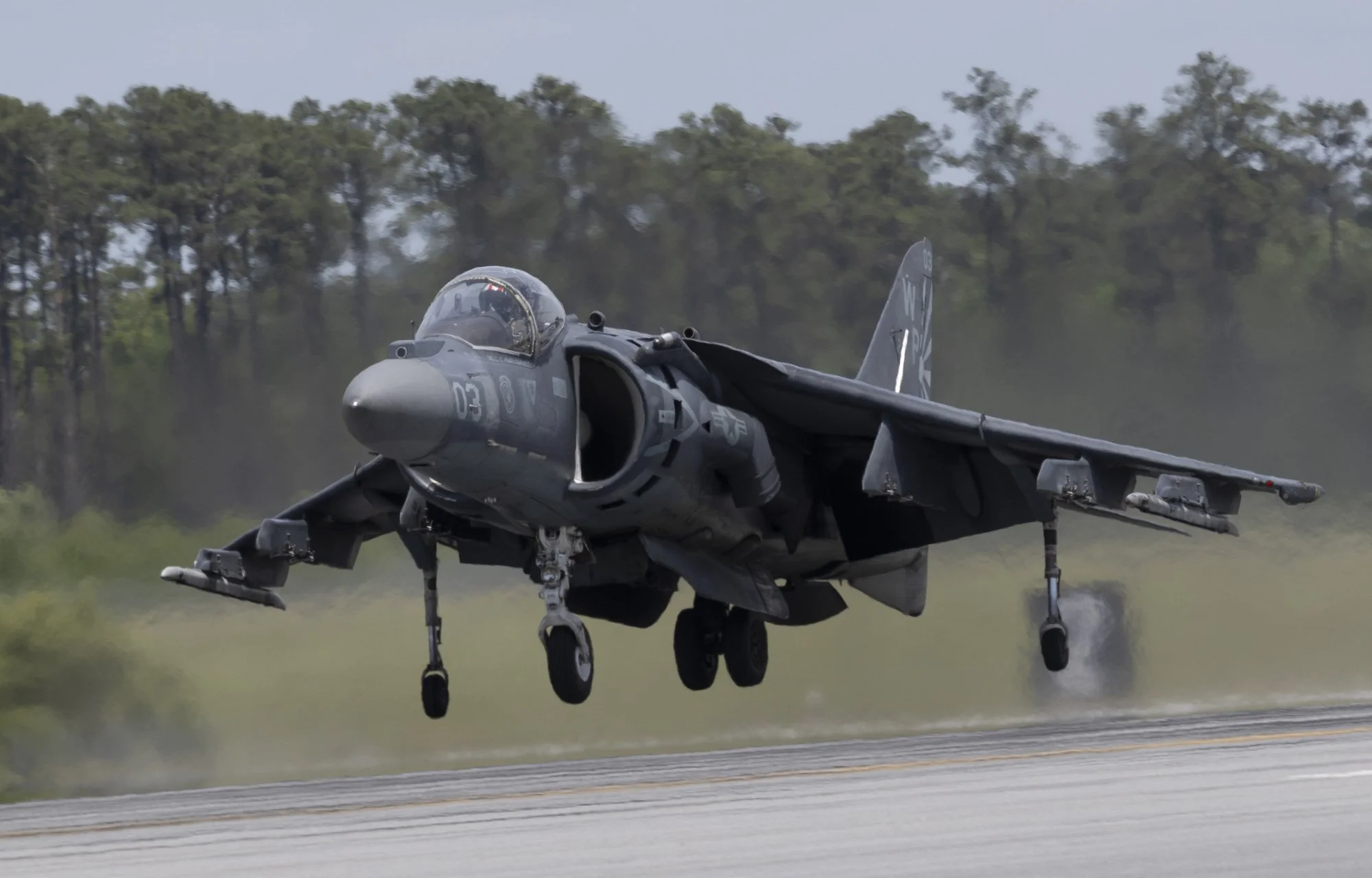
“The Harrier was the genesis of Marine Corps TacAir aviation,” former pilot Frank “CHOMPS” Zastoupil explained. “You were able to take off vertically and land on short runways. Even in the tree lines and grass fields.”
“The Harrier is the ultimate example of flexible basing,” former pilot Derek “LOOB” Mills told me. “Boats, grass, dirt, parking lots, soccer stadiums… they all looked like viable options to a jump jet pilot.”
“Hot refuel/rearm was a Harrier community invention. That tripled or quadrupled CAS over the objective. Only the Harrier could do that," said former pilot, General Jon “DOG” Davis.
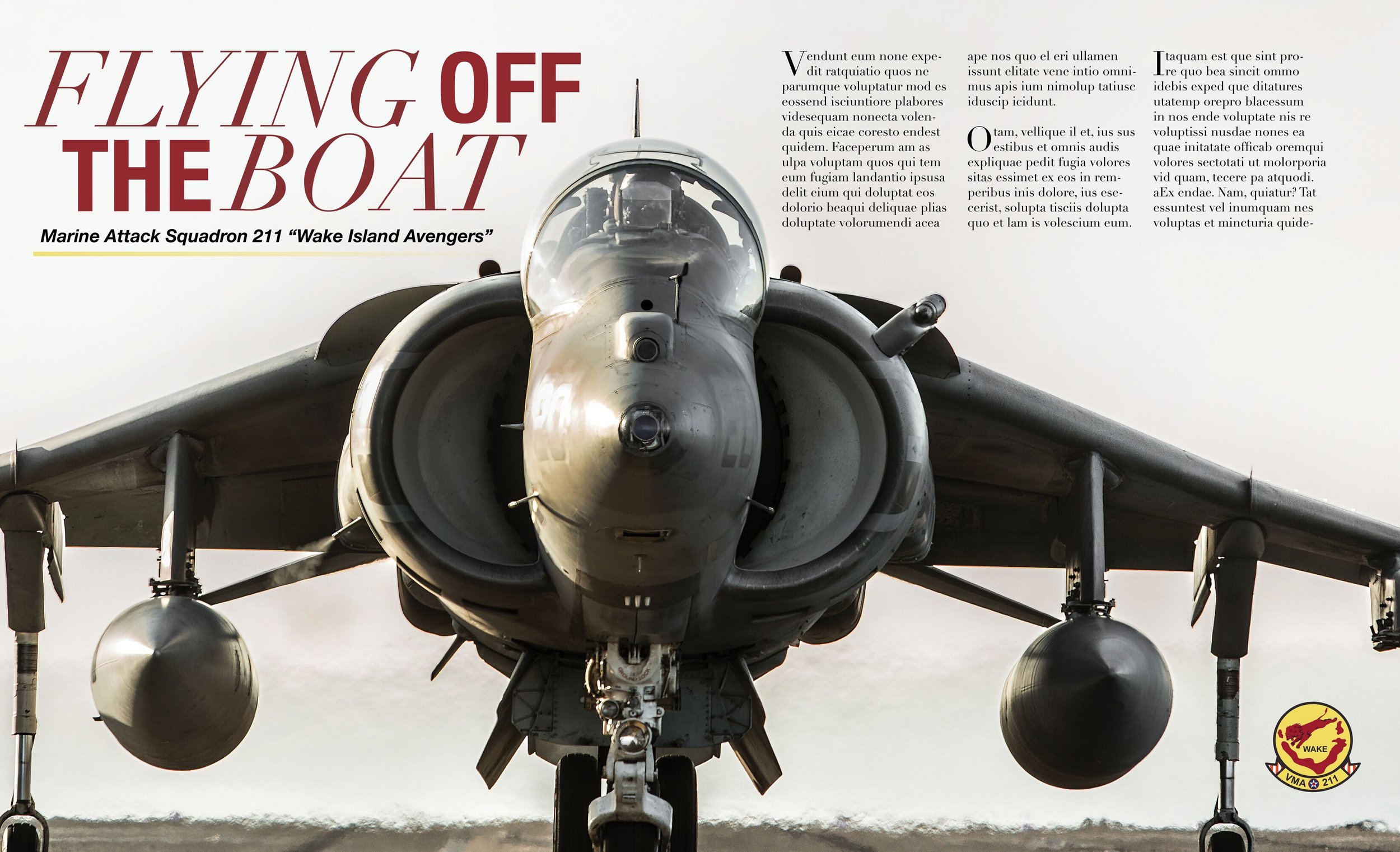
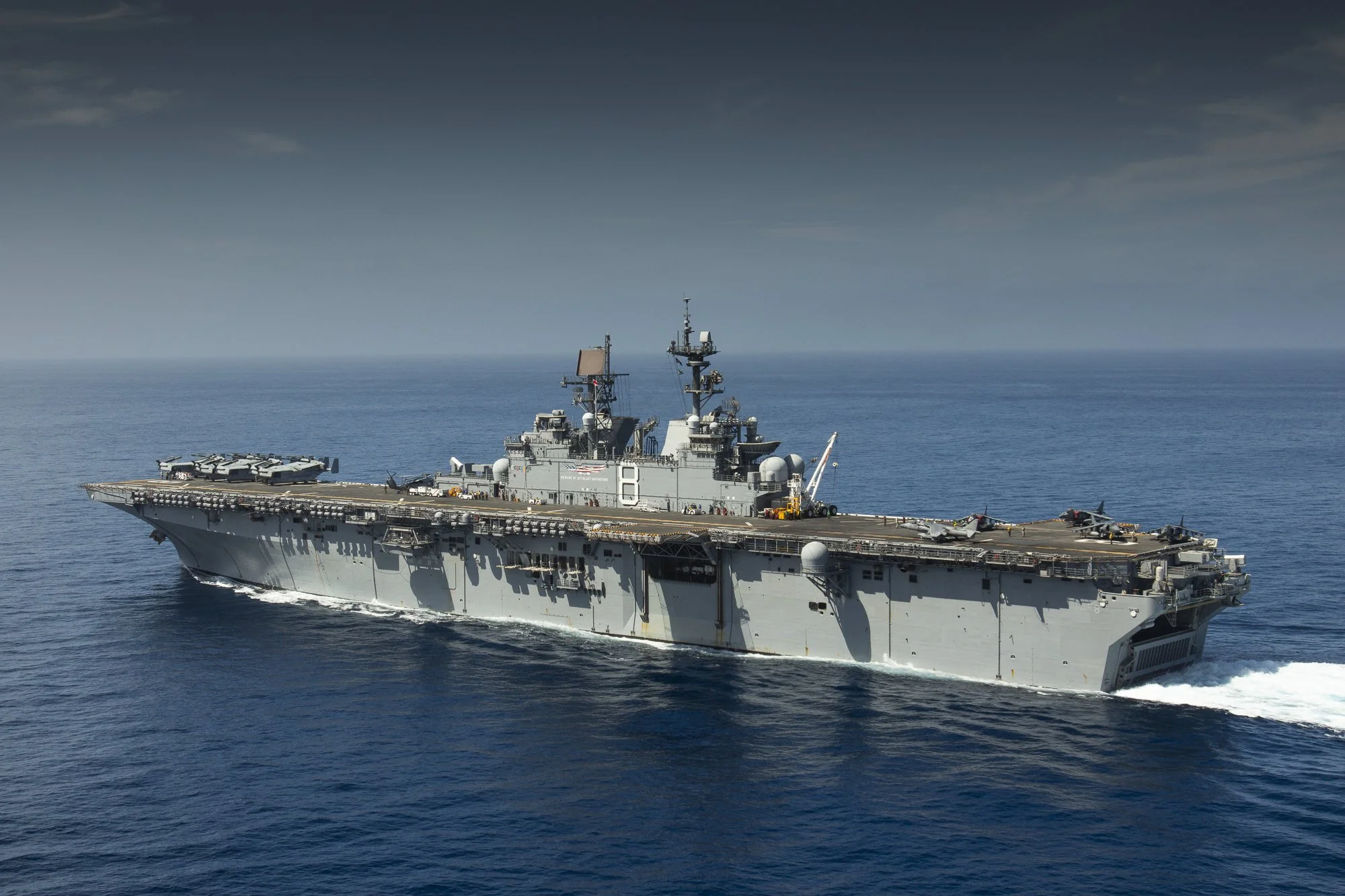
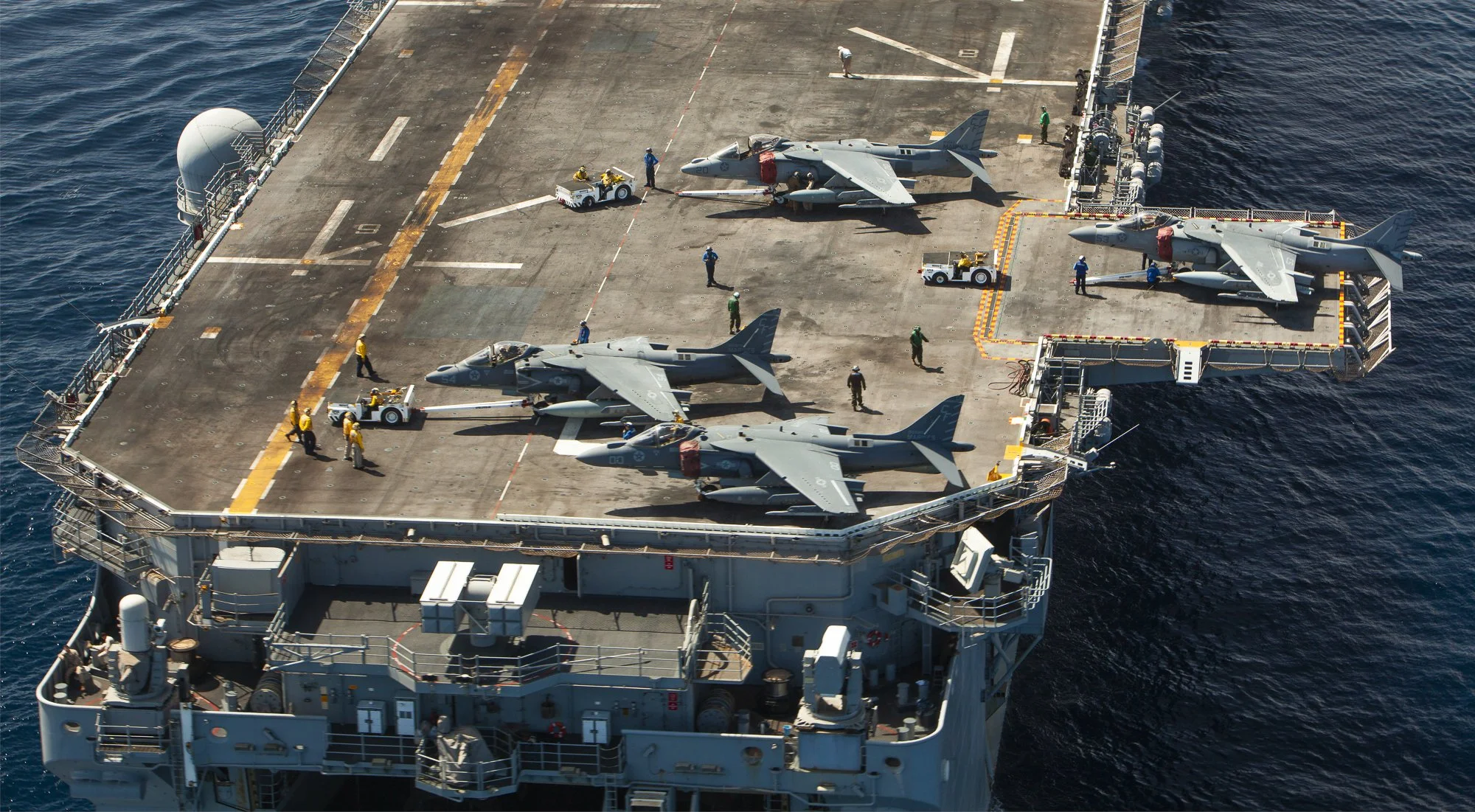
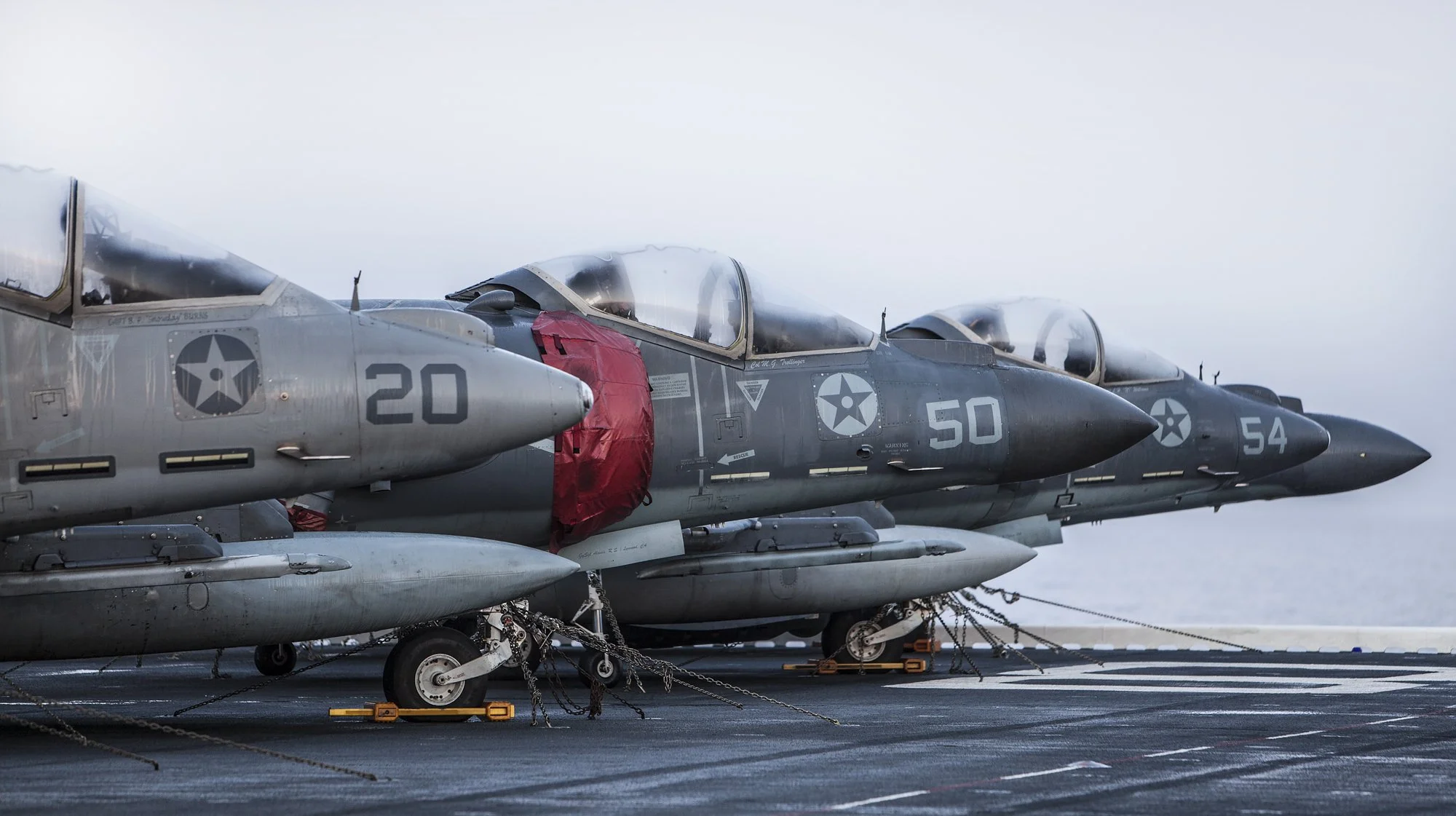
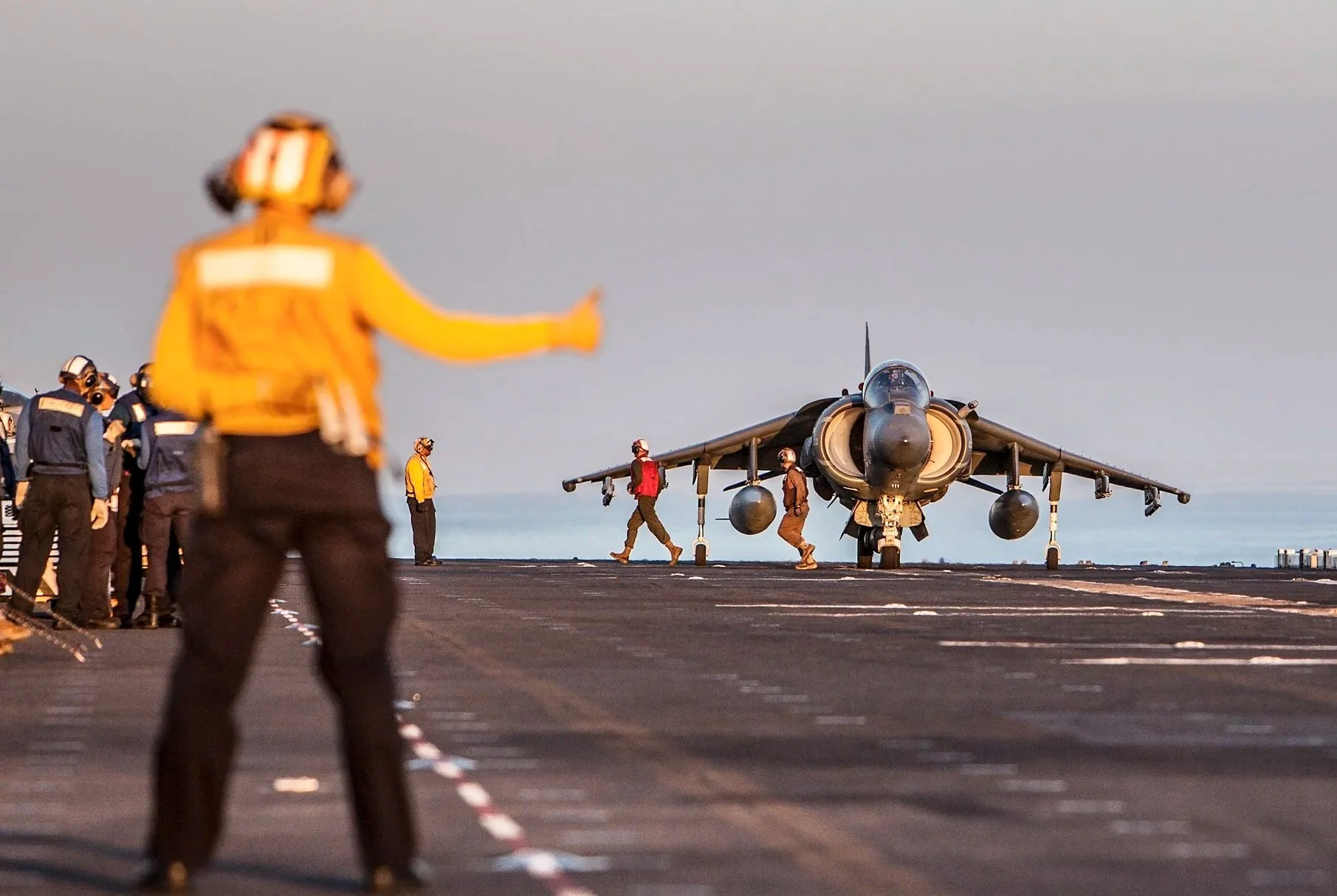
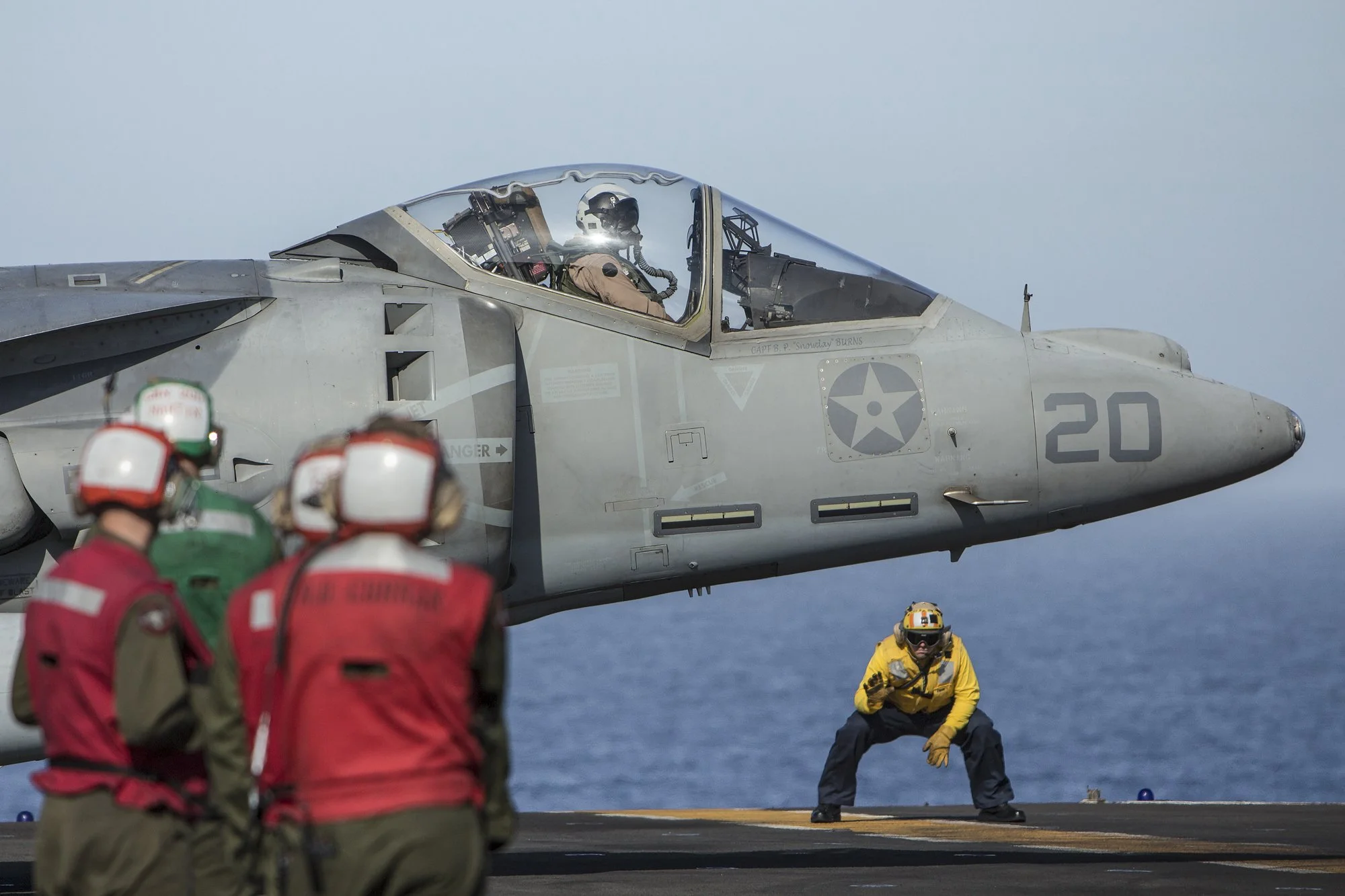
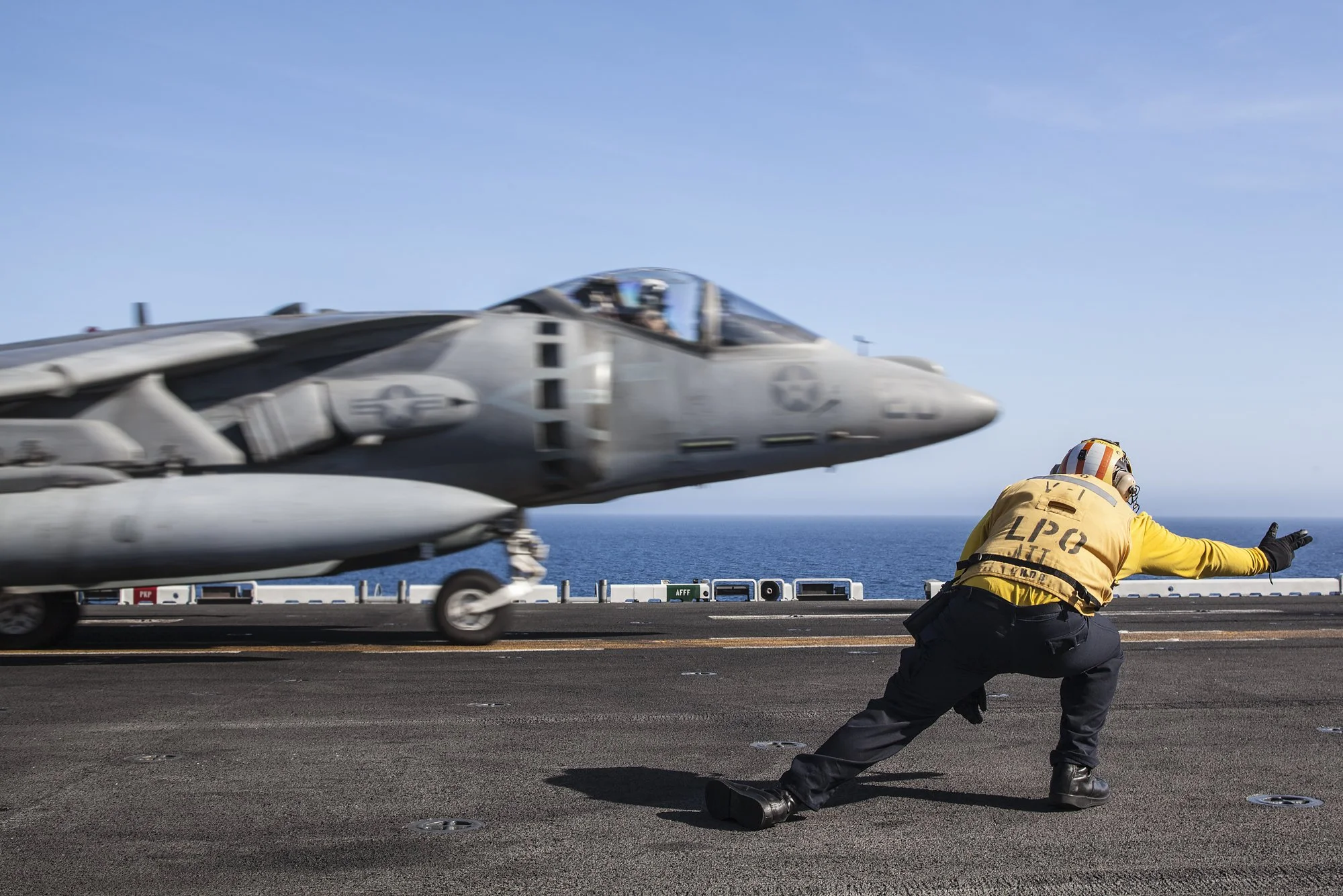
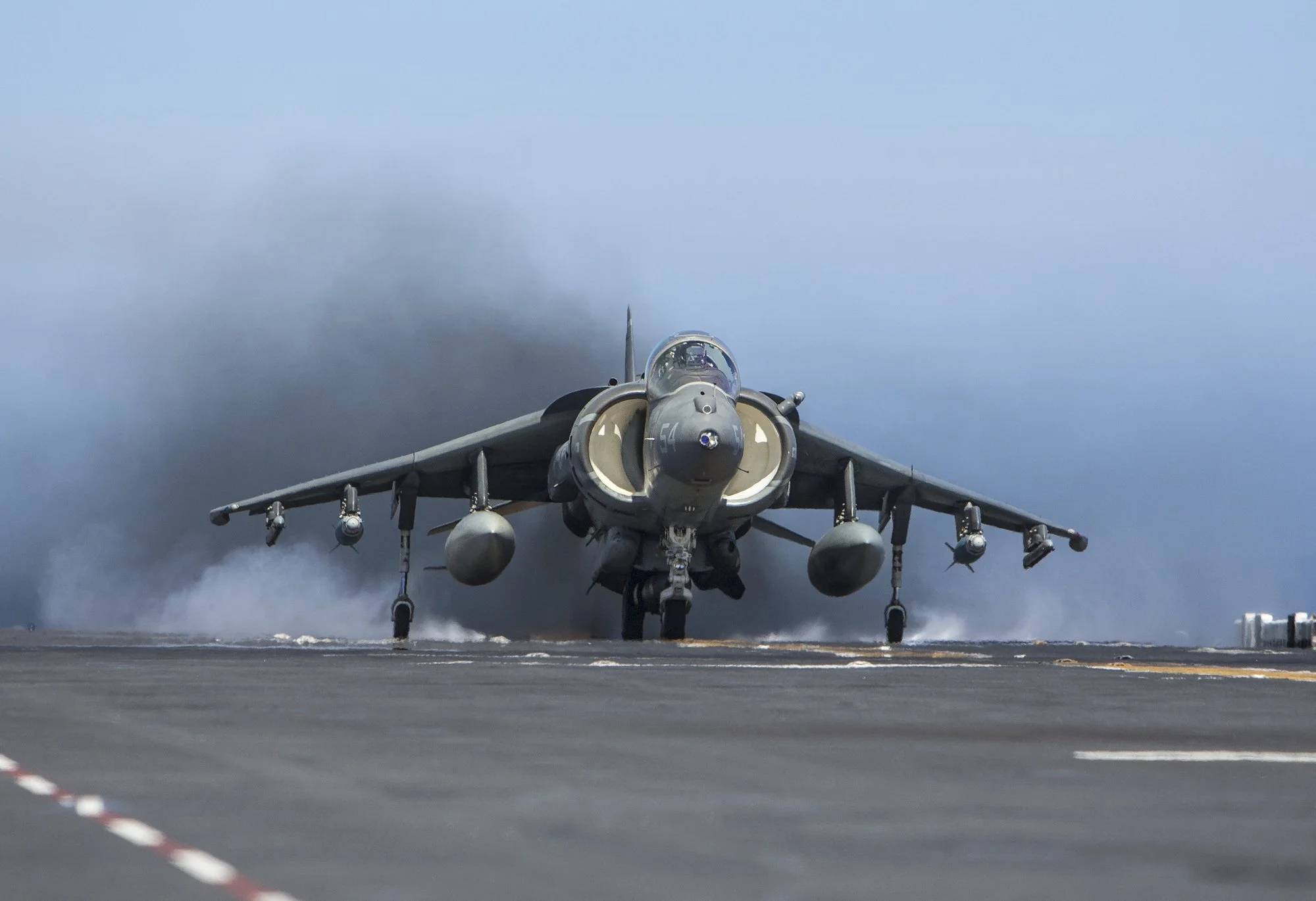
The Marines took the original British oddball, hacked and hardened it, then launched the AV-8B from forward operating bases near the front lines and the stubby decks of amphibious assault ships near the shore — making the Harrier a cornerstone of Marine Corps aviation’s most sacred mission: close air support.
Keeping the Harrier flying
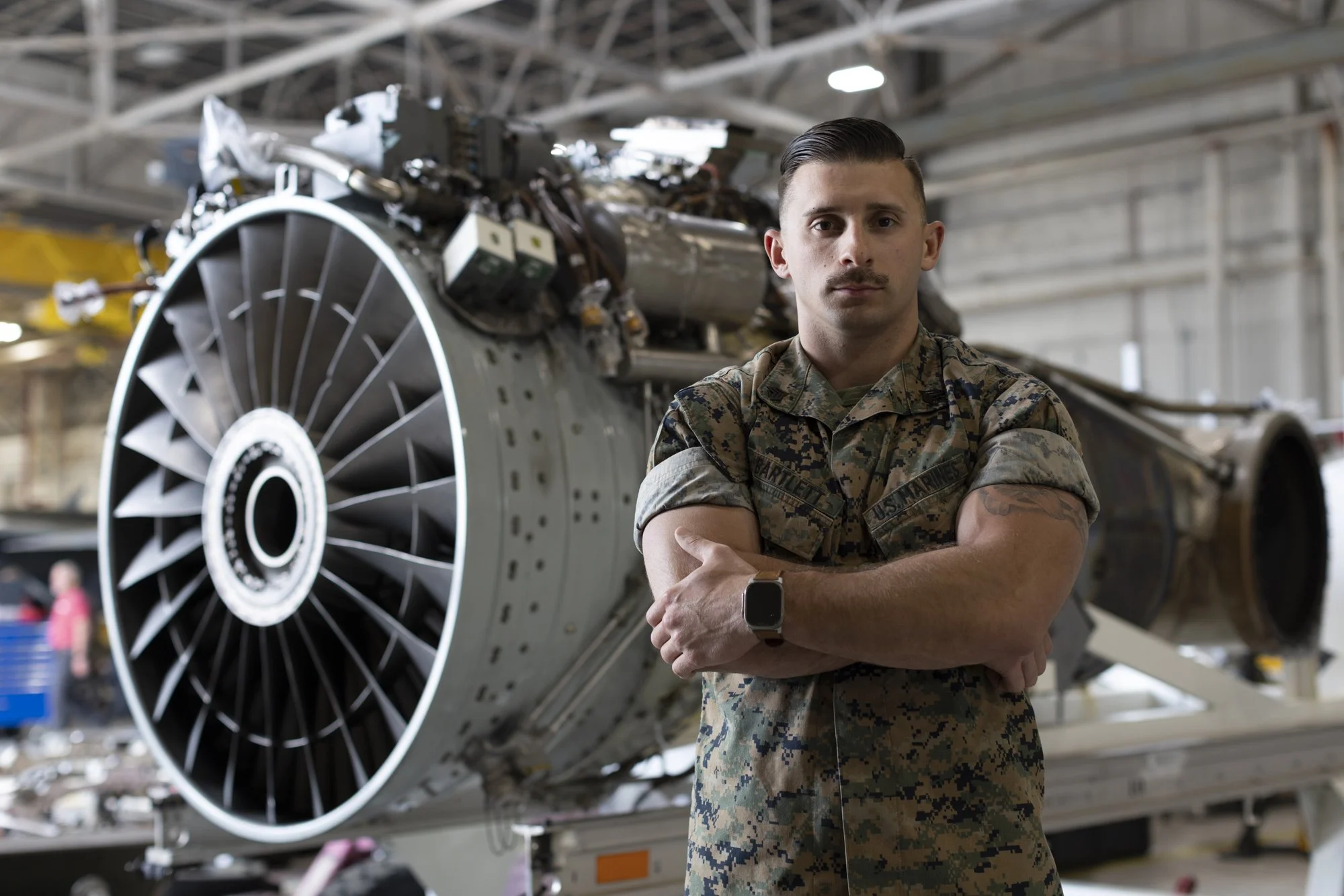
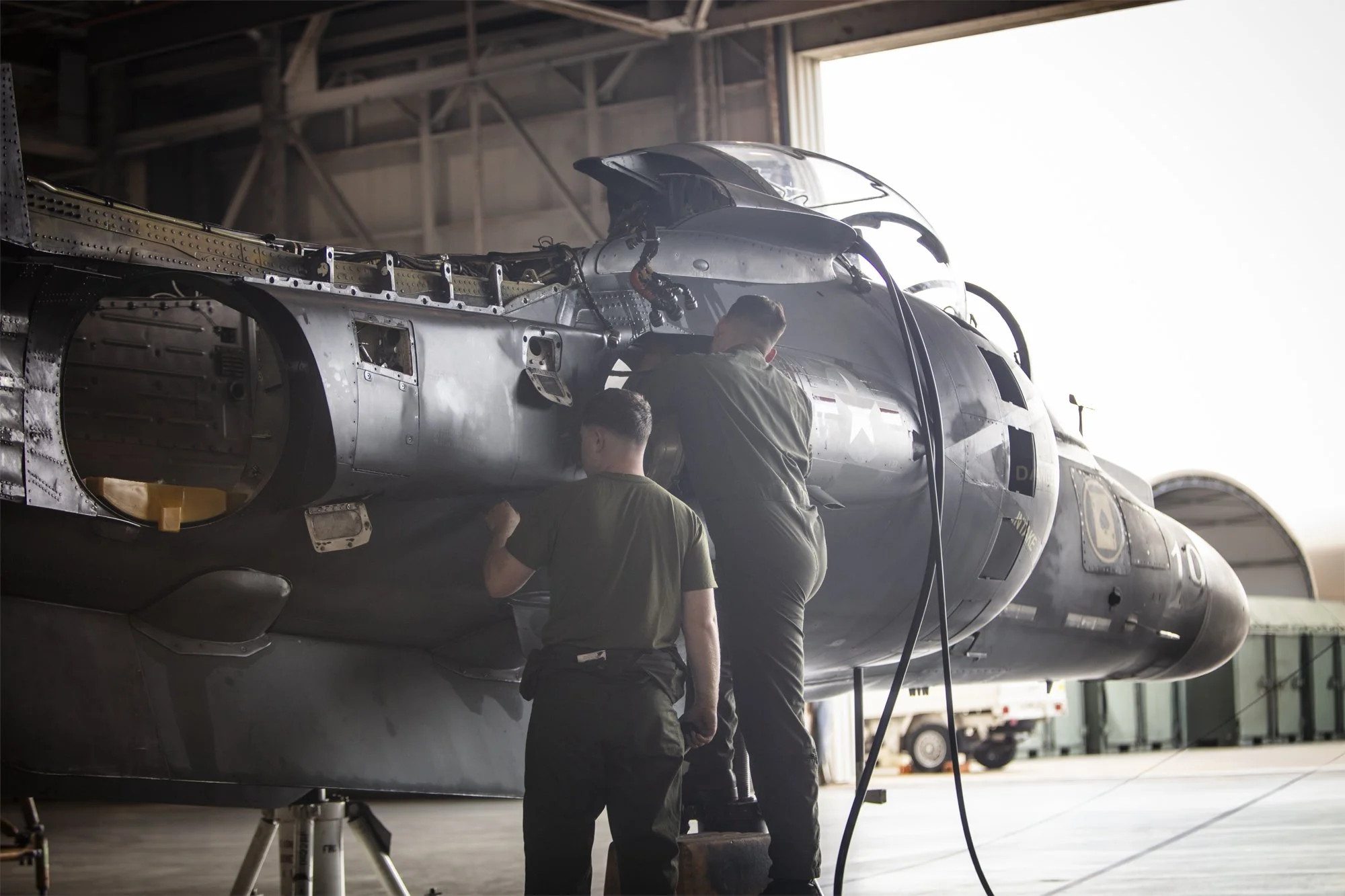
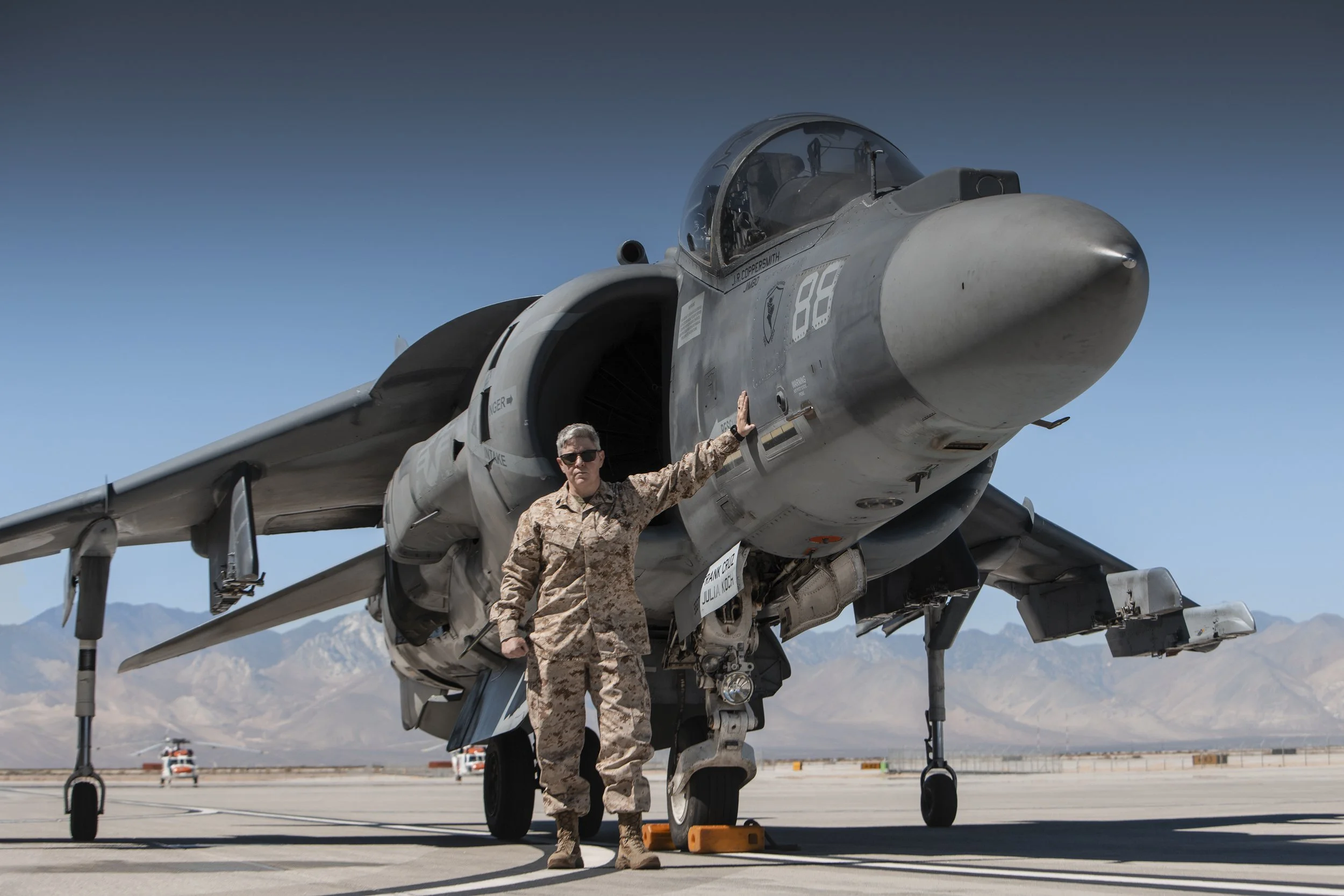
Maintainers who diagnosed a jet by ear because there was no computer to plug into. “Each Harrier had its own personality. You could hear that starter motor pitch a little bit higher for a little too long. It was telling you if you just listened.” — Julie Koch, Maintainer
Ordnance Marines who built and loaded the weapons that made the sortie mean something. Plane captains, avionics techs, and the civilian professionals behind them — the people whose names never make it into aviation books, and without whom there is no aviation. “I’ve come to literally love the Harrier, because it actually takes a mechanic to fix it. There’s no computer to hook up to tell us what’s wrong.” — Brandon Ordway, Maintainer
The Jump Jet
The Harrier didn’t own the sky — it owned the dirt, the grit, the fight. It wasn’t love; it was respect, hard and raw, for the attack pilots who wrangled this beast and made the impossible look routine. It was the Marine Corps’ most demanding aircraft, and the community spent decades making it survivable and more lethal. This book tells that story in all its glory. The long road of development. The triumphs, the losses, and the tragedies.
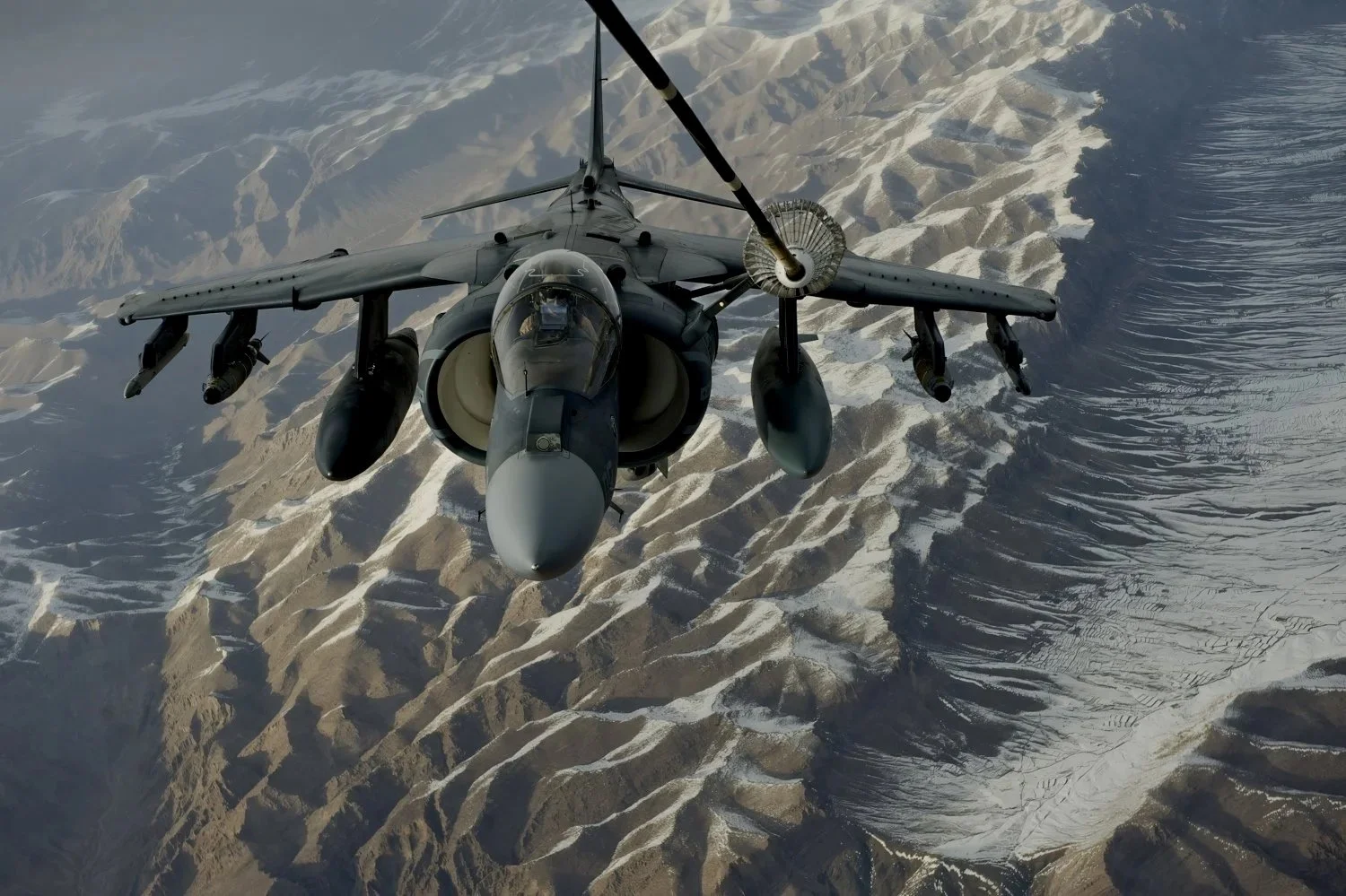
It first went to war in Desert Storm, Iraq, Syria, the Balkans, Libya, Yemen, and Afghanistan. From the first AV-8As in 1971 through the AV-8C in 1979, the AV-8B Day Attack in the mid-1980s, Night Attack, and the II+ radar jets, it flew low, where it was most exposed, because that’s where the Marines on the ground needed it.
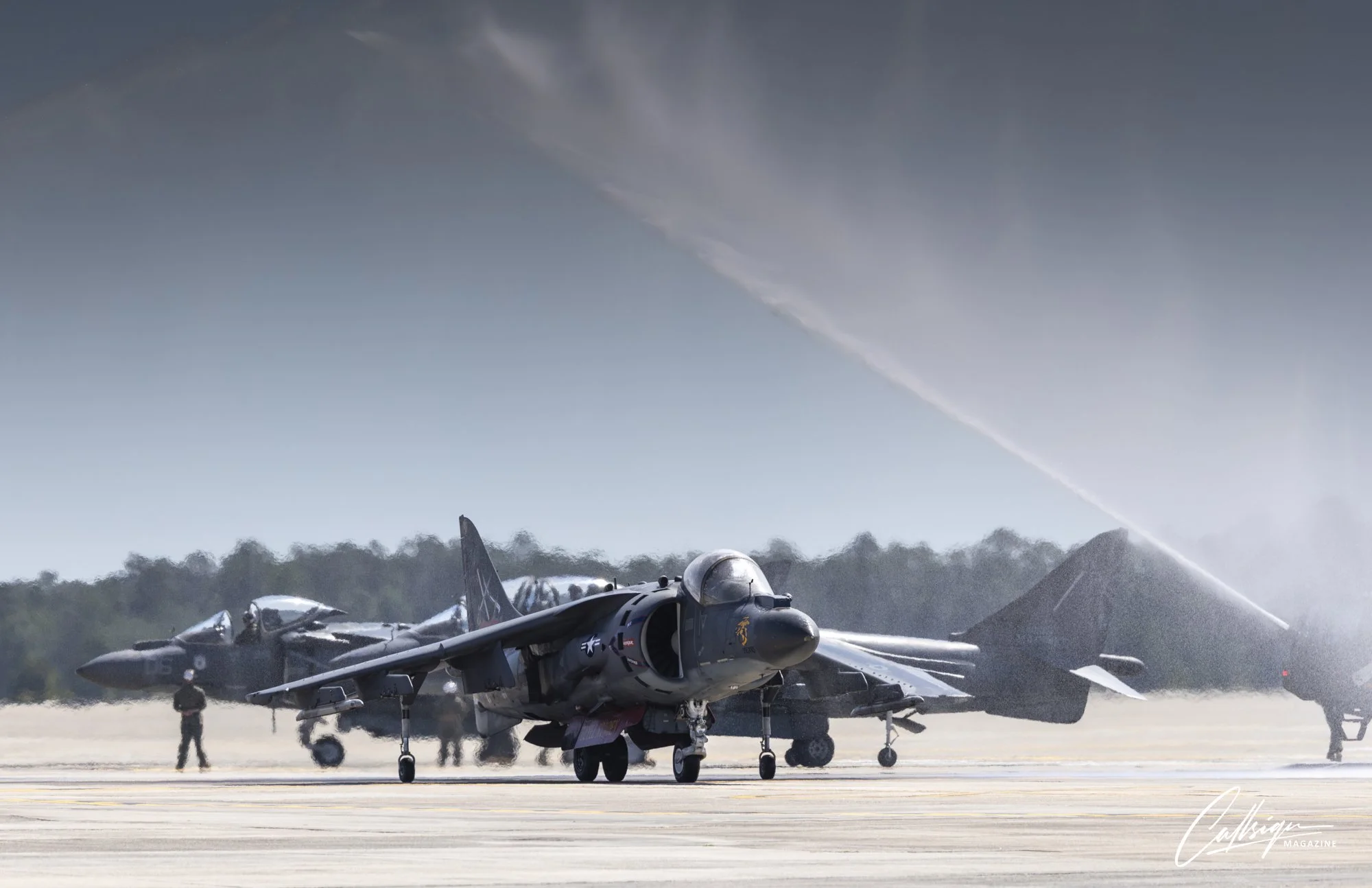
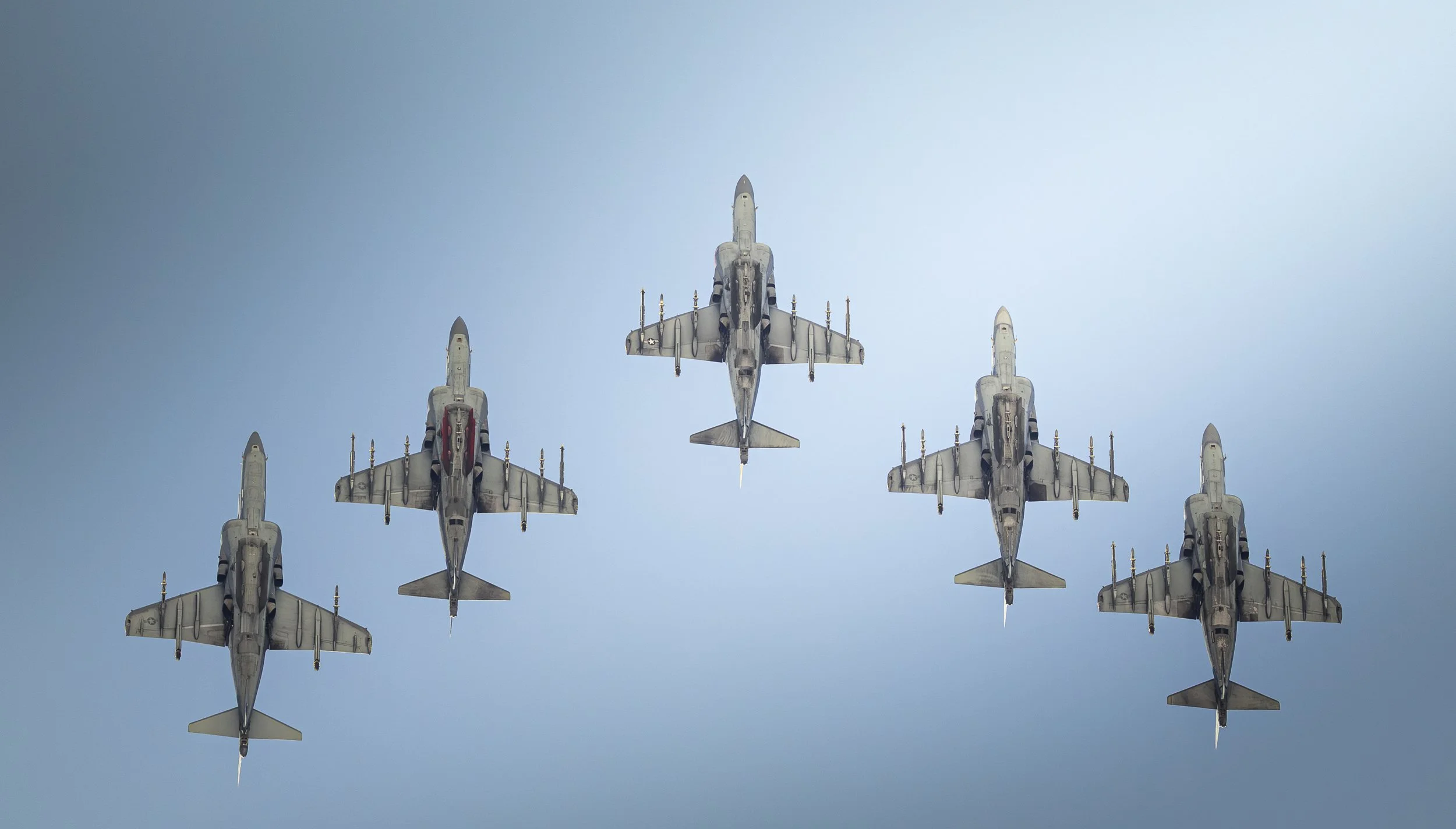
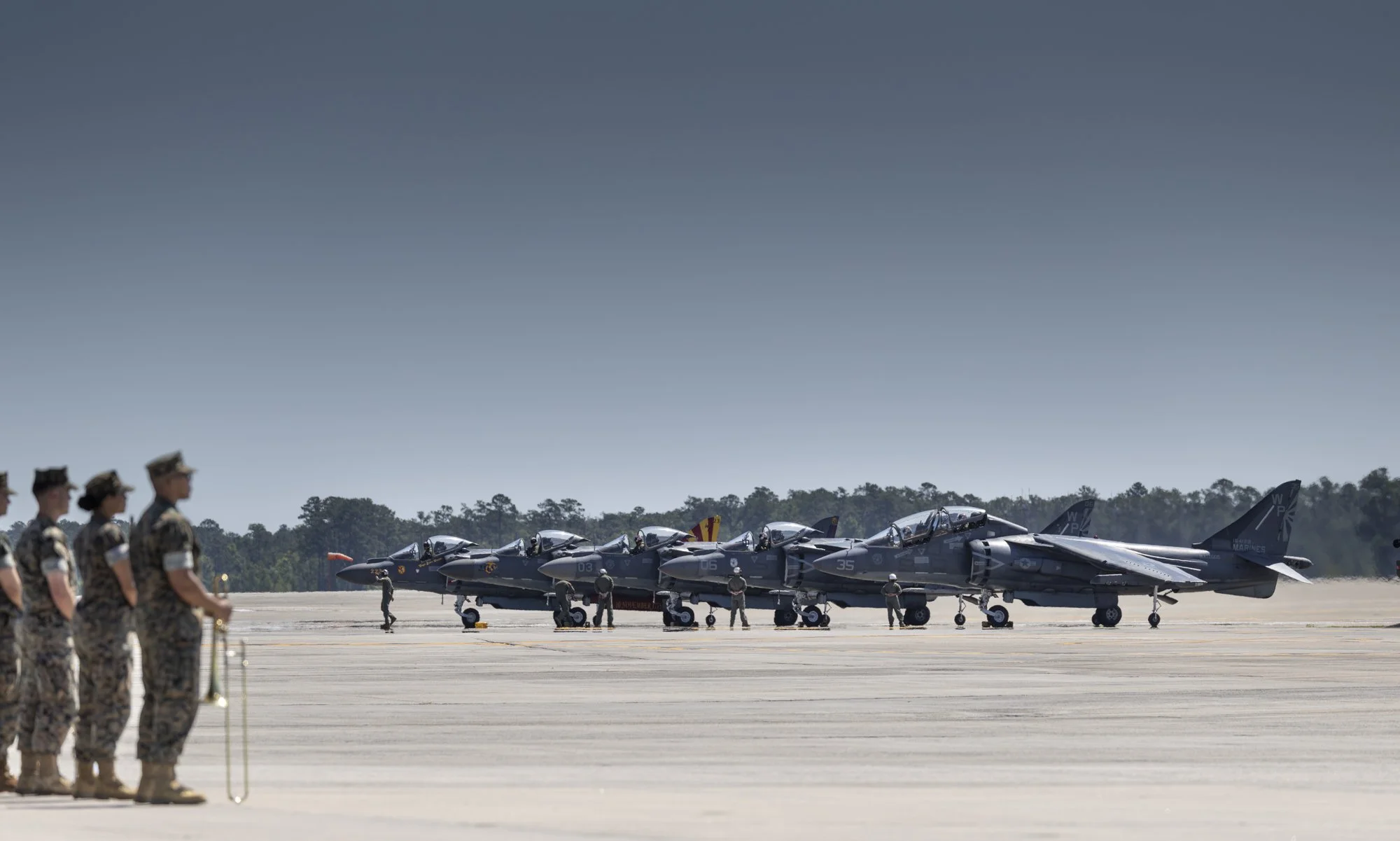
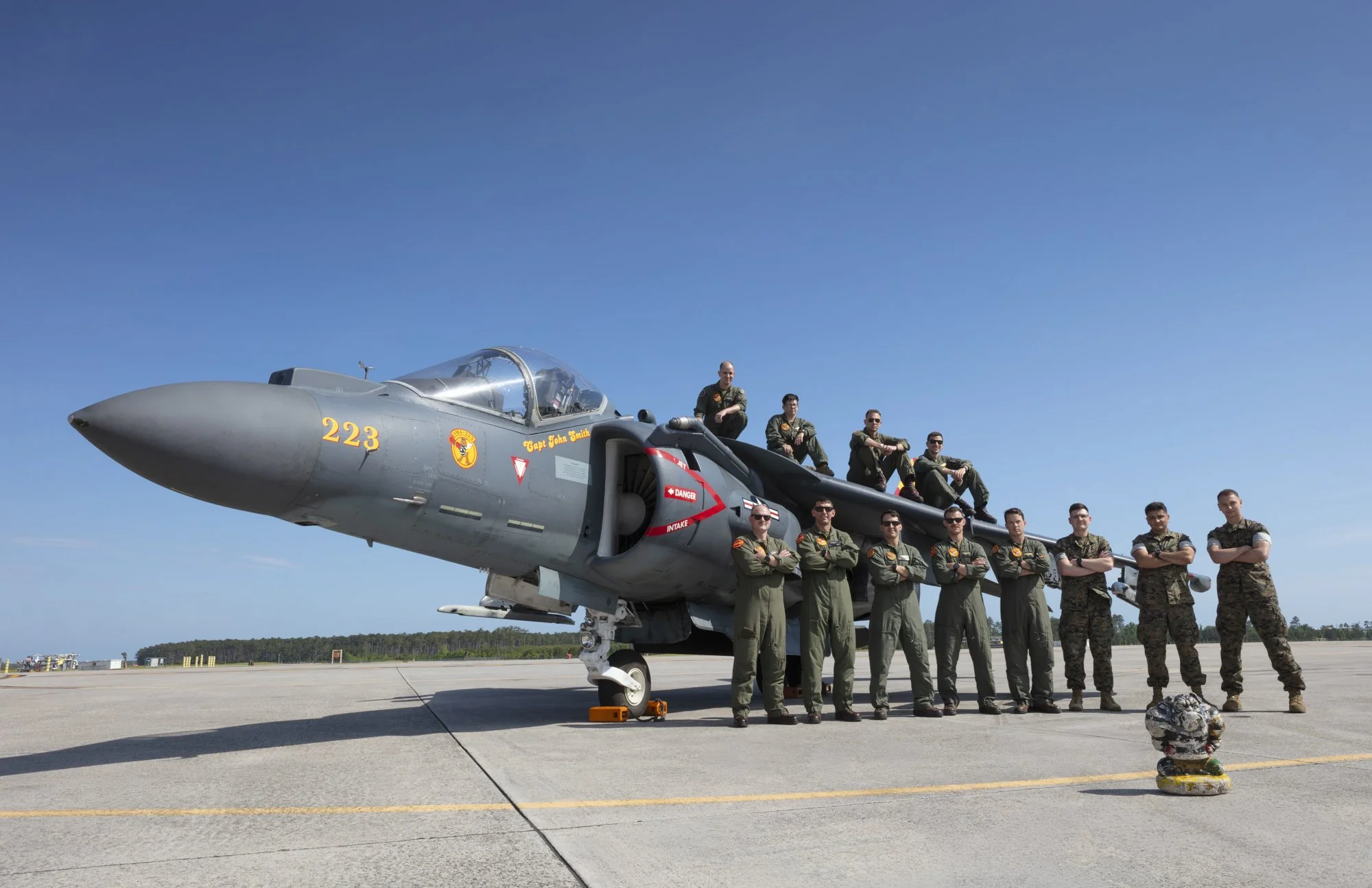
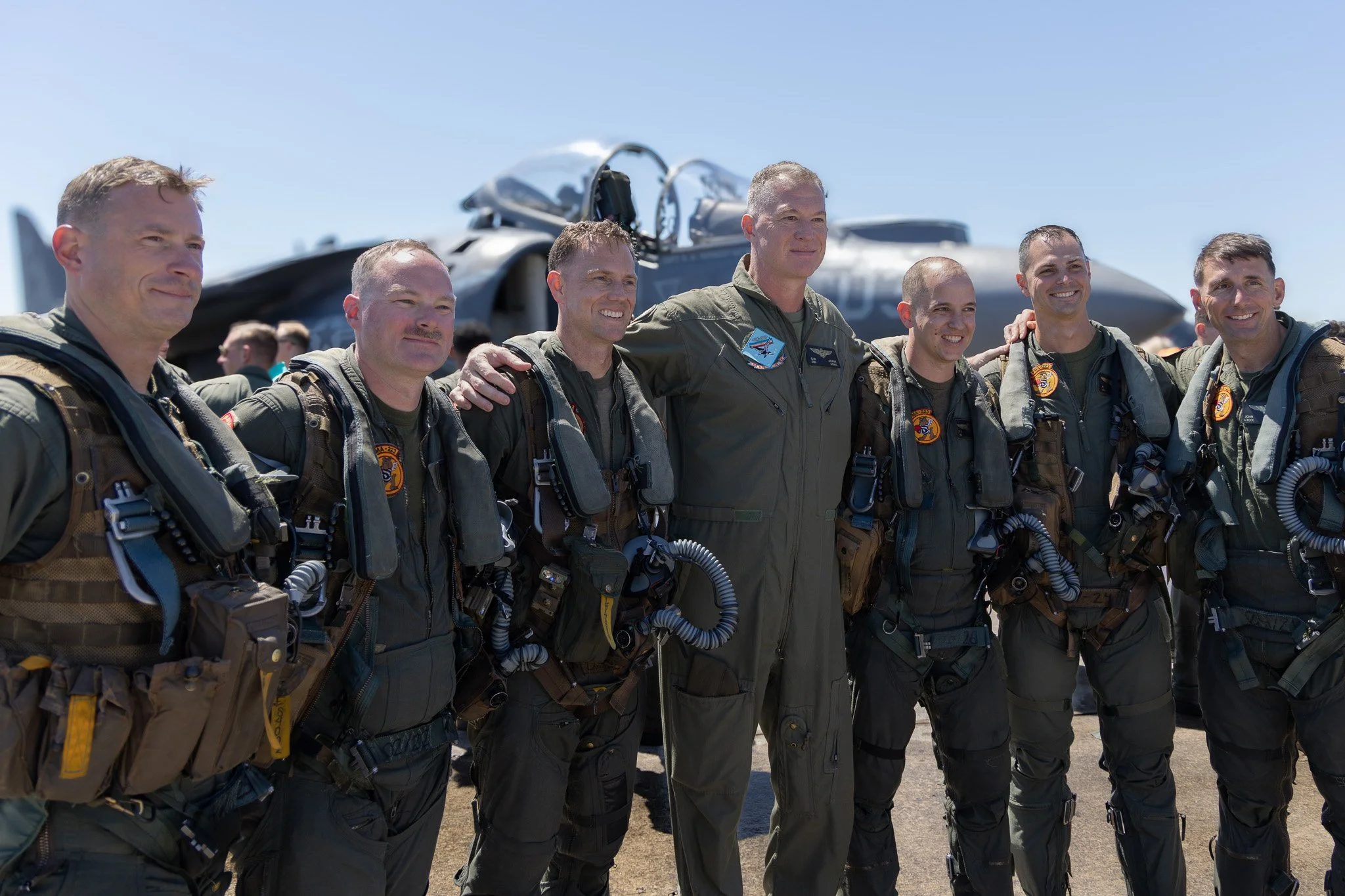
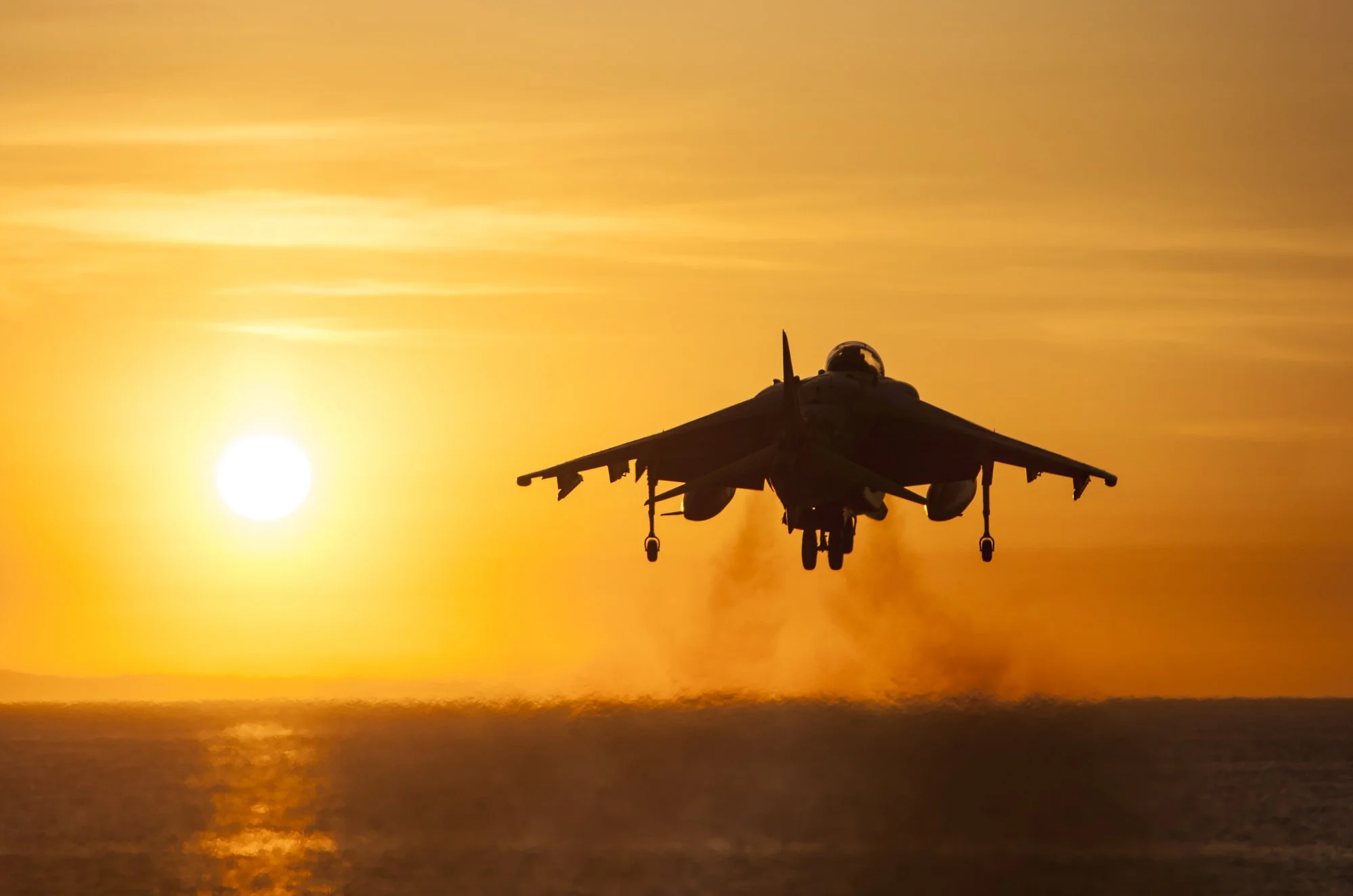
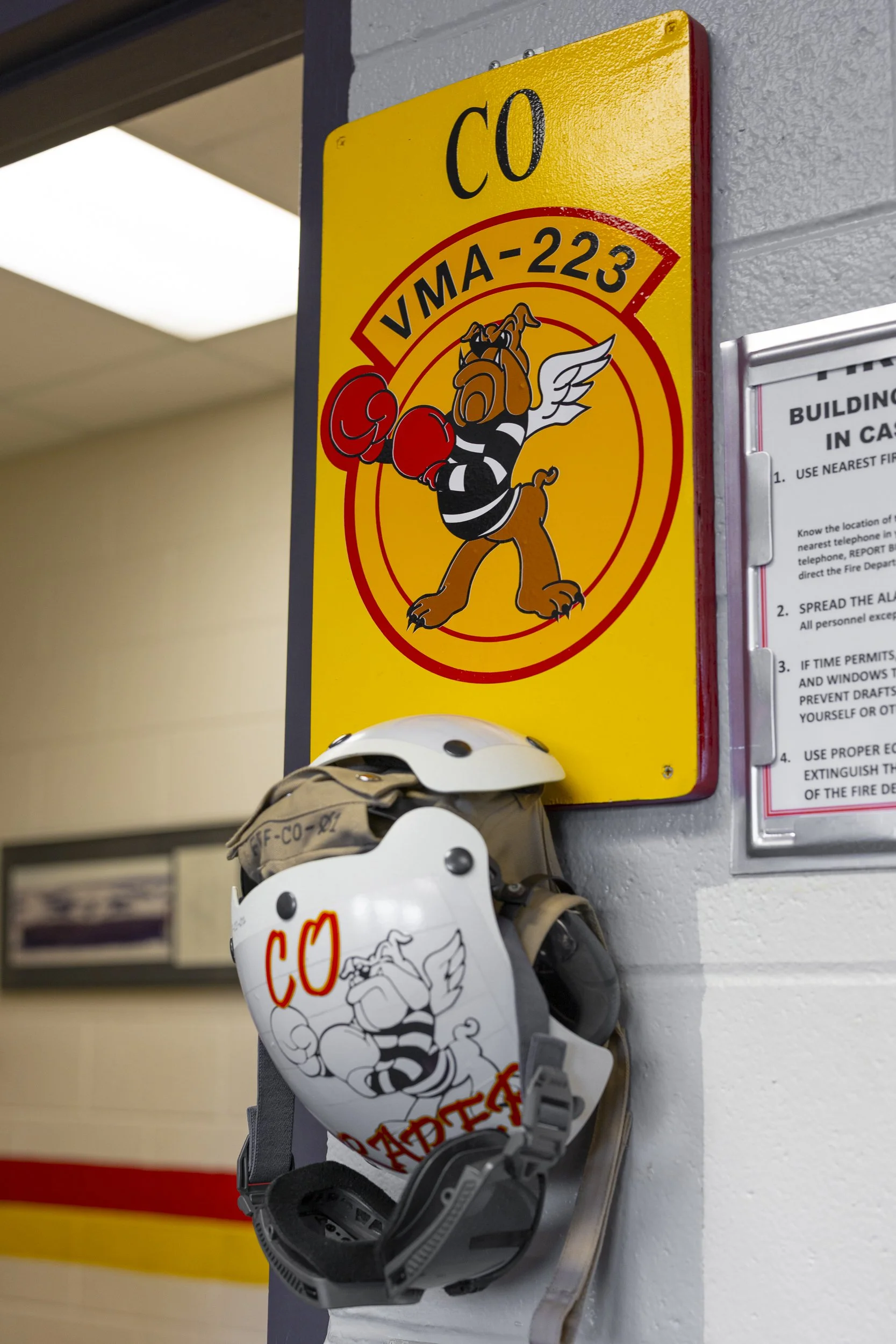
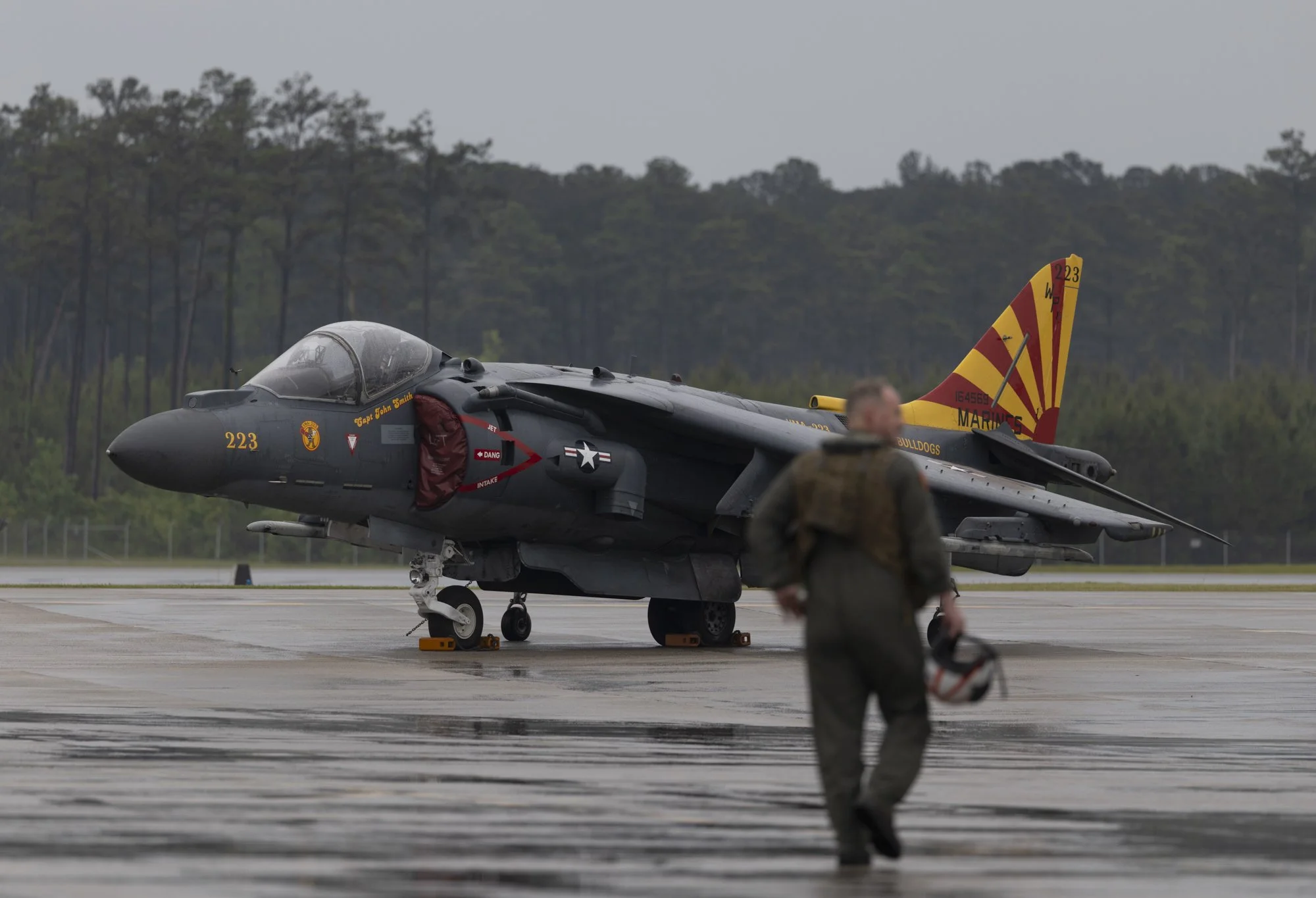
On June 3, 2026, VMA-223 “Bulldogs” flew the Harrier’s final sundown flight. Five jets came into the hover for the last time, settled onto the flight line at Cherry Point, and shut down. Fifty-five years ended there. “A very unique and special community that’s been doing this for five-plus decades, and to be at the end… we got to be a part of it, and… that’s history. All the blood, sweat, and tears put in over the years by Marines, families, and those who didn’t come home.” — John “TRAPER” Cumbie, the final USMC Harrier Commanding Officer, VMA-223.
Reserve your copy. Our Kickstarter campaign launches in November 2026, with a limited early-bird price in the first 48 hours and access to bonus materials. Waiting-list members are notified first and get first access before the tier sells out. The first edition ships in early Q2 2027.
If you flew, fixed, armed, launched, or recovered the Harrier — or supported the community from the civilian side — we're still gathering accounts for the archive and would like to interview you. Your experiences are vital to ensuring this proud chapter of Marine Corps aviation is remembered for generations to come. Every interview is preserved in full, whether or not it runs in the book.
HARRIER
Legacy Project
“Runways optional” wasn’t a punchline. It was a revolution.
“The U.S. Marine Corps took that revolution and made it a doctrine. It was a promise to the rifleman: close air support would be there, even when infrastructure wasn’t.” — Capt. David Halpern, Commodore, Naval Test Wing Pacific.
For fifty-five years, the Marine Corps kept that promise with the AV-8 Harrier.
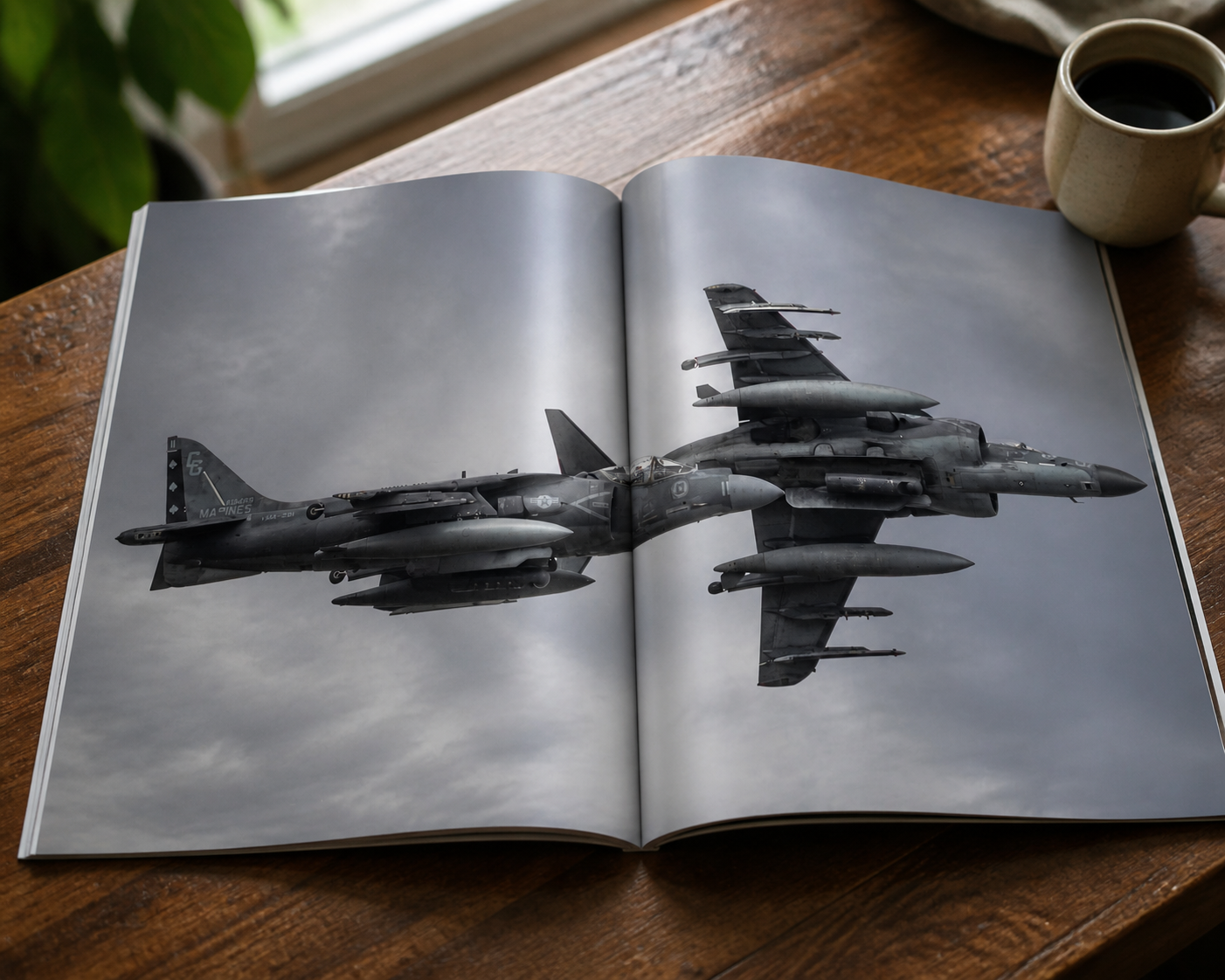
Stocky, short-winged, single-seat, single-turbofan engine — a light-attack brawler with a storied reputation of being dangerous. Bombs slung low, a 25mm cannon in its belly. It was a crazy idea that broke conventions, an audacious challenge hurled at the laws of physics and the staid minds of aviation orthodoxy.
The Harrier was all straightforward, mechanical controls — no computers, no fly-by-wire. A pilot’s airplane: linkages, chains, and cables. Pure stick-and-rudder flying. The kind of machine that didn’t forgive mistakes — it punished them.
“It was a really hard jet to master,” said retired pilot Ben “LAWMAN” Hancock. “You had to have a very smart left hand — because that hand controlled the throttle, the power, and the nozzles.”
“The Harrier was the genesis of Marine Corps TacAir aviation,” former pilot Frank “CHOMPS” Zastoupil explained. “You were able to take off vertically and land on short runways. Even in the tree lines and grass fields.”
“The Harrier is the ultimate example of flexible basing,” former pilot Derek “LOOB” Mills told me. “Boats, grass, dirt, parking lots, soccer stadiums… they all looked like viable options to a jump jet pilot.”
“Hot refuel/rearm was a Harrier community invention. That tripled or quadrupled CAS over the objective. Only the Harrier could do that," said former pilot, General Jon “DOG” Davis.
The Marines took the original British oddball, hacked and hardened it, then launched the AV-8B from forward operating bases near the front lines and the stubby decks of amphibious assault ships near the shore — making the Harrier a cornerstone of Marine Corps aviation’s most sacred mission: close air support.
Maintainers who diagnosed a jet by ear because there was no computer to plug into. “Each Harrier had its own personality. You could hear that starter motor pitch a little bit higher for a little too long. It was telling you if you just listened.” — Julie Koch, Maintainer
Ordnance Marines who built and loaded the weapons that made the sortie mean something. Plane captains, avionics techs, and the civilian professionals behind them — the people whose names never make it into aviation books, and without whom there is no aviation.
“I’ve come to literally love the Harrier, because it actually takes a mechanic to fix it. There’s no computer to hook up to tell us what’s wrong.” — Brandon Ordway, Maintainer
It first went to war in Desert Storm, Iraq, Syria, the Balkans, Libya, Yemen, and Afghanistan. From the first AV-8As in 1971 through the AV-8C in 1979, the AV-8B Day Attack in the mid-1980s, Night Attack, and the II+ radar jets, it flew low, where it was most exposed, because that’s where the Marines on the ground needed it.
The Harrier didn’t own the sky — it owned the dirt, the grit, the fight. It wasn’t love; it was respect, hard and raw, for the attack pilots who wrangled this beast and made the impossible look routine. It was the Marine Corps’ most demanding aircraft, and the community spent decades making it survivable and more lethal. This book tells that story in all its glory. The long road of development. The triumphs, the losses, and the tragedies.
On June 3, 2026, VMA-223 “Bulldogs” flew the Harrier’s final sundown flight. Five jets came into the hover for the last time, settled onto the flight line at Cherry Point, and shut down. Fifty-five years ended there. “A very unique and special community that’s been doing this for five-plus decades, and to be at the end… we got to be a part of it, and… that’s history. All the blood, sweat, and tears put in over the years by Marines, families, and those who didn’t come home.” — John “TRAPER” Cumbie, the final USMC Harrier Commanding Officer, VMA-223.
Reserve your copy.
Our Kickstarter campaign launches November 2026, with a limited early-bird price in the first 48-hours and access to bonus materials. Waiting-list members are notified first and get first access before the tier sells out.
If you flew, fixed, armed, launched, or recovered the Harrier—or supported the community from the civilian side, we’re still gathering accounts for the archives and would like to interview you. Your experiences are vital to ensuring this proud chapter of Marine Corps aviation is remembered for generations to come.
WHAT’S IN THE BOOK
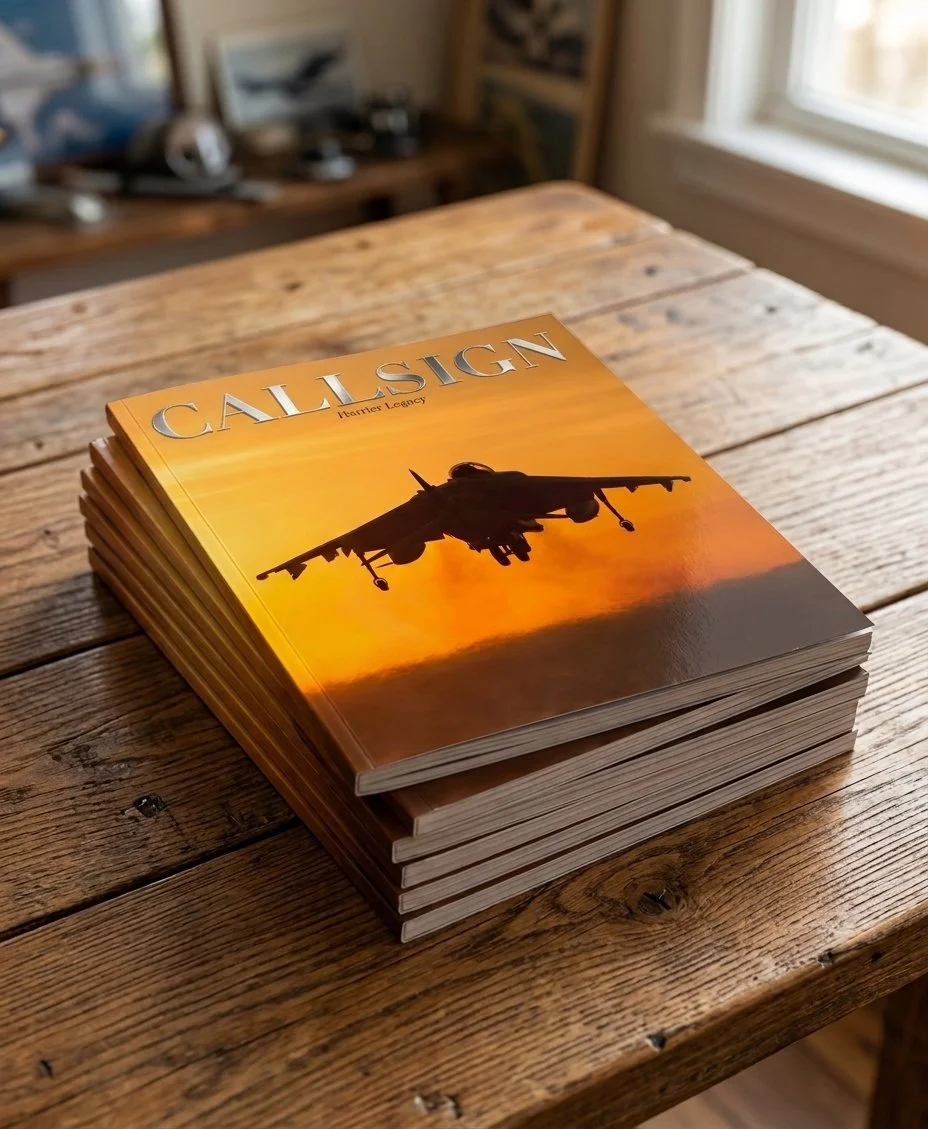
The Harrier Legacy Project is a 136-page commemorative coffee-table book from CALLSIGN Publishing, an independent military aviation publisher. Full color, printed on heavy stock and driven by images from cover to cover, it's built to be kept, revisited and passed forward.
FROM THE FLIGHT LINE
This book wasn't written from a library of archives. It was reported from the flight line.
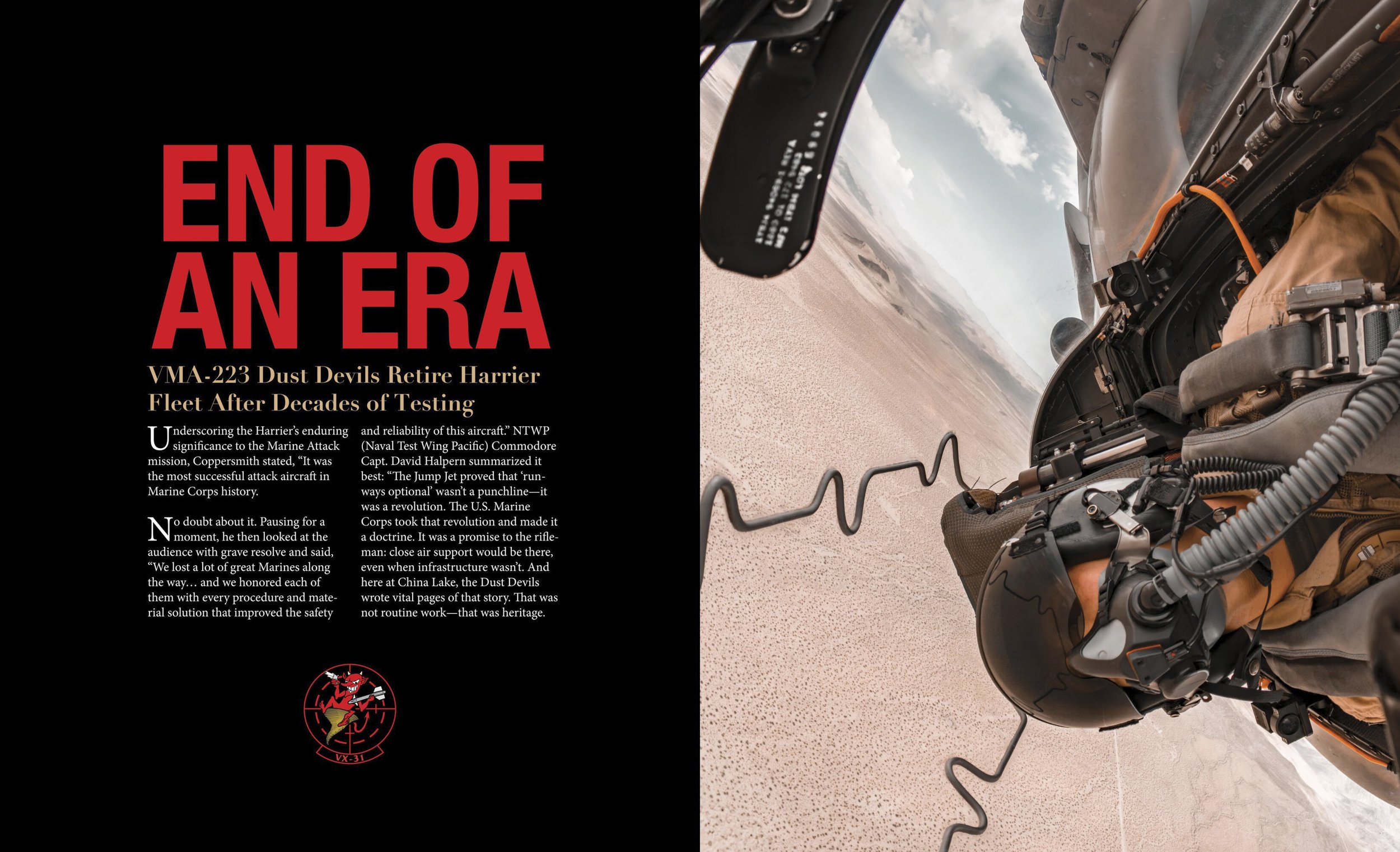
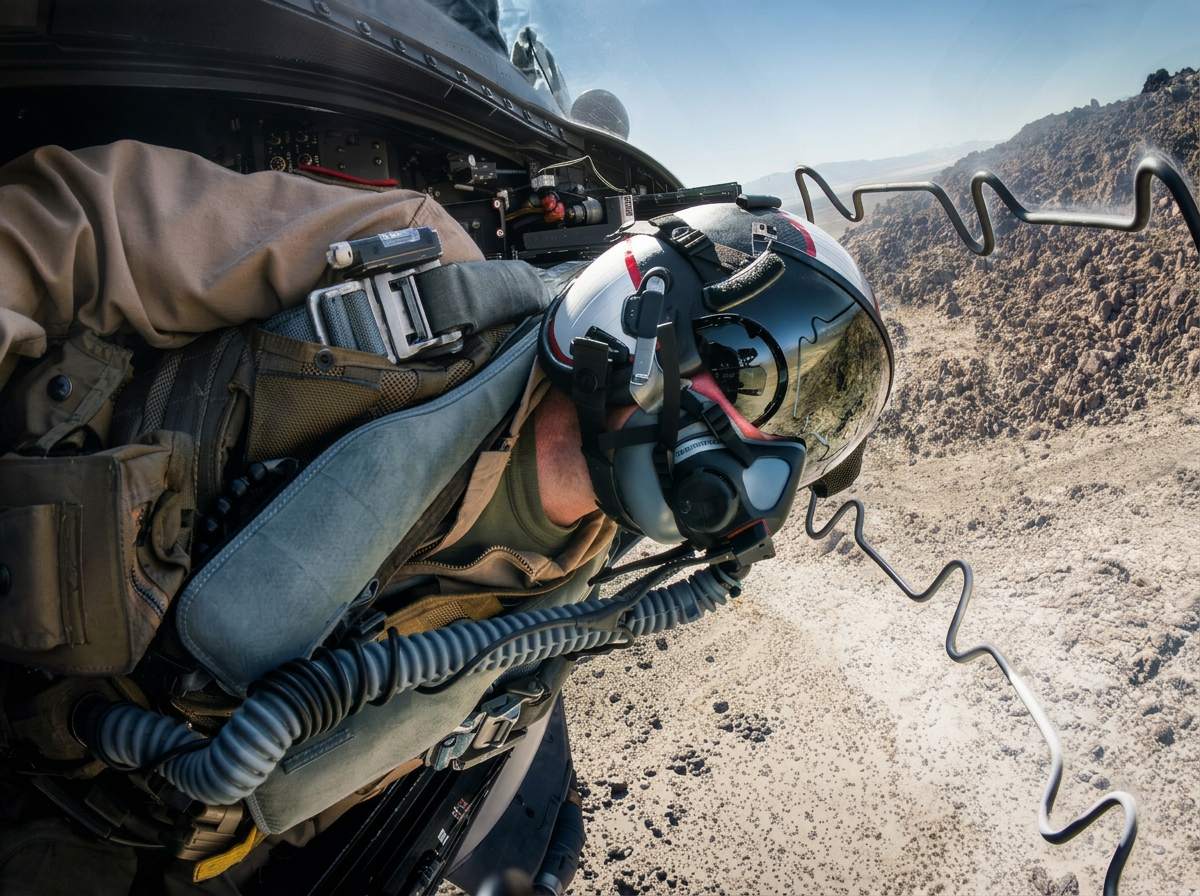
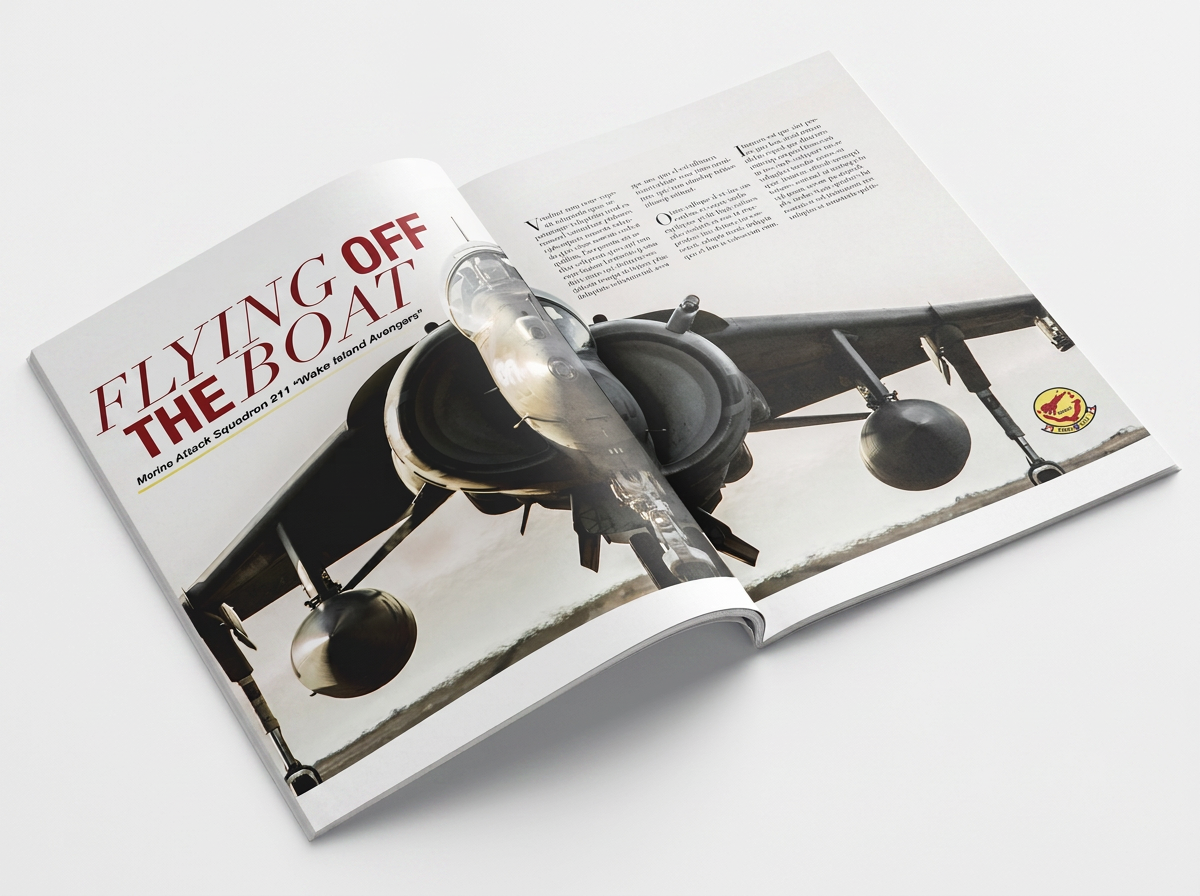
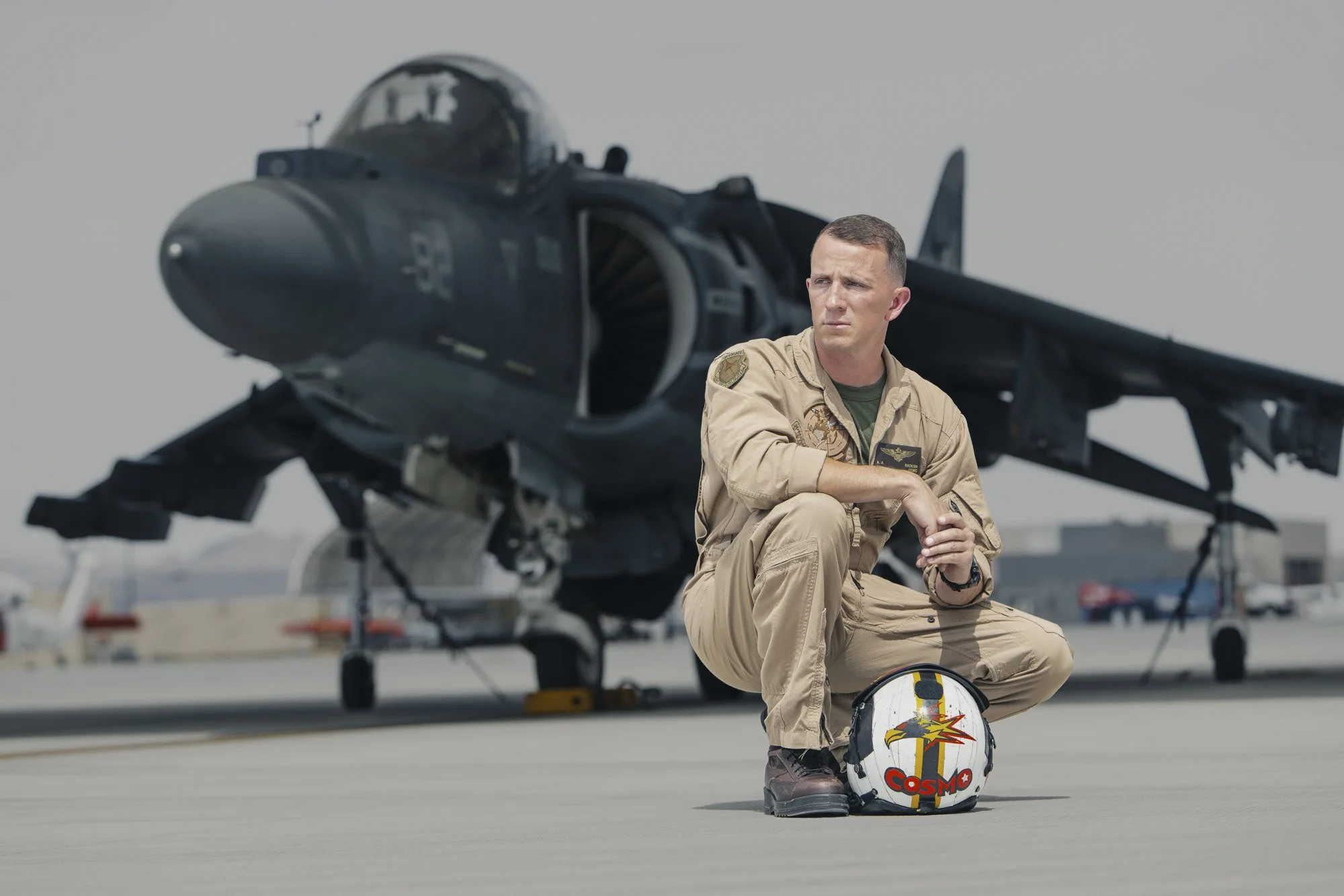
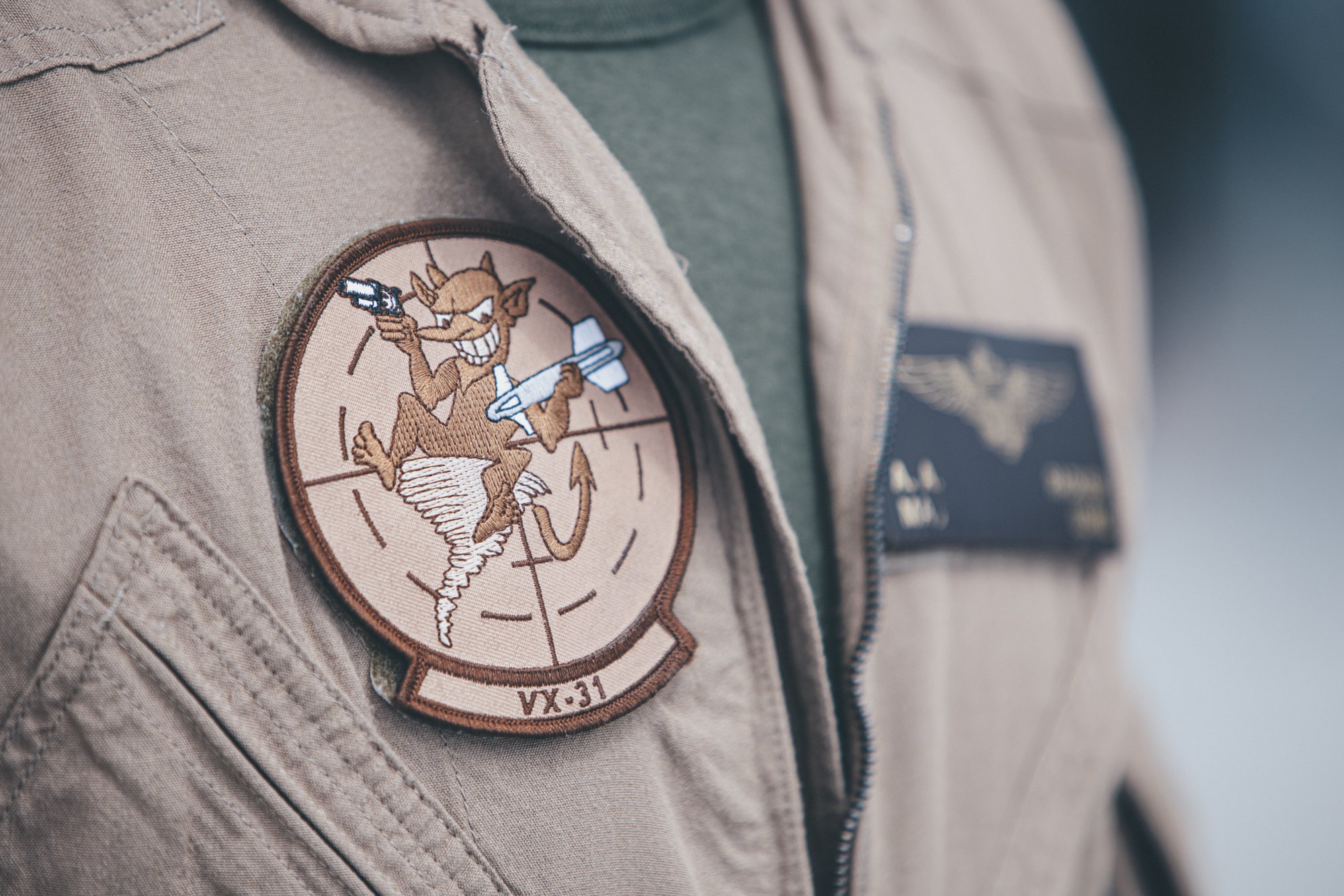
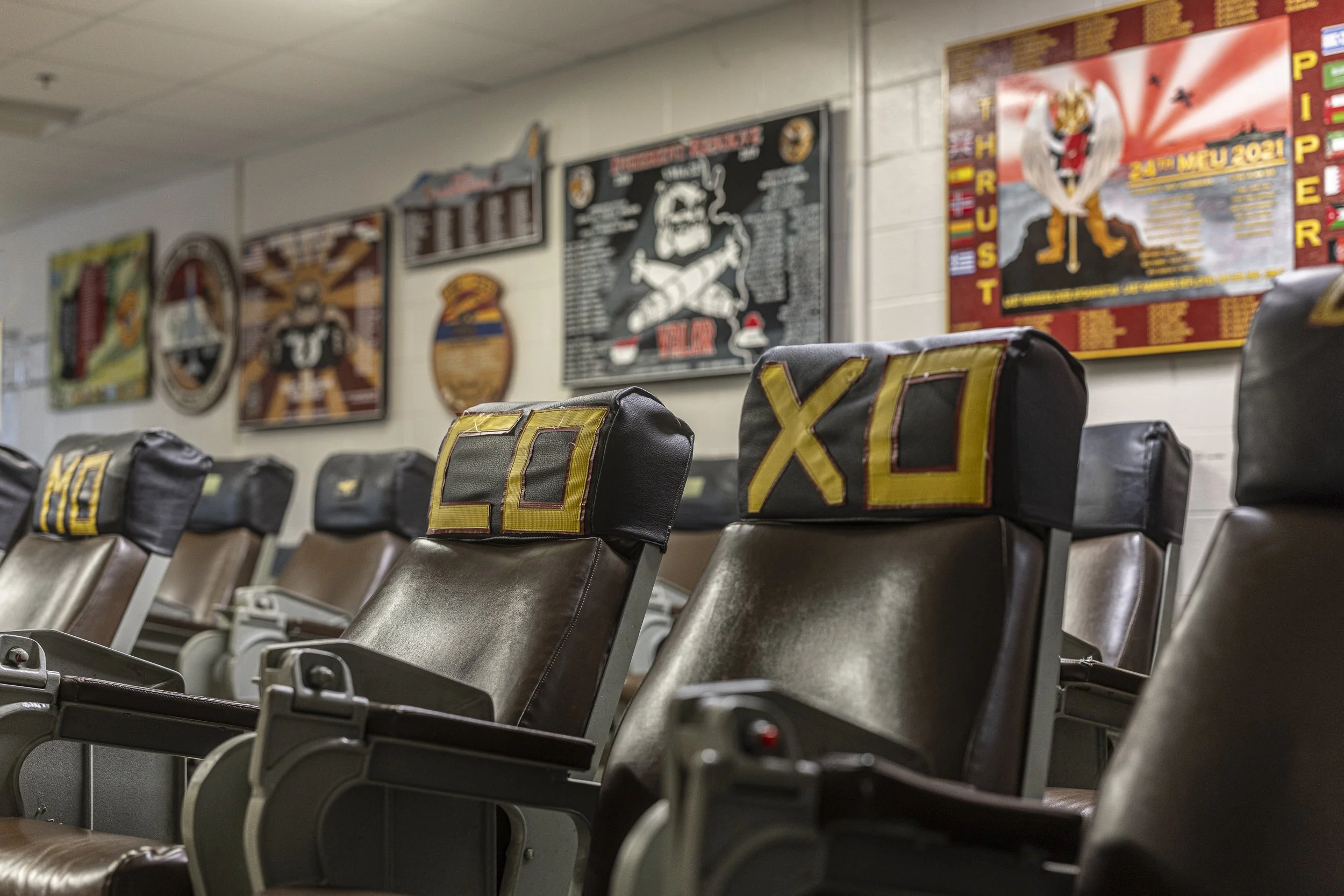
For the last three years, CALLSIGN Publishing writer and photojournalist Alan De Herrera was embedded with the final generation of Marine Corps Harrier squadrons. The reporting went wherever the jets did: into the high desert at China Lake with VX-31 "Dust Devils" for the Harrier's final test mission and sundown ceremony, and aboard USS Makin Island, where VMA-211 launched and recovered jets amid the heat, noise and jet exhaust of a flight deck at sea. It went into the hangars, thick with the smell of fuel and hydraulic fluid, where maintainers turned wrenches through long shifts to keep aging Harriers airborne. It went into the ready rooms as crews debriefed. And it ended on the ramp at Cherry Point on June 3, 2026, when the last Marine Corps Harrier came home for good.
The Marine Corps granted access few outsiders ever get, and the community trusted him with its stories, from the Marines who flew and fixed the first AV-8As, to the program leaders and test pilots who built the AV-8B, to the crews who prepped and flew the last sortie with VMA-223. That trust is the foundation of this book.
TOLD BY THE COMMUNITY
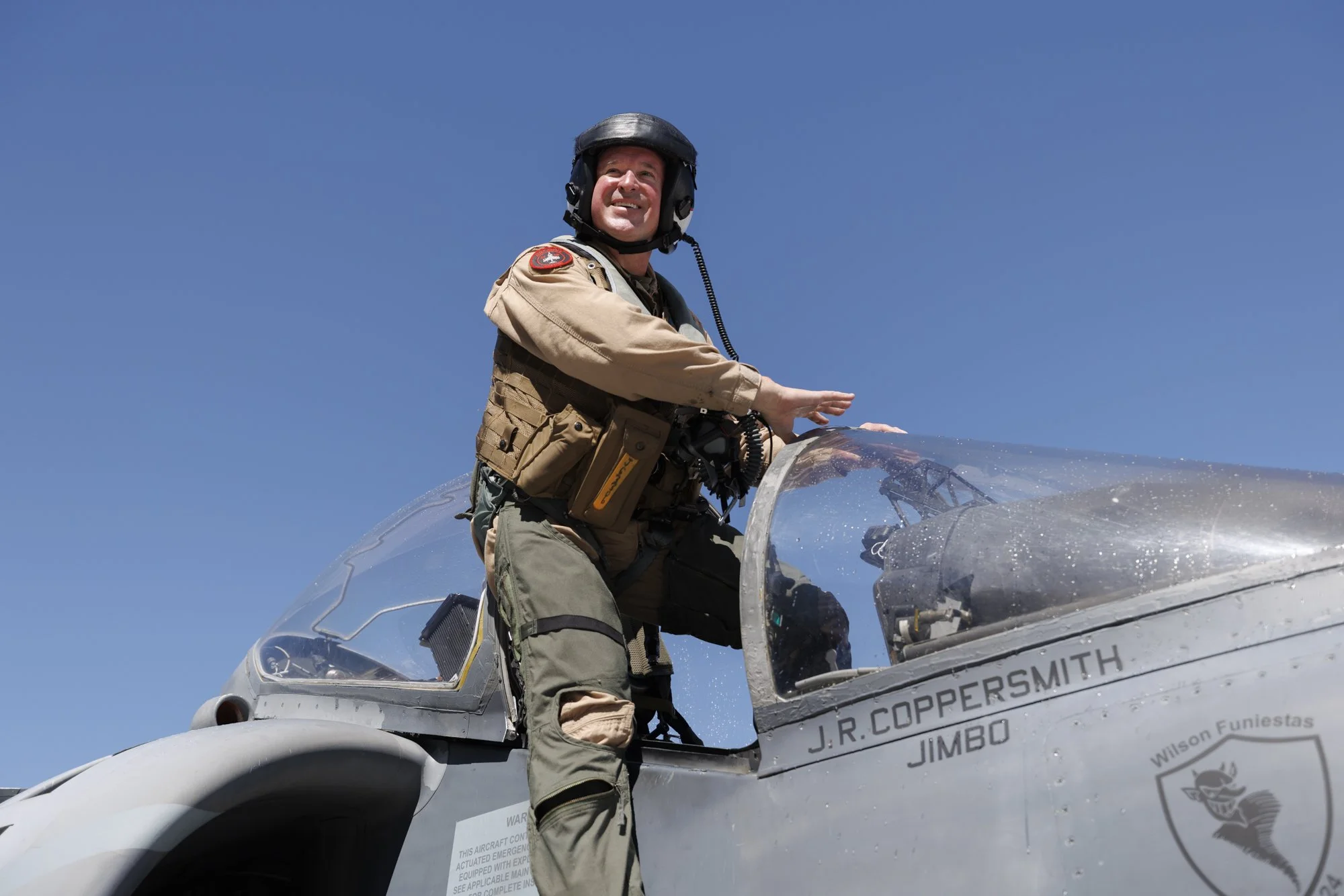
More than 50 recorded interviews form the backbone of this book. LtGen Harry "VULTURE" Blot and LtGen Jon "DOG" Davis sat down to share their memories, as did Harrier pilots from every era: LAWMAN, MONSTER, PUGS, SHINE, TRAPER, PORKY, GUMP, LOOB, MUDDUCK, SPONGEBOB, JIMBO, ZIEG, ZAK, SMELLS and several more. Maintainers, ordnance Marines and crew chiefs added what only they could see from the hangar floor and the flight deck.
Some of the stories are funny. Others are hard to hear. They come from Marines who went to war, buried friends and punched out of dying jets. Their words carry the book, and their memories fill the gaps no official record covers. This is the Harrier story as the community tells it: plainly, proudly and sometimes painfully.
INSIDE THE BOOK
At the heart of the book are nine squadron histories: VMA-211, -214, -223, -231, -311, -331, -513, -542 and VMAT-203, each with its own culture, callsigns and way of doing the job, and each told by the Marines who served in it. The book follows the Harrier to war, from Desert Storm through the Balkans, Iraq, Afghanistan, Libya, Syria and Yemen, through the eyes of the Marines who flew, commanded, fixed and armed those combat sorties. It goes aboard ship for the deck cycles, the night recoveries and the flexible basing that made the Harrier essential to the Marine Corps' expeditionary mission.
It also traces how the Marine Corps built Harrier pilots. When the AV-8A arrived in 1971, the Corps had no two-seat Harrier of its own; only the RAF flew a two-seat trainer, and the first Marine AV-8A pilots went straight from the classroom into a single-seat jet. After the TAV-8A arrived in 1975, the two-seater became the gate every Harrier pilot had to pass through, and washing out was always a real possibility. Test pilots from Patuxent River, VX-4, VX-5, VX-9 and VX-31 at China Lake describe how the jet was wrung out, modified and made more survivable and lethal in combat. And the maintainers and ordnance Marines get their due as the hands that kept the jump jet healthy, armed and in the air.
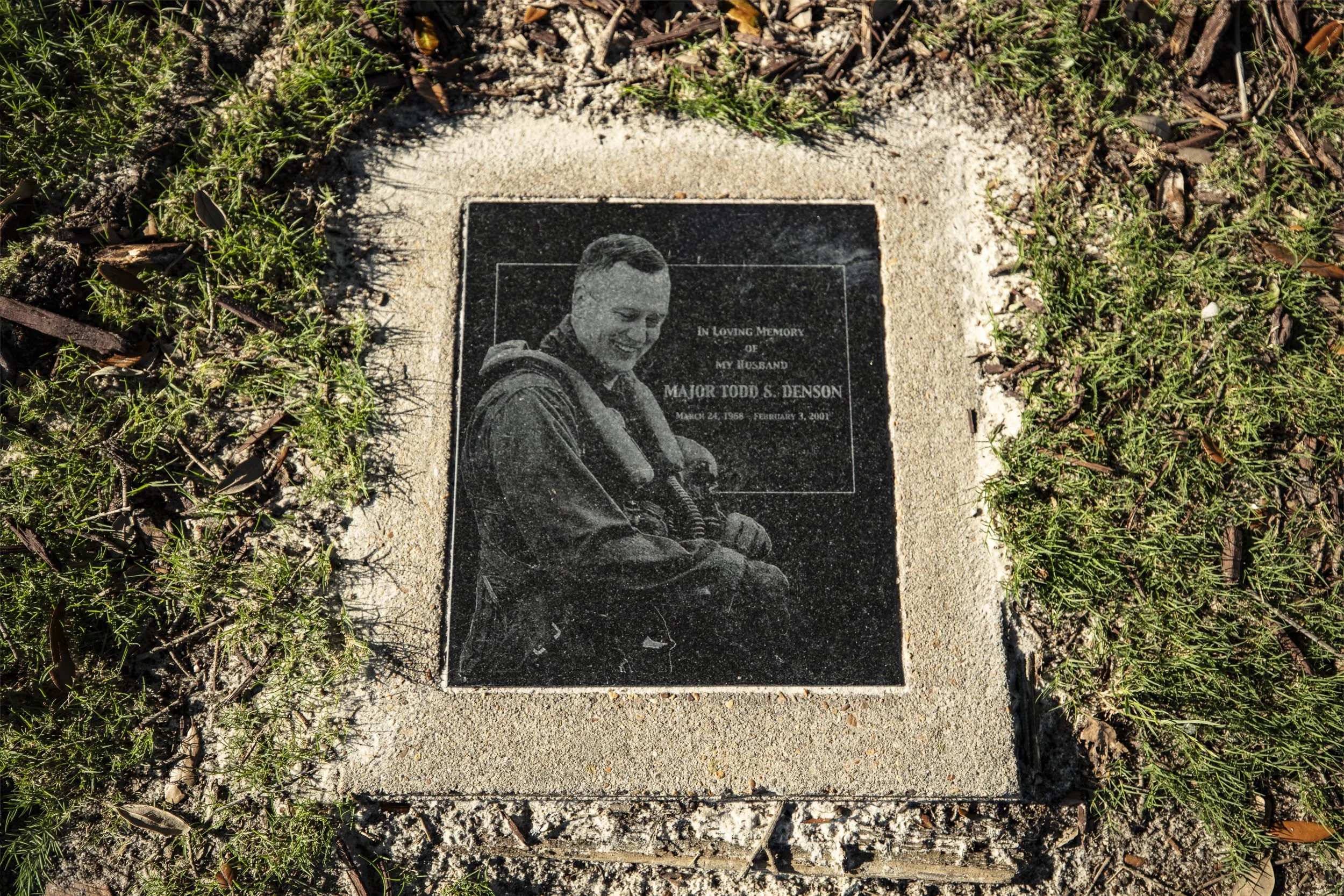
The book honors all 51 members of the Harrier community lost over 55 years, and the ways those who flew west have been remembered. It closes with VMA-223 "Bulldogs" and the final flight, photographed as it happened and told by the pilots who flew the last Marine Corps Harrier sortie.
If you flew it, fixed it, armed it, launched it or waited at home for someone who did, this book belongs to you.
ABOUT THE AUTHOR
Alan De Herrera is a military aviation photojournalist, feature writer, and editor-in-chief of CALLSIGN Publishing, with more than 20 years covering the military. His work has appeared in Smithsonian Air & Space, Skies Magazine, The Hook, Military Times and other publications.
The CALLSIGN Kickstarter campaign launches in November 2026 to fund the printing of this first edition. Waiting-list members are notified first and get access to a limited early-bird price and bonus materials in the first 48 hours. First edition ships in early Q2 2027.

AV-8 HARRIER SQUADRONS
-
![Black and white emblem with a playing card (Ace of Spades) in the center and the text VM A-231 beneath it.]()
VMA-231
ACE OF SPADES
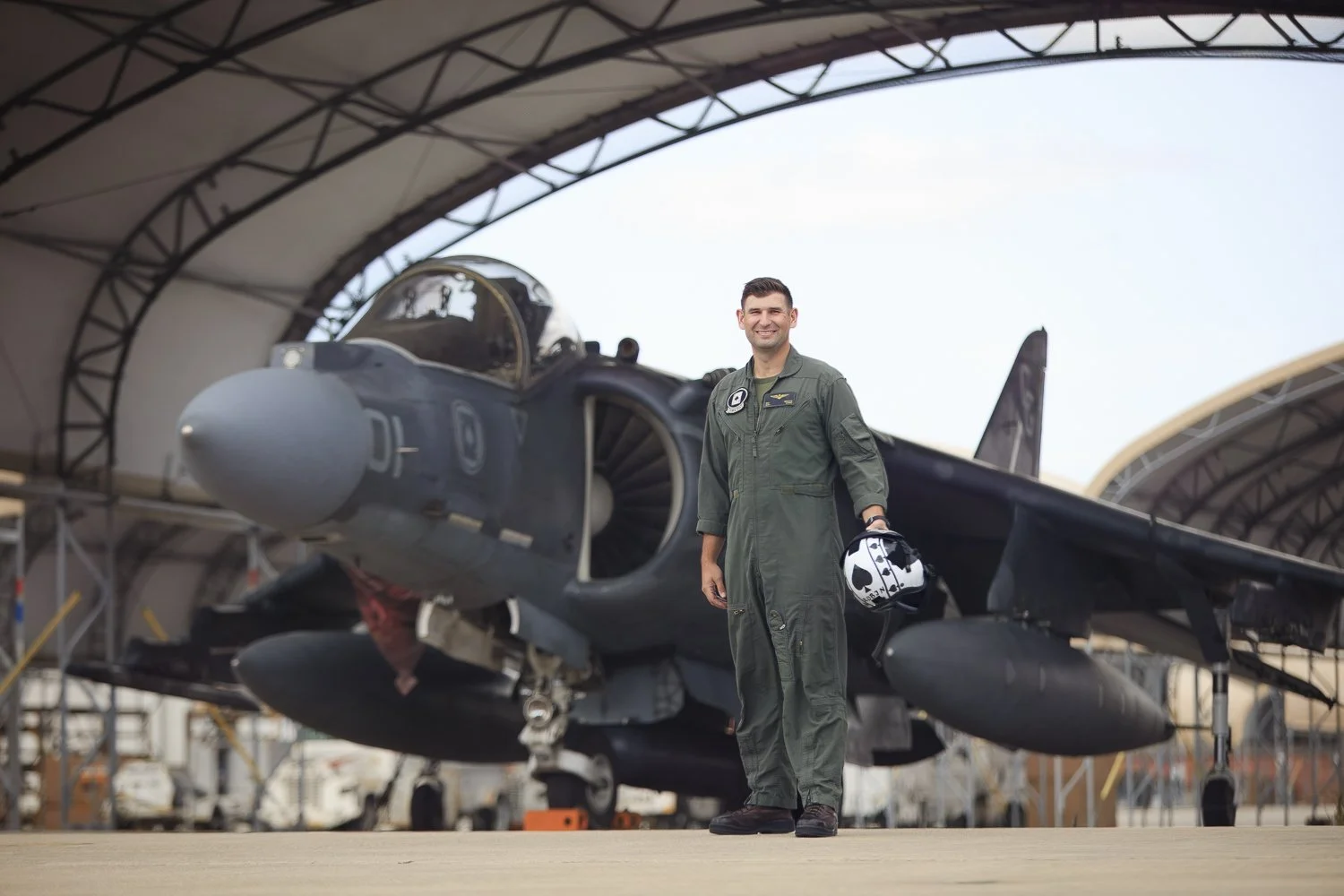
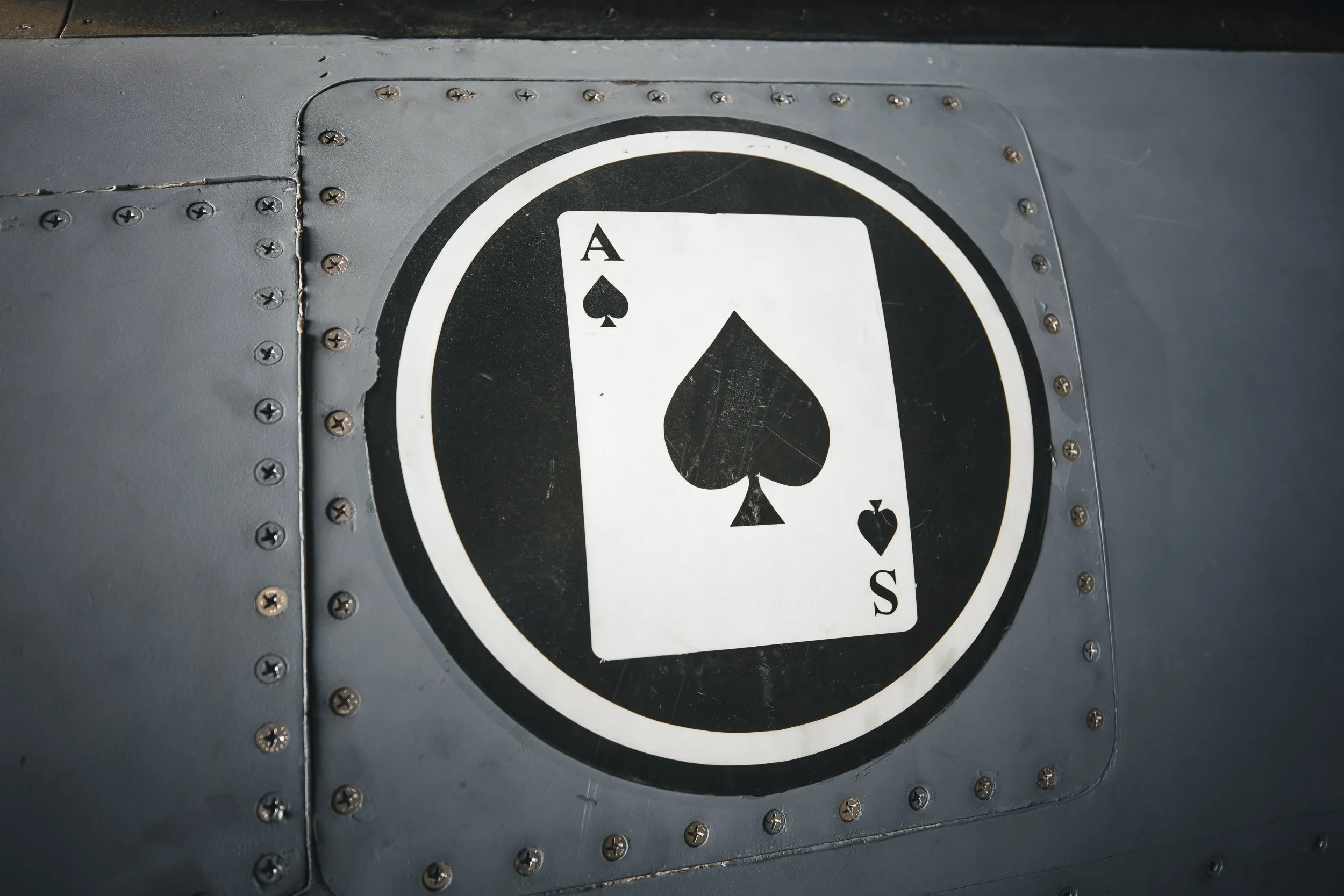
Marine Attack Squadron 231, the “Ace of Spades,” is the oldest flying squadron in the U.S. Marine Corps, with roots back to 1919 and combat lineage from the Northern Bombing Group in World War I.Over the past century it has evolved through multiple aircraft and designations—from early observation and scout-bombing roles at Midway and Guadalcanal to AV-8B Harrier close air support in modern conflicts—cementing a reputation for pioneering Marine aviation and sustained frontline service.
-
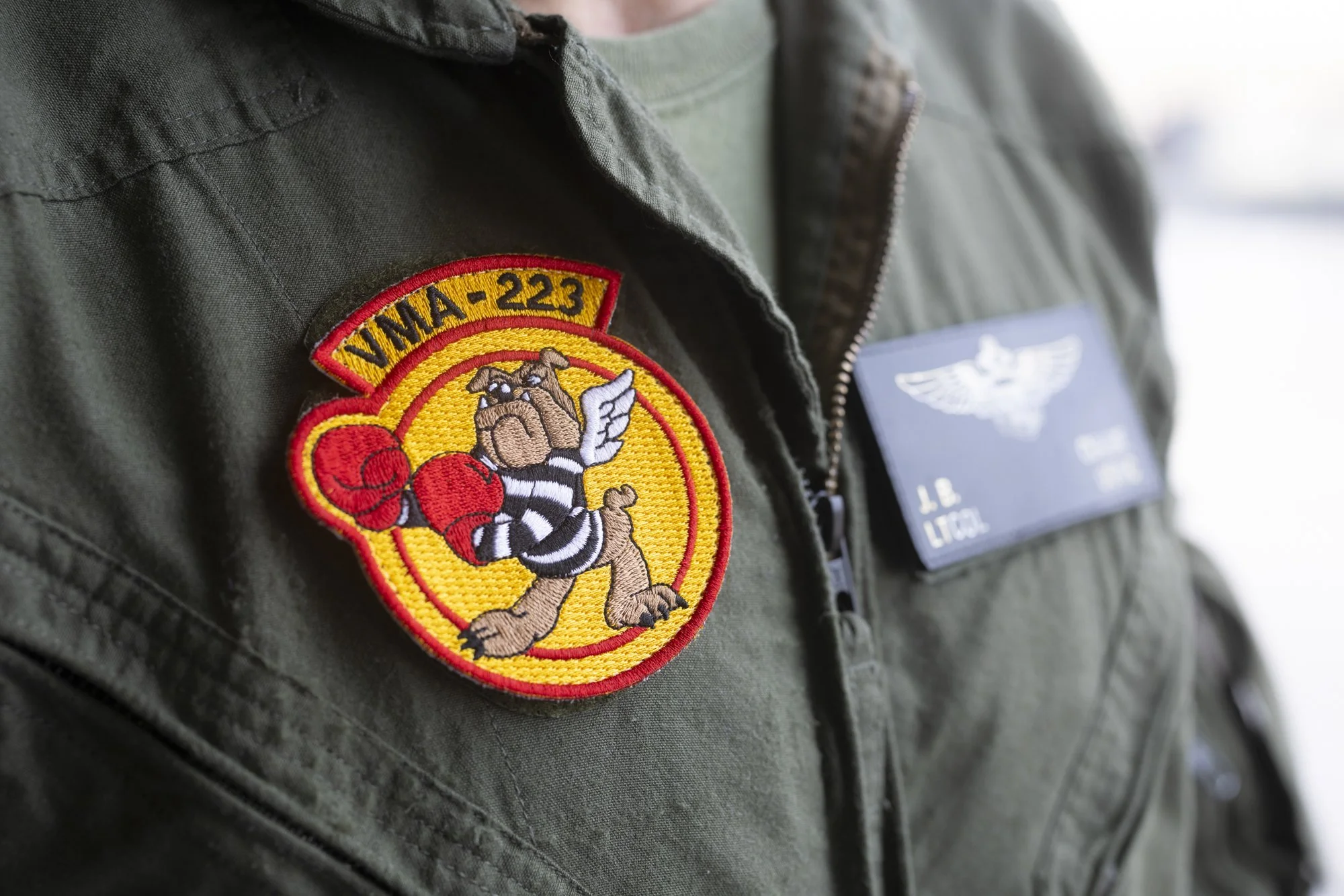
![A cartoon bulldog with wings wearing boxing gloves and striped shirt inside a circular emblem with red and yellow rings, and the text 'VMA - 223' at the top.]()
VMA-223
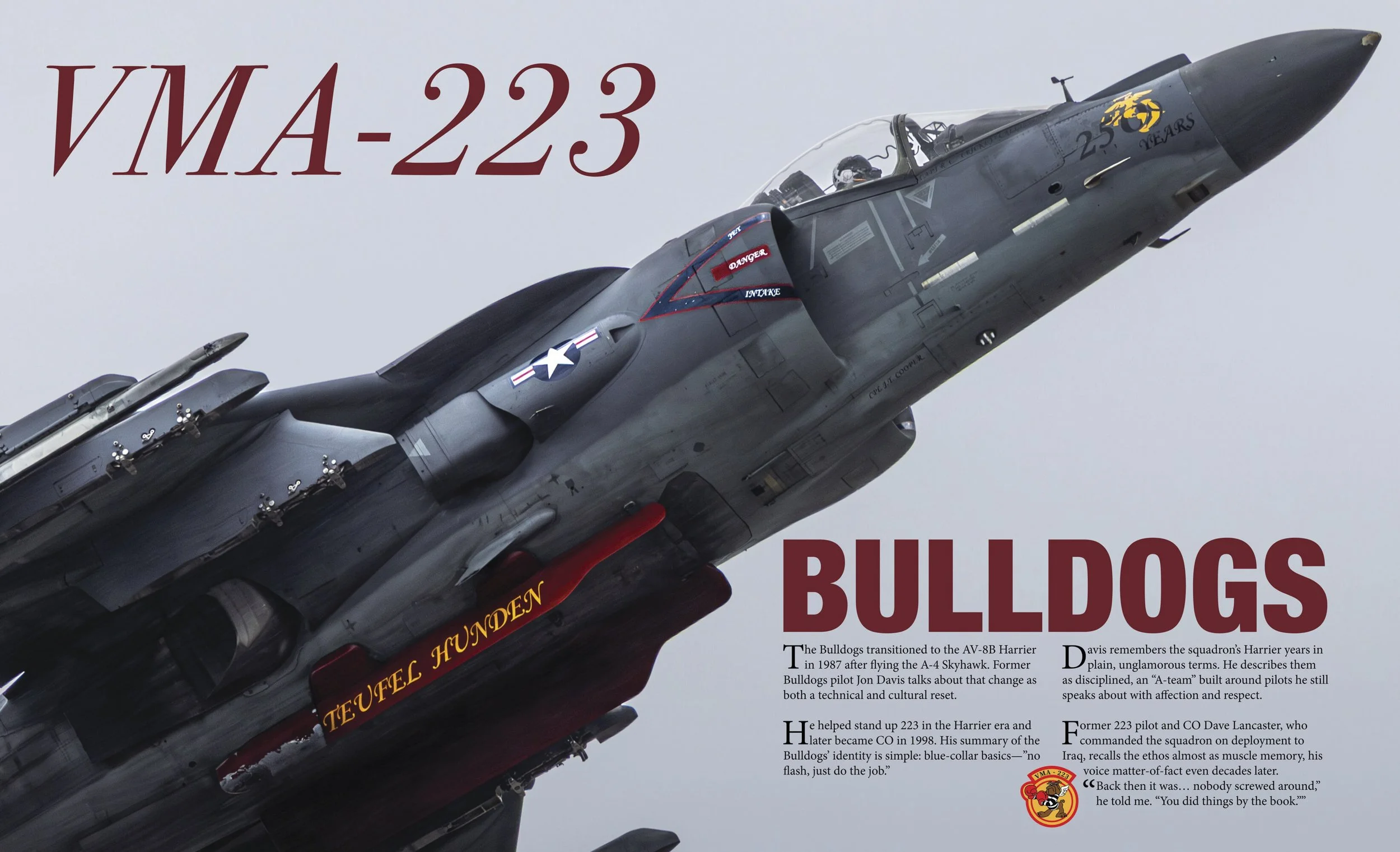
BULLDOGS
Marine Attack Squadron 223, the “Bulldogs,” was commissioned on 1 May 1942 at MCAS Ewa, Hawaii, and first saw combat in the Pacific flying F4F Wildcats from Henderson Field during the Guadalcanal campaign.
Over subsequent decades, the squadron transitioned through Corsairs, jets, Skyhawks, and AV-8B Harriers, building a distinguished record from World War II through Vietnam and into modern expeditionary close air support.
-
![Military space badge featuring an owl with wings spread, set against a background divided into night sky with stars and moon on the left, and daytime sky with clouds and mountains on the right, with a gold border and the text 'VMA-513' at the bottom.]()
VMA-513
FLYING NIGHTMARES
Marine Attack Squadron 513, the “Flying Nightmares,” was a Marine AV-8B Harrier attack squadron whose lineage began in 1944 as VMF-513, a World War II F6F Hellcat unit that later became a pioneering Marine night‑fighter and jet squadron in the Korean War.
Over nearly 70 years it evolved through night‑fighter, fighter‑attack, and Harrier roles, earning its nickname for devastating night operations before decommissioning in 2013 after distinguished service from Okinawa and Korea to Vietnam, Desert Storm, Afghanistan, and Iraq.
-
![A Black Sheep militay-style patch with a starry background, a ram's head, and a star. The top has a blue aircraft or drone, and the bottom has the text "VMA-214 BLACKSHEEP."]()
VMA-214
BLACK SHEEP
Marine Attack Squadron 214, the “Black Sheep,” traces its origins to VMF-214 in World War II, where Pappy Boyington’s Corsair‑equipped misfits became legendary for aggressive fighter operations in the South Pacific and earned a Presidential Unit Citation.
In the postwar era the squadron transitioned into an attack role as VMA-214, flying jets and later AV-8B Harriers in Korea, Vietnam, and modern conflicts while preserving the Black Sheep reputation for high-tempo, front‑line close air support.
-
![A circular emblem featuring the head of a roaring tiger with blue eyes, black and orange striped fur, visible teeth, and an open mouth. The emblem has a yellow banner at the bottom with the text 'VMA-542' and yellow lightning bolts on either side.]()
VMA-542
FLYING TIGERS
Marine Attack Squadron 542, the “Tigers,” began in 1944 as a Marine night‑fighter Hellcat unit, later flying F3D Skyknights and F-4 Phantoms in Korea and Vietnam before transitioning to AV-8 Harriers and becoming one of the Corps’ premier V/STOL light attack squadrons.
Redesignated VMFA-542 with the F-35B, the Tigers have carried their close air support and strike legacy from Desert Storm and Afghanistan into the fifth‑generation era, recently completing high‑tempo F-35 combat deployments from the U.S. East Coast.
-
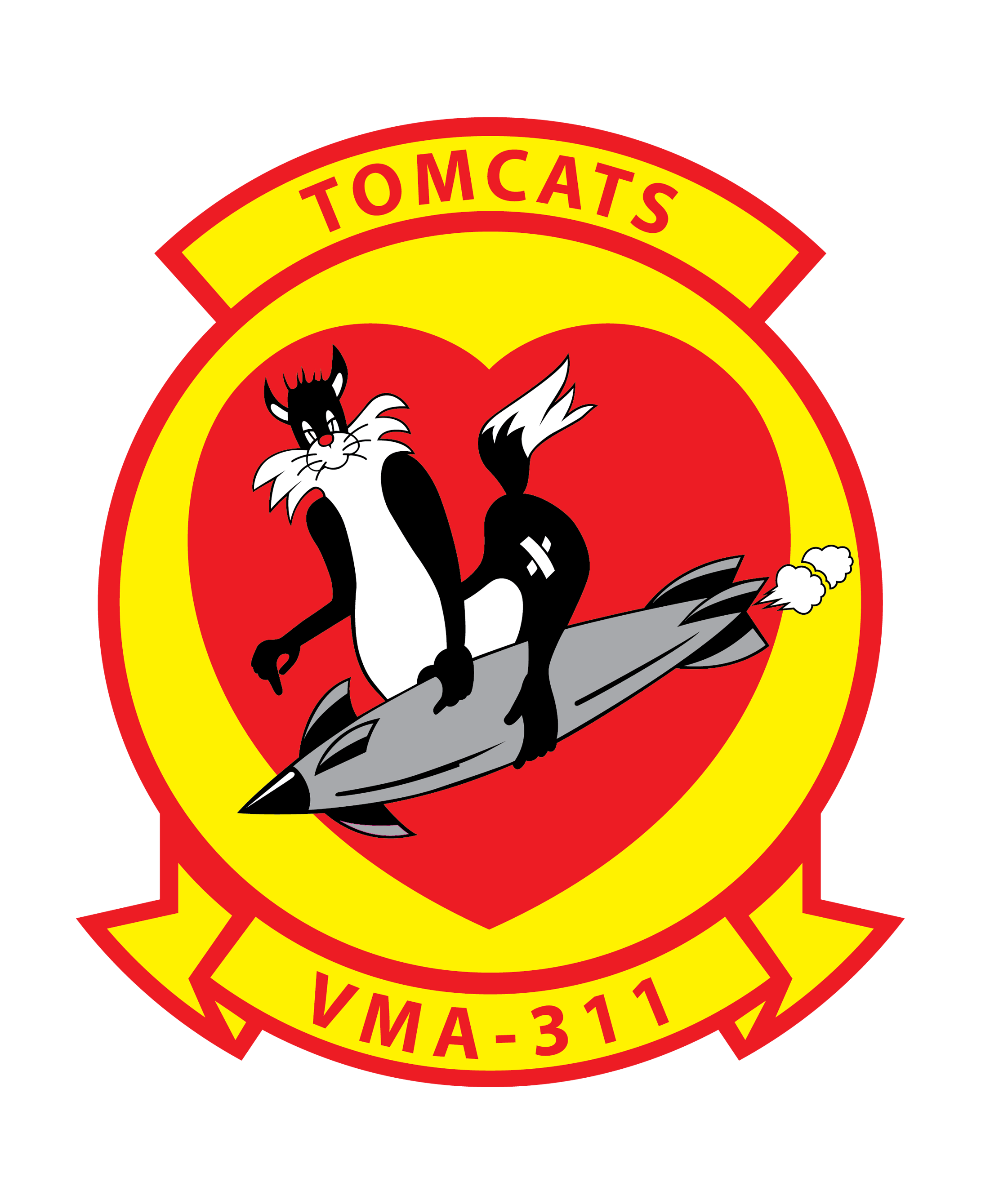
![A logo with a red shield shape featuring a heart at the center. Inside the heart, there is a cartoon black and white cat riding a gray missile with a puff of smoke at the back. The banner at the top reads "TOMCATS" in red letters on a yellow background, and the lower banner reads "VMA-311" in red letters on a yellow background.]()
VMA-311
TOMCATS
Marine Attack Squadron 311, the “Tomcats,” was commissioned in 1942 and first made its name flying F4U Corsairs in the Pacific, pioneering Marine fighter dive‑bombing and later becoming the first land‑based Marine jet squadron in combat during Korea.
Over the following decades it evolved through Panthers, Skyhawks, and AV-8B Harriers, racking up record combat sortie counts in Vietnam, earning multiple Attack Squadron of the Year awards, and achieving several “firsts” in Desert Storm, Afghanistan, and Iraq before its legacy continued in the F-35 era.
-
![]()
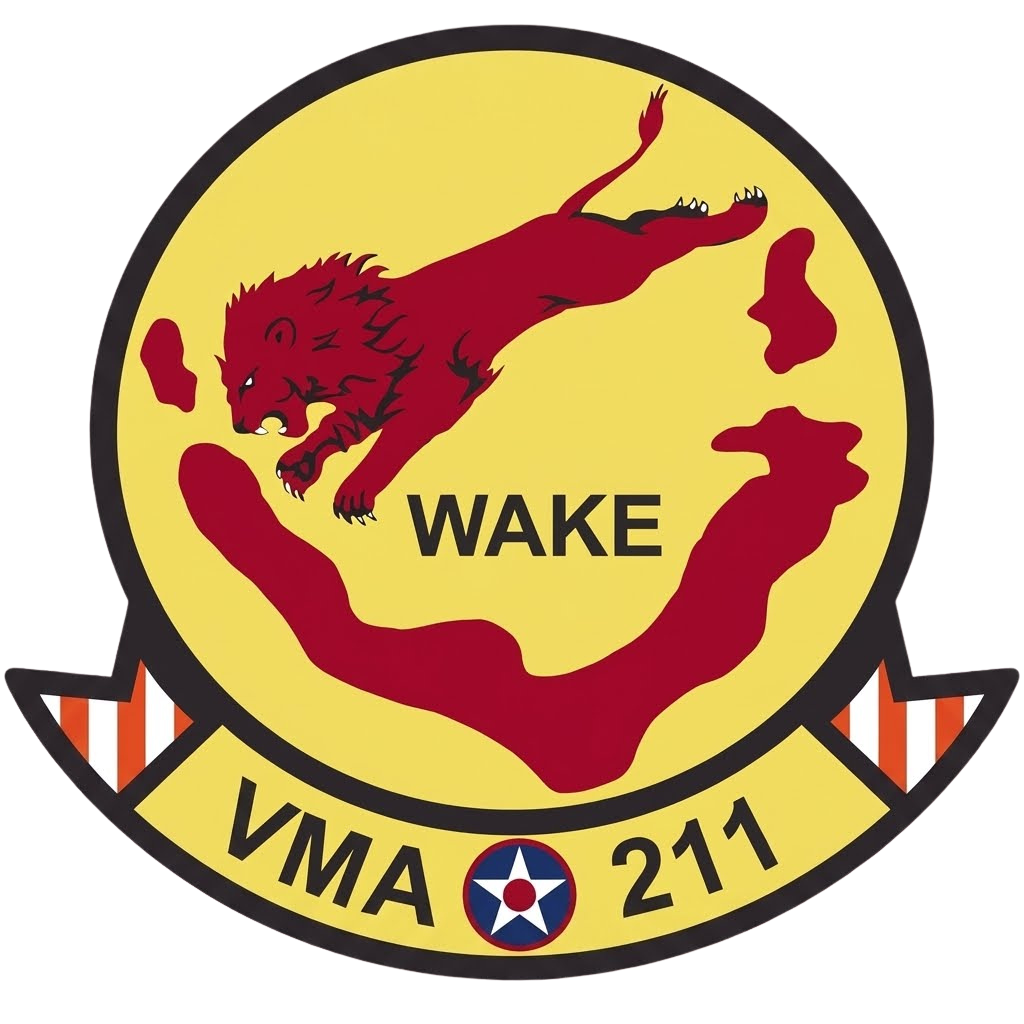
VMA-211
AVENGERS
Marine Attack Squadron 211, the “Wake Island Avengers,” traced its roots to 1937 and built a long legacy in Marine Corps aviation before becoming closely associated with the AV-8B Harrier.
After years of flying aircraft such as the Skyraider and Skyhawk, the squadron transitioned to the Harrier in June 1990, giving it a vertical/short takeoff and landing capability well suited for expeditionary Marine operations. VMA-211 later introduced the AV-8B Harrier II+ in 2000 and flew the Harrier in combat and training deployments until its final AV-8B flight in May 2016, when the squadron transitioned to the F-35B Lightning II.
-
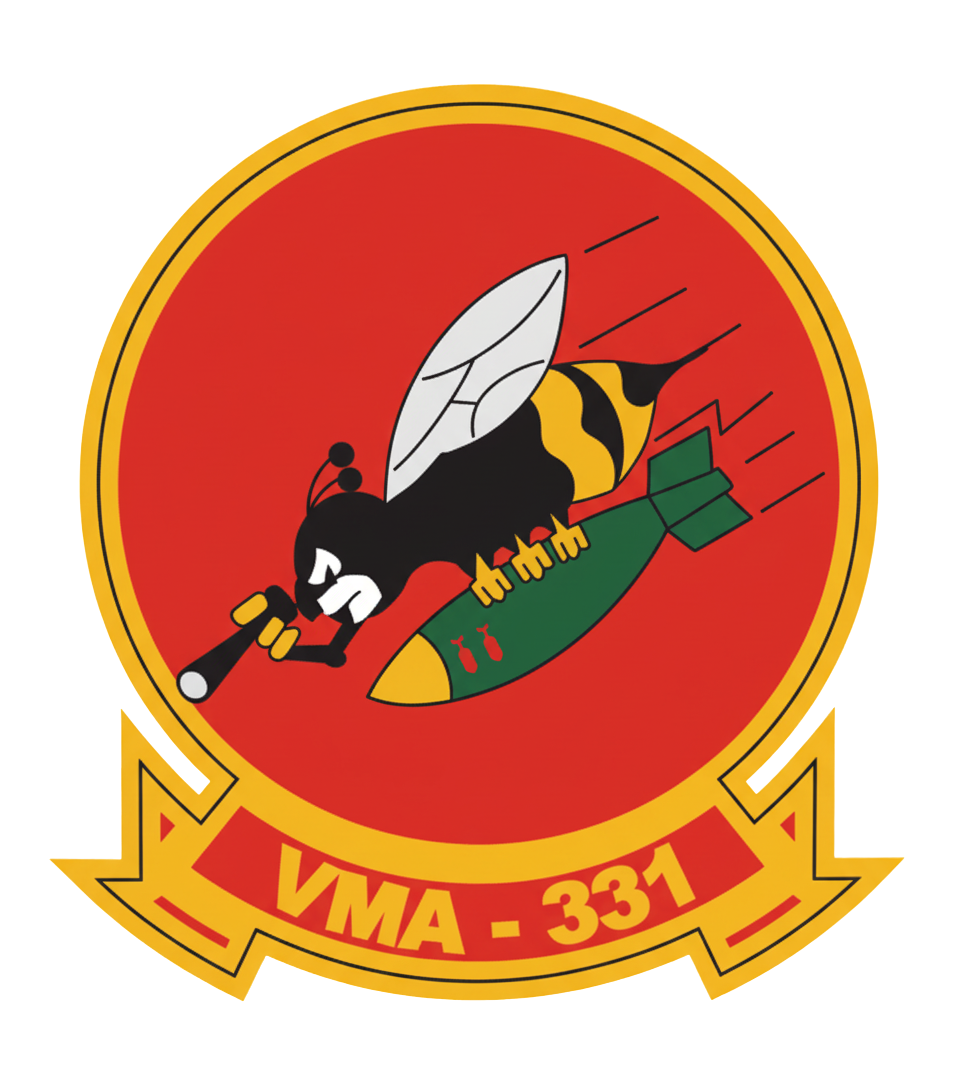
![A cartoon logo of a wasp holding a bomb with a burning fuse, sitting on a green missile, set against a red background with a yellow border, and the text 'VMA - 331' on a banner below.]()
VMA-331
BUMBLEBEES
Marine Attack Squadron 331, the “Bumblebees,” began in 1943 as VMSB‑331 flying SBD Dauntless dive bombers in Central Pacific campaigns, later redesignated and transitioning through Corsairs and jets as it shifted from scout‑bomber to fighter‑bomber and attack roles.
In the Harrier era it became the first fully operational AV‑8B II squadron and the first Marine attack unit to fly AV‑8B combat sorties from an amphibious assault ship during Desert Storm, before being deactivated in 1992 as part of the post–Cold War drawdown.
-
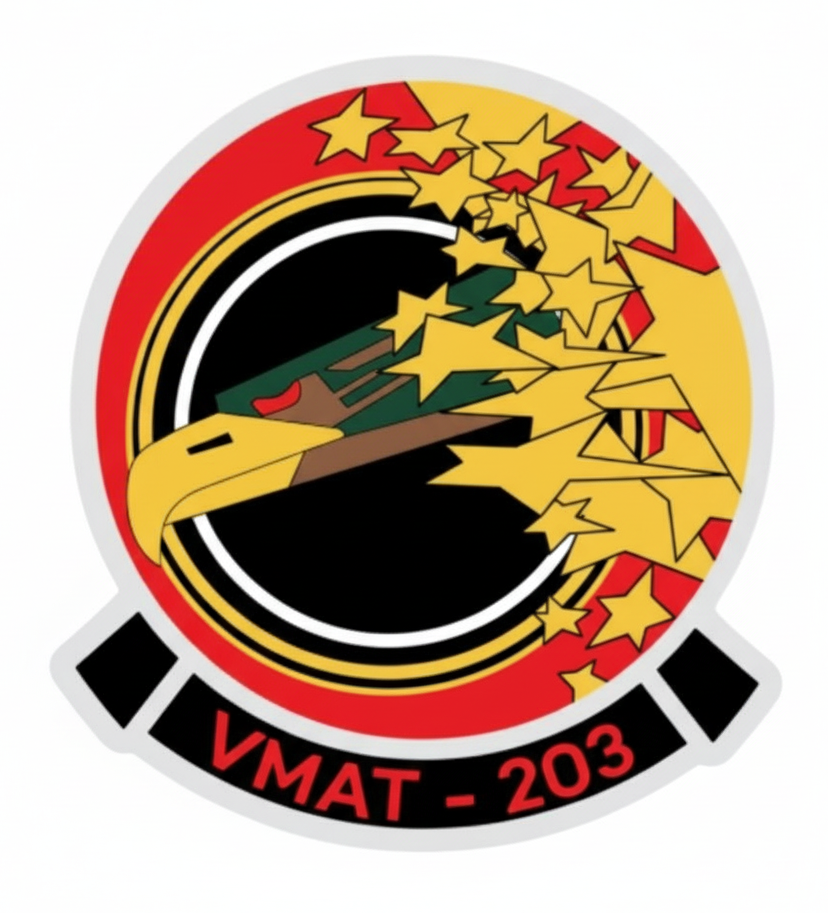
![VMAT - 203 Hawks]()
VMAT-203
HAWKS
Marine Attack Training Squadron 203, the “Hawks,” originated from post‑war Marine Training Squadron 1 in 1947 and evolved through prop and jet trainers before being redesignated VMAT‑203 in 1972 with a light‑attack training mission in the A‑4 Skyhawk.
From the mid‑1970s onward it became the Marine Corps’ dedicated Harrier training squadron—progressing from AV‑8A/C to AV‑8B/TAV‑8B—qualifying generations of fleet AV‑8B pilots until its deactivation in 2021.
-
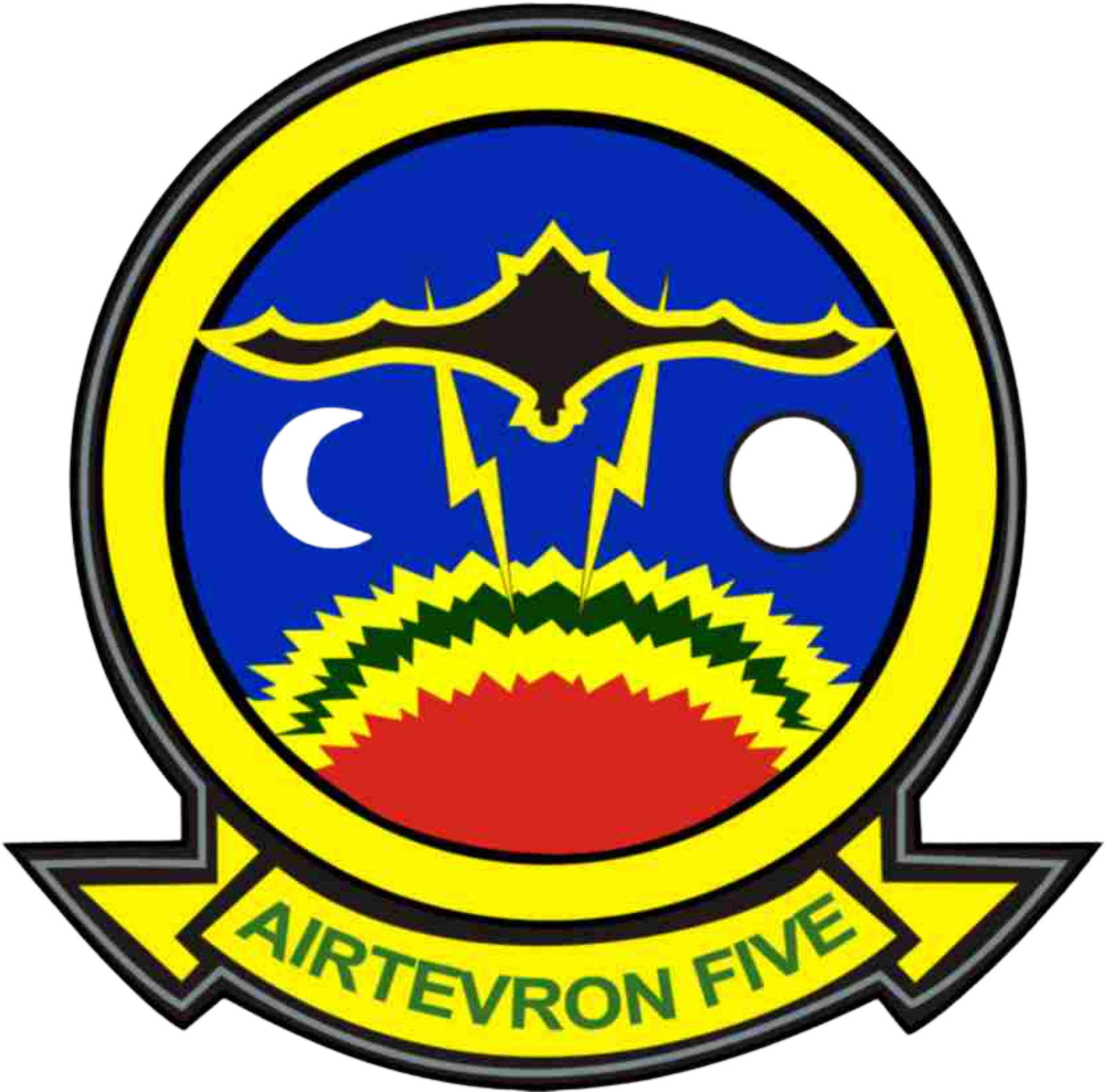
![VX-5 VAMPIRES]()
VX-5
VAMPIRES
From 1978 to 1995, Air Test and Evaluation Squadron Five (VX-5) played a pivotal role in transforming the Marine Corps' vertical flight capabilities from an experimental concept into a lethal, frontline reality. The squadron's Harrier legacy began at NAWS China Lake in November 1978 with the arrival of the first-generation AV-8C. This foundation paved the way for August 1984, when VX-5 accepted the second-generation McDonnell Douglas AV-8B Harrier II.
As the decade progressed, VX-5 heavily expanded the aircraft's mission profile by spearheading operational testing for the AV-8B Night Attack variant in the late 1980s. This highly influential era of testing drew to a close during the 1994–1995 military restructuring, when VX-5 merged with VX-4 to form VX-9.
-
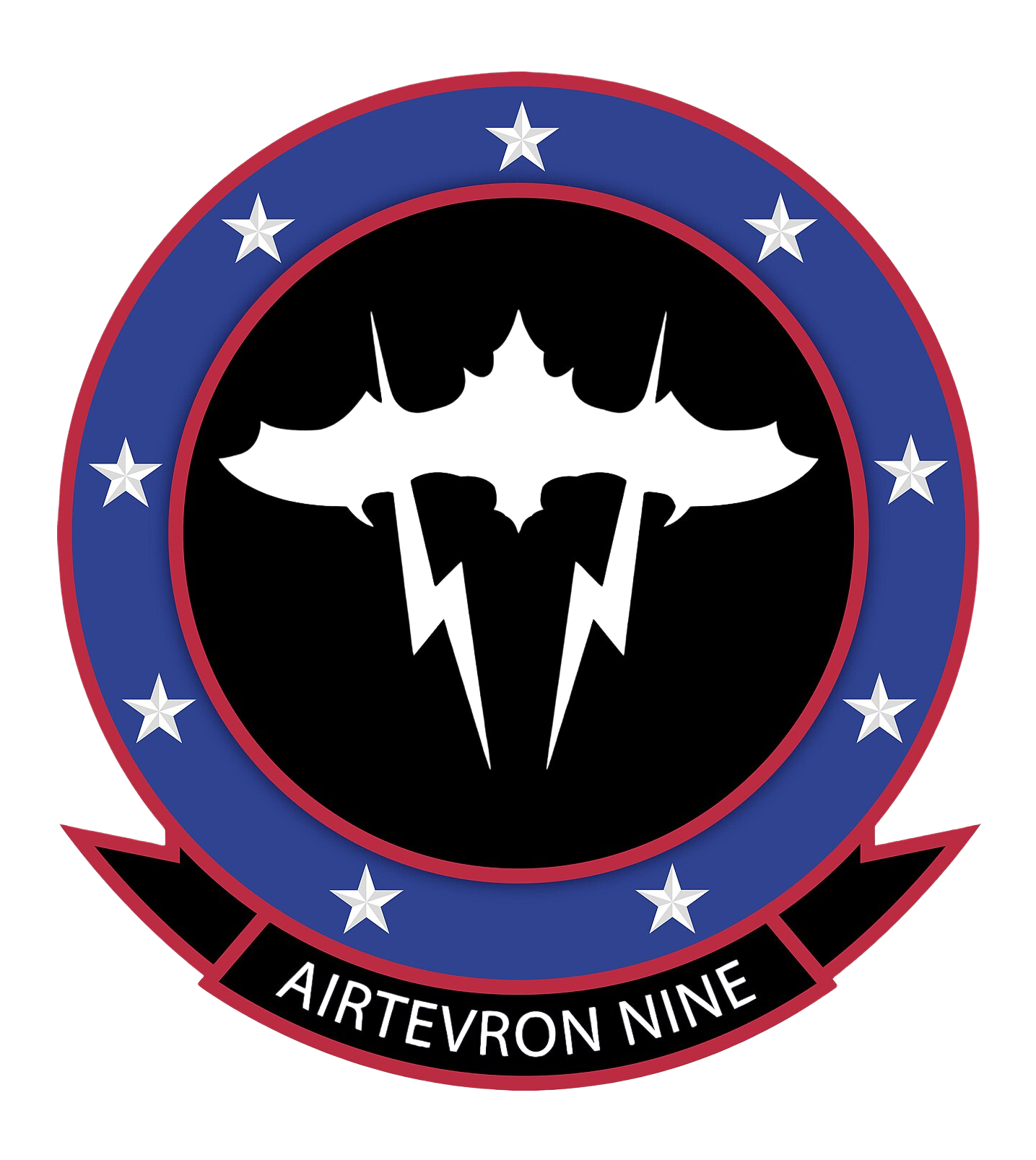
![VX-9 Vampires]()
VX-9
VAMPIRES
Air Test and Evaluation Squadron 9’s Harrier legacy lives upstream of VX‑31’s China Lake work, in the way VX‑5/VX‑9 wrote the Navy–Marine Corps playbook for attack and strike‑fighter weapons employment that the AV‑8B community later drew from.
While VX‑31 handled hands‑on Harrier developmental test, VX‑9’s broader mission—operational test, weapons/tactics development, and integrating new precision and EW capabilities across fleet attack aircraft—shaped the joint environment the Harrier grew up in, ensuring its ordnance, survivability concepts, and later fifth‑gen tactics were validated against the same Vampire standard applied to Navy strike‑fighters.
-
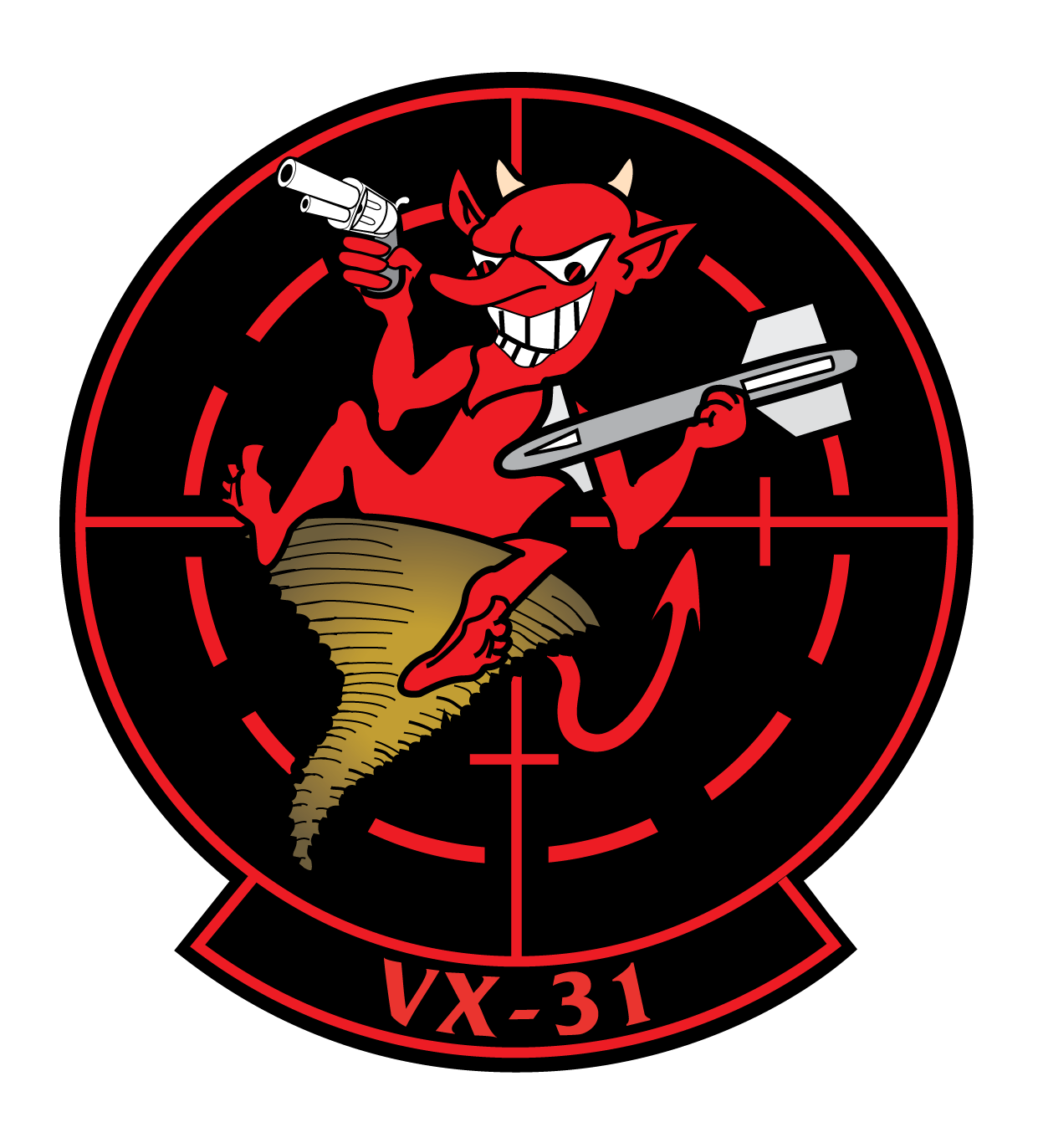
![VX-31 Dust Devils]()
VX-31
DUST DEVILS
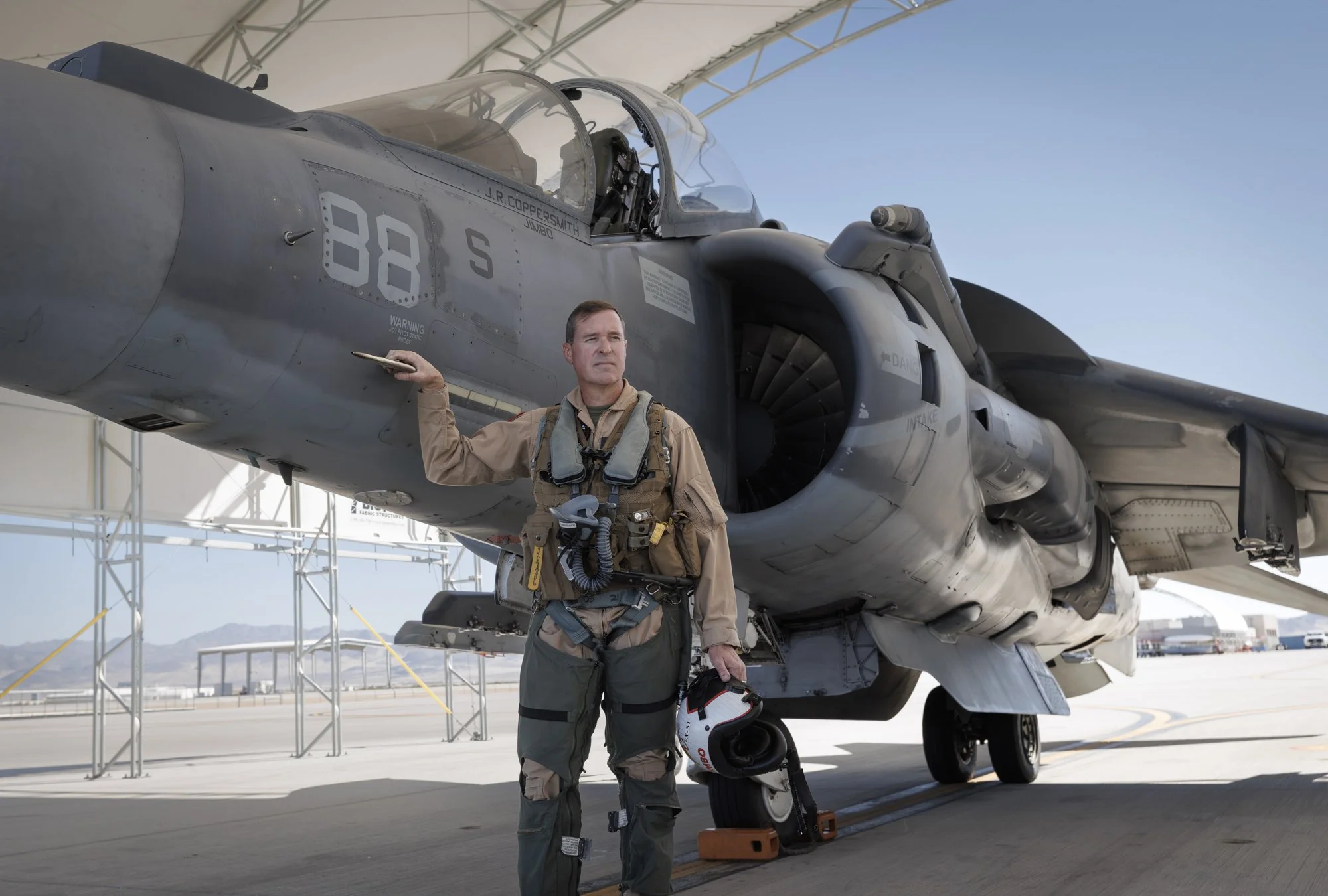
Air Test and Evaluation Squadron 31, the “Dust Devils,” at China Lake spent more than four decades wringing out the AV‑8B Harrier, turning it from a quirky V/STOL jump jet into a safer, more lethal, and more reliable combat attack aircraft through relentless developmental testing of flight controls, weapons, sensors, and tactics.
Their Harrier work—from early day‑attack variants through night‑attack and radar‑equipped AV‑8B II—culminated in a 2025 “sundown” flight that closed the book on vertical‑lift test at China Lake, but left the fleet with a matured jet whose procedures, software, and survivability fixes were written in Dust Devil data and desert dust.
HARRIER Interviews
HARRIER
Interviews
Harrier Legacy Project
Interviews that preserve the Harrier’s iconic
55-year history.
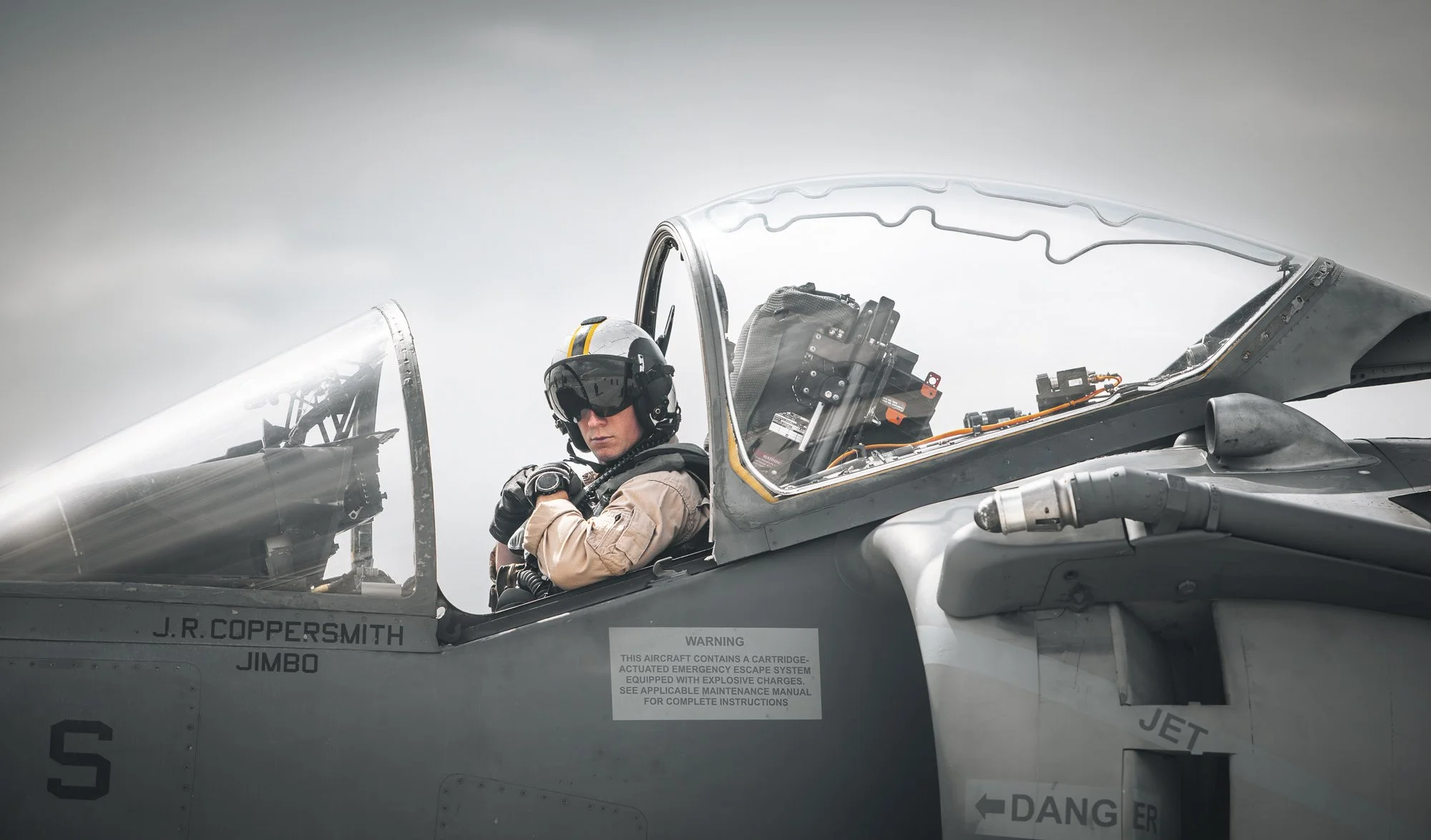
Were you part of the Harrier community?
The Harrier Legacy Project is seeking firsthand accounts, photographs, deployment material, squadron memorabilia, maintenance stories, flight records, and personal recollections from the Marines, sailors, and civilians who supported the AV-8 Harrier. Whether your connection was on the flight line, in the cockpit, in maintenance or aboard a boat, your story may help preserve this history and we would be very interested in interviewing you for our project.
The Interview Process
-
Thank you for your interest in sharing your story with the Harrier Legacy book project.
Your firsthand account is a vital piece of this history. Before we schedule your interview with CALLSIGN Publishing Editor-in-Chief Alan De Herrera, we ask that you send us a short introductory email so we can prepare and tailor our conversation to your unique experience.
What to Include in Your Email
• Short bio — Who you are, your background, and how you came to serve with the Harrier community.
• Years active with the Harrier — The dates or range of years you worked with or flew the AV-8.
• Squadron(s) — Every squadron you were part of during your time with the Harrier program.
• Deployments — Where and when you deployed, and how much time you spent deployed overall.
• Combat service — Whether you served in combat operations, and if so, a brief note on which conflict(s) or operations.
• Role — Your specific job (pilot, maintainer, ordnance, leadership, etc.) and rank at the time.
-
Single-session recorded interview with CALLSIGN Publishing Editor-in-Chief Alan De Herrera.
• Duration: Approximately 60–90 minutes, conducted in person, by video call, or by phone—whichever works best for you.
• Format: A relaxed, conversational discussion, not a formal Q&A script. Alan will guide the conversation, but there’s plenty of room to go where your memories take you.
• Recording: The session will be audio-recorded to ensure accuracy when your story is transcribed and adapted for the magazine and archive. You may request a copy of the interview.
• Personal materials: If you have photos, flight logs, patches, or other memorabilia, feel free to have them nearby—Alan may ask you to describe or reference them during the conversation.
-
Parts of your interview will become part of the larger fabric of the Harrier Legacy story. As we transcribe and review your conversation, we’ll identify meaningful segments and organize them by theme, weaving your voice into the chapters where it fits best alongside the accounts of other pilots, maintainers, ordnance crews, and leadership.
• Stories and firsthand accounts — Memorable missions, deployments, and personal experiences may be featured in narrative chapters that bring the Harrier’s operational history to life.
• Reflections and perspective — Thoughts on camaraderie, sacrifice, career impact, and the meaning of your service may appear in chapters focused on the human and cultural legacy of the program.
• Technical insight — Details on aircraft systems, maintenance procedures, ordnance loading, or flight operations may be used in chapters exploring the Harrier’s engineering and evolution.
• Leadership and lessons learned — Command decisions, training philosophy, or squadron culture may inform chapters on leadership within the Harrier community.
Quotes and excerpts from your interview may be placed across multiple chapters if your experience speaks to more than one theme. We’ll always preserve context and intent when using your words, and the full, unedited interview will also be retained in our archive as part of the permanent historical record—regardless of which portions make it into the published magazine. And we can make a copy available to you.
This approach lets us tell a richer, multidimensional story of the Harrier community, one where individual voices connect to form a complete picture rather than a single narrow account.
Set-up an Interview
CALLSIGN Publishing— Interview Quotes
The Harrier Legacy Project is presented in partnership with
THE HARRIER ASSOCIATION
Preserving the Legacy and Honoring the Service of the
AV-8 Harrier Community
CALLSIGN Publishing partnered with The Harrier Association—a non-profit built and run by the Harrier community itself—to ensure this story is told with the accuracy, technical rigor, and justice it deserves. The Association serves as an advisory partner throughout the project, connecting us directly with the Marines who flew and maintained the Harrier and providing the community insight and technical expertise needed to get it right. Together, we’re creating a story truly by the community, for the community—especially as the aircraft’s operational chapter closes after 55 years of service.
The Harrier Association is a professional, not-for-profit organization dedicated to preserving the history, traditions, and camaraderie of the AV-8 Harrier community. It honors the aircraft’s role in military aviation history and celebrates the pilots, maintainers, and support personnel who served with distinction.
The Association’s mission is to foster connections among members, support members and their families, and advance public understanding of the Harrier’s significance in military aviation history. Through its programs, it works to ensure this heritage endures for future generations. As a 501(c)(19) veterans’ organization devoted to camaraderie, education, and historical preservation, the Association shares CALLSIGN’s core purpose: turning firsthand memory into a lasting, accurate record of the Harrier community’s place in Marine Corps aviation history.
THE HARRIER ASSOCIATION
The Harrier Legacy Project is presented in partnership with
Preserving the Legacy and Honoring the Service of the AV-8 Harrier Community
CALLSIGN Magazine partnered with The Harrier Association—a non-profit built and run by the Harrier community itself—to ensure this story is told with the accuracy, technical rigor, and justice it deserves. The Association serves as an advisory partner throughout the project, connecting us directly with the Marines who flew and maintained the Harrier and providing the community insight and technical expertise needed to get it right. Together, we’re creating a story truly by the community, for the community—especially as the aircraft’s operational chapter closes after 55 years of service.
The Harrier Association is a professional, not-for-profit organization dedicated to preserving the history, traditions, and camaraderie of the AV-8 Harrier community. It honors the aircraft’s role in military aviation history and celebrates the pilots, maintainers, and support personnel who served with distinction.
The Association’s mission is to foster connections among members, support members and their families, and advance public understanding of the Harrier’s significance in military aviation history. Through its programs, it works to ensure this heritage endures for future generations. As a 501(c)(19) veterans’ organization devoted to camaraderie, education, and historical preservation, the Association shares CALLSIGN’s core purpose: turning firsthand memory into a lasting, accurate record of the Harrier community’s place in Marine Corps aviation history.
Harrier Legacy is Presented in Partnership With
THE HARRIER ASSOCIATION
Preserving the Legacy and Honoring the Service of the AV-8 Harrier Community
The Harrier Association is a professional, not-for-profit organization dedicated to preserving the history, traditions, and camaraderie of the AV-8 Harrier community. It honors the aircraft’s role in military aviation history and celebrates the pilots, maintainers, and support personnel who served with distinction.
The Association’s mission is to foster connections among members, support members and their families, and advance public understanding of the Harrier’s significance in military aviation. Through its programs, it works to ensure this heritage endures for future generations.
CALLSIGN partnered with the Harrier Association because no publication can capture the true weight of the Harrier’s story without the direct testimony of the Marines who flew and maintained it — especially as the aircraft’s operational chapter closes after 55 years of service. As a 501(c)(19) veterans’ organization devoted to camaraderie, education, and historical preservation, the Association shares CALLSIGN’s core purpose: turning firsthand memory into a lasting, accurate record of the Harrier community’s place in Marine Corps aviation history.
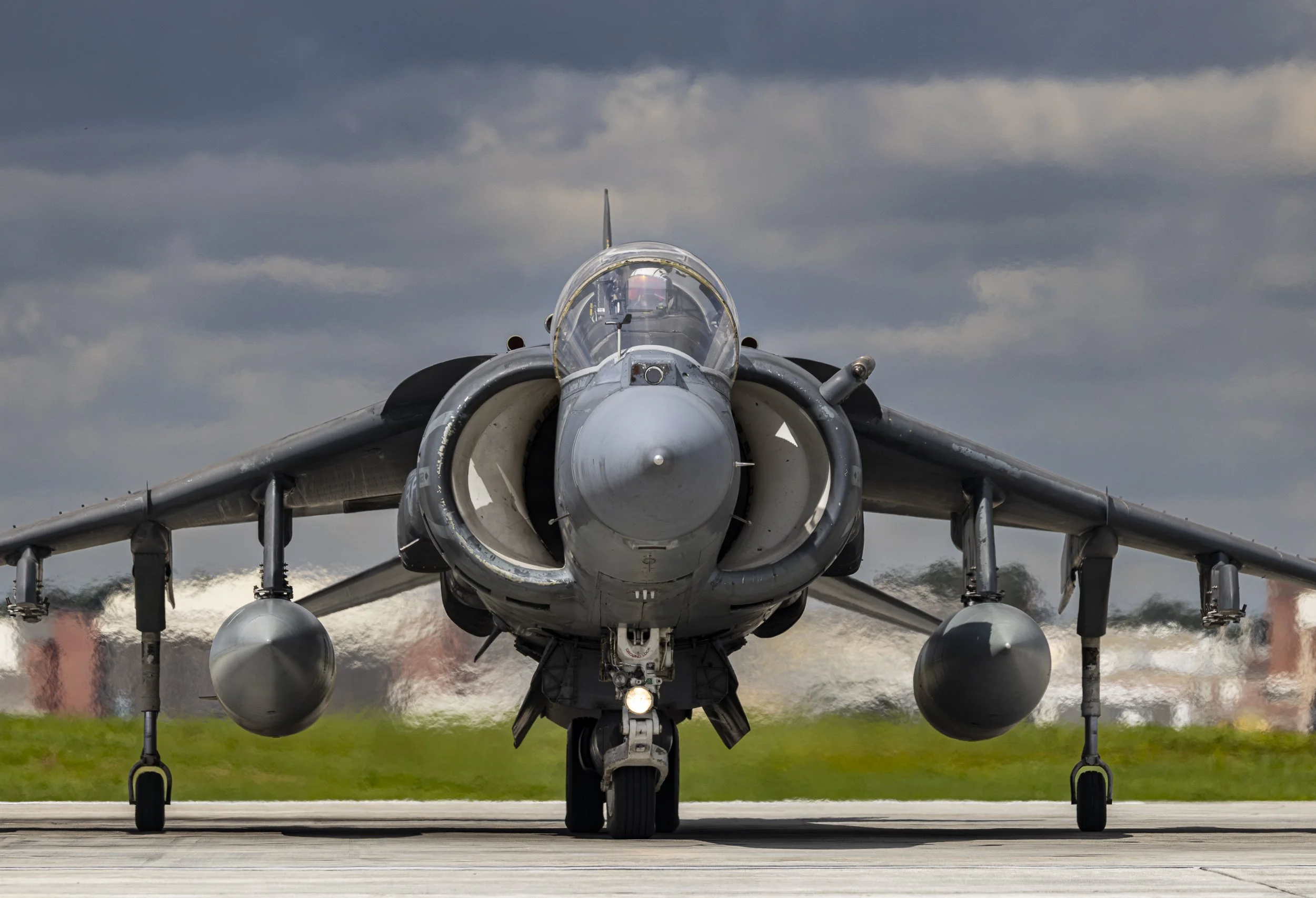
KICKSTARTER
CAMPAIGN LAUNCHES NOVEMBER
Be the first to reserve a copy of the book.
A definitive visual and narrative tribute to the AV-8 Harrier community. More than fifty interviews with the pilots, maintainers, and ordnance Marines who flew, fixed, and armed the jet. A photographic record of the Harrier's final two years, through the last sundown flight on June 3, 2026.
CALLSIGN will soon launch a Kickstarter campaign to fund the design and printing of the first edition of Harrier Legacy, a commemorative 136-page deluxe coffee-table book. Every backer reserves a first-edition copy. Higher tiers add special editions, Harrier sundown archival prints, patches, and other exclusive rewards.
The first 48 hours will open with a limited early-bird price, and the waiting list gets notified first. When those special copies are gone, they're gone.
Join the waiting list and be first in line when the campaign opens.