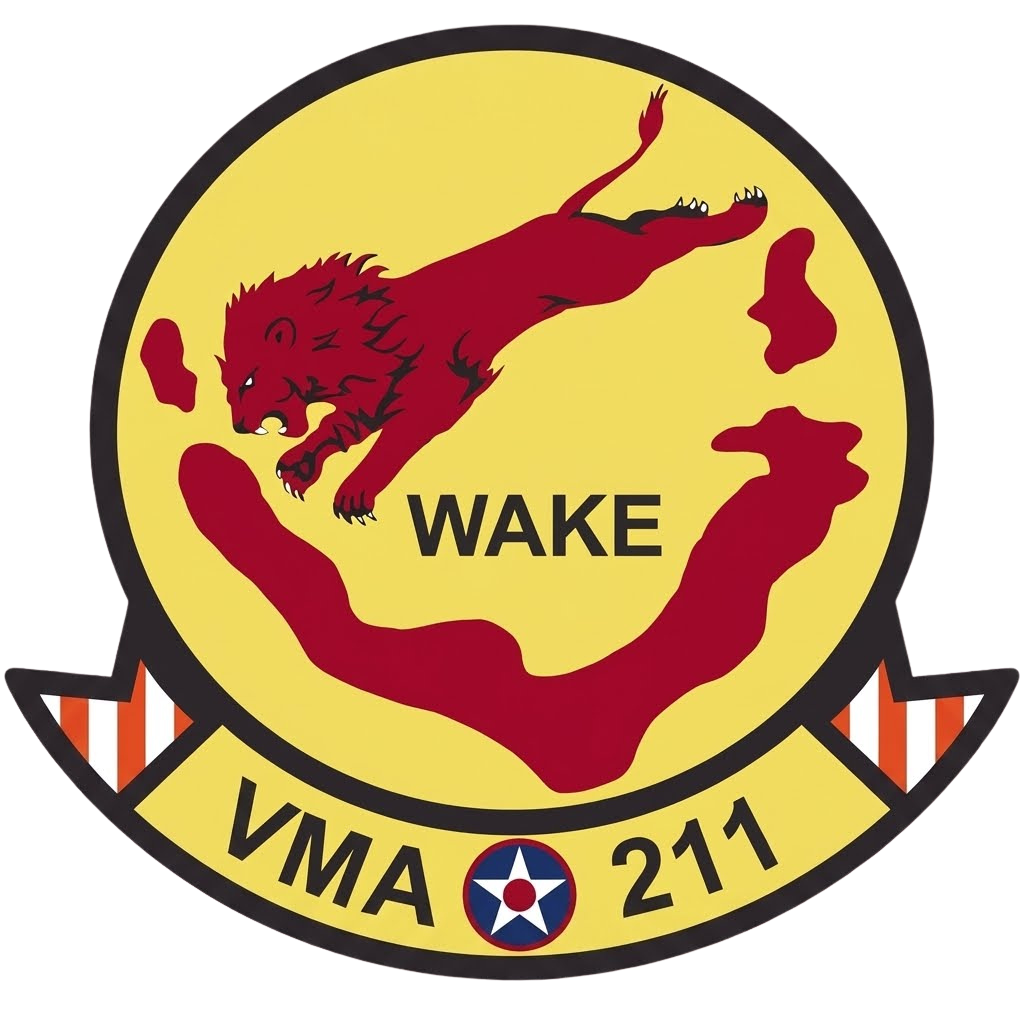
VMA-211
Wake Island Avengers — Harrier Operations 1990–2016
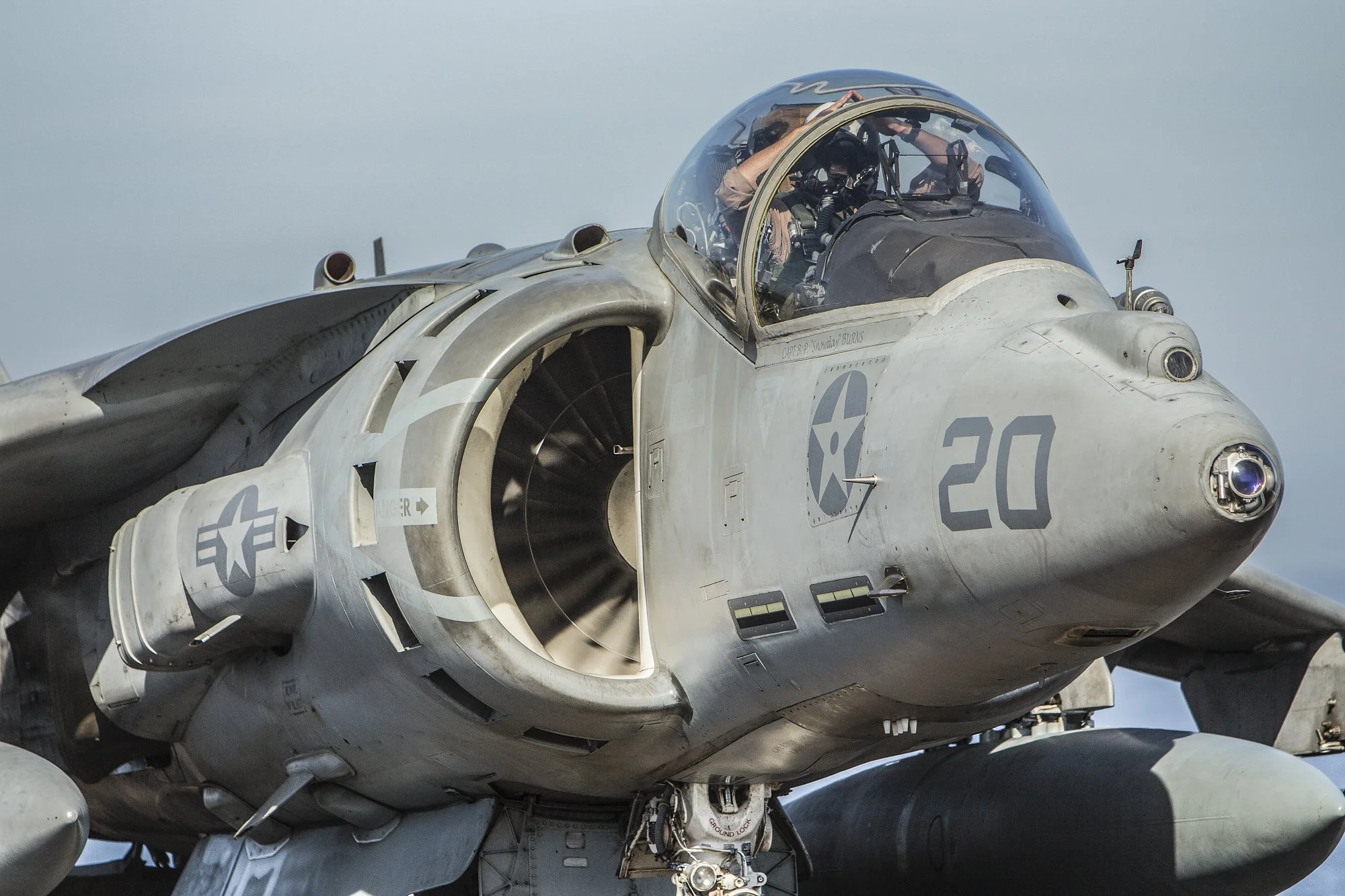
The squadron that fought for Wake Island in 1941 flew the Harrier for more than a quarter-century from the Arizona desert. VMA-211 began flying the AV-8B Night Attack Harrier at MCAS Yuma in June 1990 and took it to war over Afghanistan, Iraq and Syria. On the night of September 14, 2012, the Wake Island Avengers fought on the ground at Camp Bastion, Afghanistan, where their commanding officer was killed and six of their Harriers were destroyed. The last Avengers Harrier flight came on May 6, 2016.
Quick Facts
Nickname: Wake Island Avengers
Harrier years: June 1990 – May 2016
Aircraft: AV-8B Harrier II Night Attack and the radar-equipped AV-8B Harrier II Plus
Home base: MCAS Yuma, Ariz.
Parent units: Marine Aircraft Group 13, 3rd Marine Aircraft Wing
Tail code: CF
Distinction: The first AV-8B squadron to transition to the F-35B
Today: VMFA-211, flying the F-35B Lightning II
The Harrier Years
1989 — After its last overseas deployment with the A-4M Skyhawk, the squadron begins transferring its Skyhawks to the 4th Marine Aircraft Wing to prepare for the Harrier.
1990 — Begins flying the AV-8B Night Attack Harrier in June.
“I was avionics chief slash maintenance chief when I retired in ’93 out of … VMA 211, the Wake Island guys.”
— Richard Campbell, VMA-211 avionics and maintenance chief, retired 1993
1995–96 — Named Marine Corps Aviation Association Attack Squadron of the Year in back-to-back years.
1998 — Attack Squadron of the Year for the third time.
2000 — Begins bringing in the radar-equipped AV-8B Harrier II Plus in September, soon flying both radar and Night Attack jets.
2002 — Flies combat missions over Afghanistan from USS Bonhomme Richard, January to March.
2003 — Returns to war aboard USS Bonhomme Richard for Operation Iraqi Freedom, then comes home to Yuma in May.
2004 — Arrives at MCAS Iwakuni, Japan, on January 7 for a six-month Unit Deployment Program tour, relieving VMA-231.
2004–05 — Deploys to Iraq from USS Essex, flying from Al Asad Air Base.
2005–06 — Back to Al Asad from USS Tarawa.
2006 — Deploys to Al Asad again in September.
2009 — Sails with the 31st MEU aboard USS Essex, January to August.
2012 — Deploys to Afghanistan in April. Moves from Kandahar Airfield to Camp Bastion on July 1. Attacked on the night of September 14.
2014 — A squadron Harrier crashes into a neighborhood in Imperial, Calif., on June 4. The pilot ejects safely and no one on the ground is hurt.
2014–15 — Detachment Alpha sails aboard USS Makin Island in July 2014. The main body deploys in September. From October 2014 to March 2015 the squadron flies combat against ISIL over Iraq and Syria.
2016 — Final Harrier flight at MCAS Yuma on May 6. The first F-35Bs arrive May 9, and the squadron becomes VMFA-211 on June 30.
Going to War
Afghanistan, 2002. After the September 11 attacks, the Avengers sailed for the Arabian Sea aboard USS Bonhomme Richard and flew combat missions against targets in Afghanistan from January to March 2002 in Operation Enduring Freedom.
Iraq. In January 2003 the squadron was back aboard USS Bonhomme Richard, bound for the Persian Gulf. In one month of combat flying during Operation Iraqi Freedom it flew more than 360 sorties and 640 hours. Three more Iraq tours followed, all flying from Al Asad Air Base: from USS Essex in 2004–05, from USS Tarawa in 2005–06 and a return to Al Asad in September 2006.
Camp Bastion. The Avengers deployed to Afghanistan in April 2012 and moved from Kandahar Airfield to the British-run Camp Bastion in Helmand Province on July 1. On the night of September 14, insurgents breached the base perimeter and attacked the VMA-211 flight line. Lt. Col. Christopher “Otis” Raible, the commanding officer, gathered Marines from the maintenance spaces into a reaction force and led a counterattack before he was killed by a rocket-propelled grenade. Sgt. Bradley W. Atwell, an aviation electrical technician from a Marine aviation logistics squadron, was mortally wounded fighting alongside them. The executive officer, Maj. Robb McDonald, took command, organized the defense, got the wounded out and led a four-man team back into the fight, working with HMLA-469 attack helicopters overhead. The battle lasted nearly four hours. Six Harriers were destroyed and two more were badly damaged.
“There was maybe one second where we were thinking, what to do. And then Lt Col. Raible sprang into action.”
— Maj. Greer Chambless, a fellow pilot who fought alongside Lt. Col. Raible at Camp Bastion
“My decision to move up to the flight line wasn’t really a decision at all. That was the point of friction, and I loved them.”
— Maj. Robb McDonald, VMA-211 executive officer, on his Marines at Camp Bastion
Back in the Fight. By squadron accounts, the Avengers never stopped flying missions after the attack. Six AV-8B Harrier II Plus jets came over from VMA-231, and Lt. Col. Troy Pehrson arrived from MAG-13 to take command. The squadron finished the deployment and returned home on November 3, 2012. For that year VMA-211 received the Lawson H. M. Sanderson Award as the Marine Corps’ attack squadron of the year.
Against ISIL. VMA-211’s Detachment Alpha sailed aboard USS Makin Island in July 2014, and the main body deployed that September with Special Purpose MAGTF–Crisis Response–Central Command 15.1. From October 2014 to March 2015, Avengers Harriers flying from the ship and from forward bases hit ISIL targets in Iraq and Syria during Operation Inherent Resolve. On what turned out to be its last combat deployment with the Harrier, the squadron flew more than 650 combat missions and 4,500 combat hours and dropped more than 91,000 pounds of ordnance.
At Sea
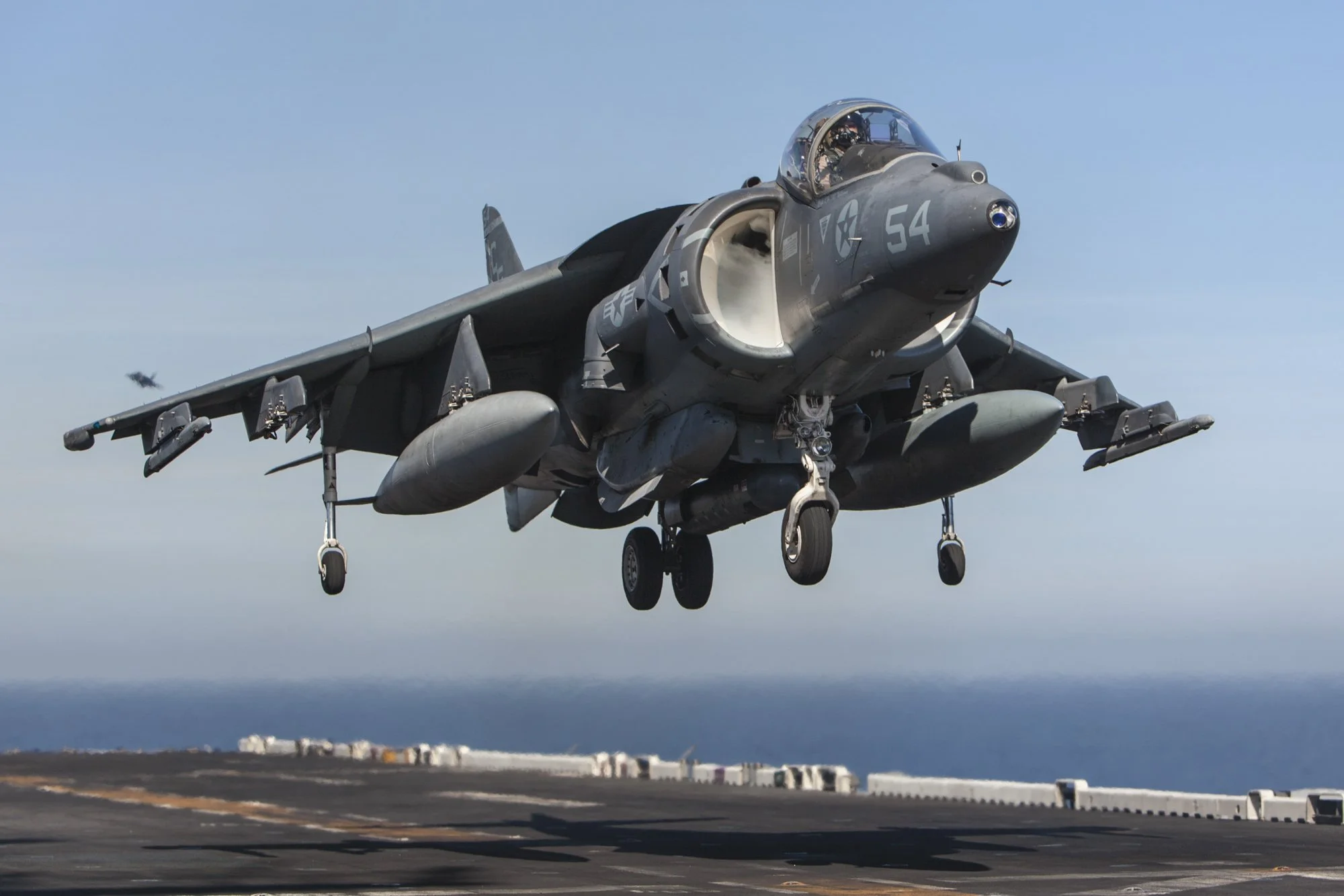
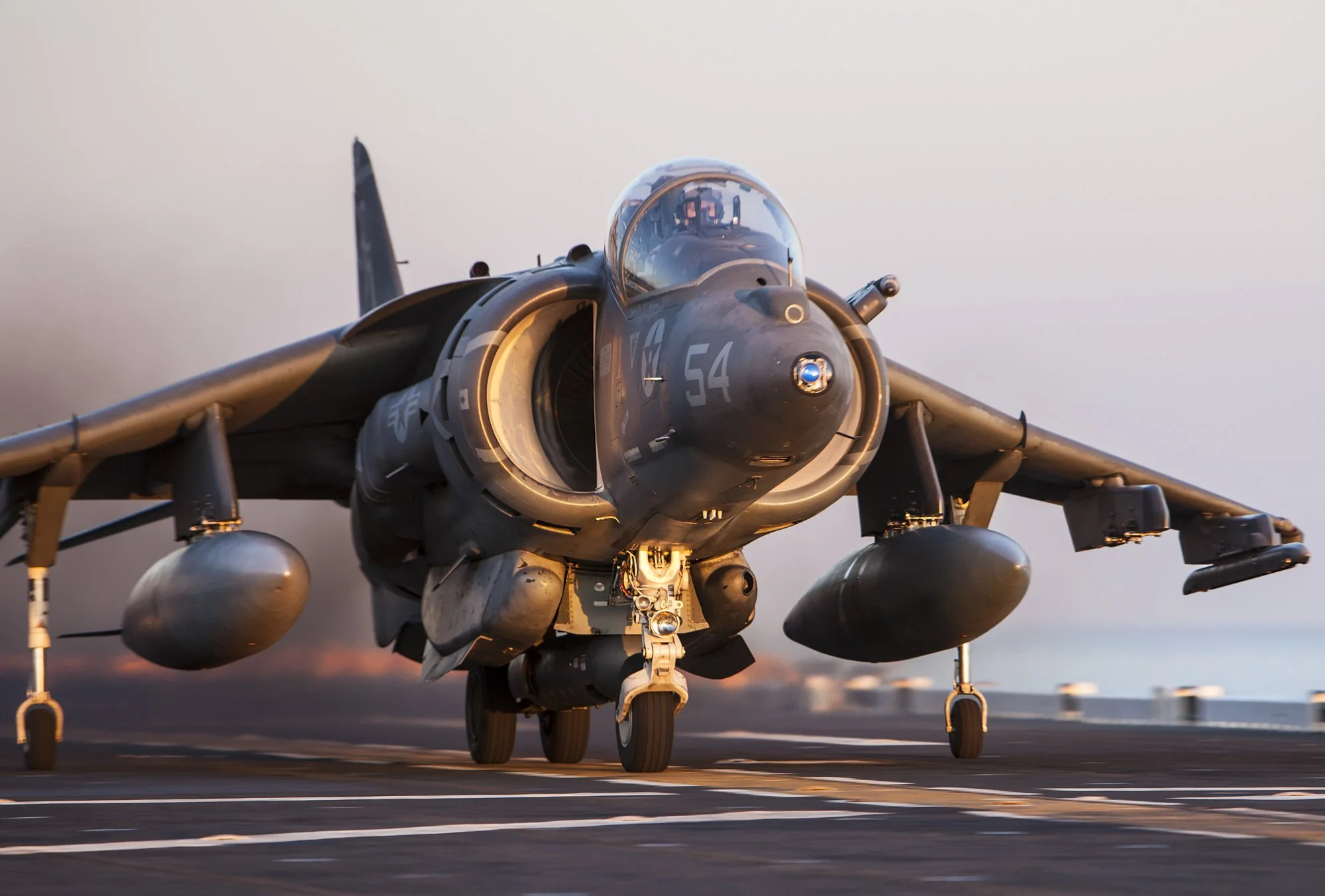
2002 — USS Bonhomme Richard, Arabian Sea: Operation Enduring Freedom.
2003 — USS Bonhomme Richard, Persian Gulf: Operation Iraqi Freedom.
2004 — MCAS Iwakuni, Japan, Unit Deployment Program: six aircraft and about 120 Marines, supporting the 31st MEU.
2004–05 — USS Essex, then ashore at Al Asad, Iraq.
2005–06 — USS Tarawa, then ashore at Al Asad, Iraq.
2009 — USS Essex, 31st MEU.
2014–15 — USS Makin Island (Detachment Alpha), with the main body deployed as part of Special Purpose MAGTF–Crisis Response–Central Command 15.1: Operation Inherent Resolve.
The Maintainers
Camp Bastion proved something every Avengers maintainer already knew: the Marines who fix the jets are riflemen first. On September 14, 2012, the reaction force that Lt. Col. Raible led onto the flight line was built from the mechanics, clerks and support Marines he found in the maintenance spaces. Two decades earlier, Richard Campbell ran the squadron’s avionics shop and then its maintenance department, and he remembered a deployment to Iwakuni, Japan, when his Marines kept a full flight schedule going while short-handed.
“When I was maintenance chief for 211, and we went to Iwakuni on … my last deployment out there, we went out there with a full component of airplanes. … the enlisted showed up. They did their thing.”
— Richard Campbell, VMA-211 avionics and maintenance chief, retired 1993
The Wake Island Avengers
VMA-211 traces its lineage to Marine Fighting Squadron 4, activated at San Diego on January 1, 1937, and redesignated VMF-211 on July 1, 1941. In December 1941 a detachment of 12 F4F Wildcats defended Wake Island against the Japanese. Together with the Marines on the ground, the squadron accounted for at least four enemy warships before the island fell. Capt. Henry T. Elrod of VMF-211 became the first Marine airman of World War II to be awarded the Medal of Honor. The name Wake Island Avengers comes from that fight, and the Harrier generation carried it on.
Awards and Milestones
1994–96 — Chief of Naval Operations Aviation Safety Award three years running.
1995, 1996 and 1998 — Marine Corps Aviation Association Attack Squadron of the Year.
2003 — More than 360 combat sorties and 640 flight hours in a single month of Operation Iraqi Freedom.
2012 — Lawson H. M. Sanderson Award as attack squadron of the year, the same year as the Camp Bastion attack.
2014–15 — More than 650 combat missions, 4,500 combat hours and 91,000 pounds of ordnance against ISIL.
2016 — The first AV-8B squadron to transition to the F-35B, and the Marine Corps’ second fleet F-35B squadron.
In Memoriam
Lt. Col. Christopher K. “Otis” Raible, commanding officer — September 14, 2012, Camp Bastion, Afghanistan
Sgt. Bradley W. Atwell, killed defending the VMA-211 flight line — September 14, 2012, Camp Bastion, Afghanistan
Lt. Col. Raible, 40, of North Huntingdon, Pa., was posthumously awarded the Bronze Star with Valor. Sgt. Atwell, 27, of Kokomo, Ind., was posthumously awarded the Navy and Marine Corps Commendation Medal with Valor.
This record is still being compiled. If you served with VMA-211 and can help us honor the Avengers we lost, please share your story.
Harrier Commanding Officers
Lt. Col. Christopher K. Raible — until September 14, 2012, killed in action at Camp Bastion
Maj. Robb McDonald — September 2012, took command during the Camp Bastion attack as executive officer
Lt. Col. Troy M. Pehrson — September 2012–May 31, 2013
Lt. Col. Cory Simmons — from May 31, 2013
Lt. Col. William Maples — until June 30, 2016, final Harrier commanding officer
This list is still being compiled. If you commanded or flew with VMA-211, help us complete it.
Today
VMA-211 flew its last Harrier flight at MCAS Yuma on May 6, 2016, and received its first two F-35B Lightning IIs three days later. On June 30, 2016, the squadron was redesignated VMFA-211, and Lt. Col. William Maples handed command to Lt. Col. Chad Vaughn. A Harrier and an F-35B flew over the ceremony together. VMFA-211 still flies the F-35B from Yuma with MAG-13.
“I had a transition coin from 211 when they went from VMA to VMFA.”
— Richard Campbell, VMA-211 avionics and maintenance chief, retired 1993
The Harrier Legacy Project
The Avengers’ story is part of The Harrier Legacy Project, CALLSIGN Publishing’s 136-page commemorative book on the Marine Corps AV-8 Harrier community, built from more than two years of embedded reporting, original photography and firsthand oral histories. Learn about the book →
More Harrier Squadrons
VMA-214 Black Sheep · VMA-223 Bulldogs · VMA-231 Ace of Spades · VMA-311 Tomcats · VMA-331 Bumblebees · VMA-513 Flying Nightmares · VMA-542 Tigers · VMAT-203 Hawks · VX-4 Evaluators · VX-5 Vampires · VX-9 Vampires · VX-31 Dust Devils
Frequently Asked Questions
When did VMA-211 fly the Harrier? From June 1990, when it began flying the AV-8B Night Attack Harrier at MCAS Yuma, until its final Harrier flight on May 6, 2016.
What happened to VMA-211 at Camp Bastion? On the night of September 14, 2012, insurgents breached Camp Bastion in Afghanistan and attacked the squadron’s flight line. Six Harriers were destroyed and two badly damaged. Lt. Col. Christopher Raible and Sgt. Bradley Atwell were killed.
Who was Lt. Col. Christopher Raible? The commanding officer of VMA-211. He was killed leading Marines in a counterattack at Camp Bastion and was posthumously awarded the Bronze Star with Valor.
Why is VMA-211 called the Wake Island Avengers? The squadron, then VMF-211, defended Wake Island against Japanese attack in December 1941. Capt. Henry Elrod’s actions there earned him the Medal of Honor.
Who was VMA-211’s last Harrier commanding officer? Lt. Col. William Maples, who handed over command when the squadron became VMFA-211 on June 30, 2016.
What does the squadron fly now? The F-35B Lightning II, as VMFA-211 at MCAS Yuma. It was the first AV-8B squadron to transition to the jet.
Sources and Further Reading
VMFA-211 unit history, 3rd Marine Aircraft Wing
Camp Bastion Heroes Exemplified ‘Every Marine a Rifleman’, DVIDS / 3rd Marine Aircraft Wing
VMA-211 “Wake Island Avengers” Change of Command, 3rd Marine Aircraft Wing
VMA-211 to transition to F-35B Joint Strike Fighter squadron, MCAS Miramar
VMA-211 transitions to F-35, DVIDS
Second F-35B Squadron Stands Up at MCAS Yuma, USNI News
VMFA-211 re-designation ceremony, Alert 5
Attack on Camp Bastion: The Destruction of VMA-211, Defense Media Network
Camp Bastion Attack: VMA-211 Is Back in the Fight, Defense Media Network
Marine Lt. Col. Christopher K. Raible, Military Times
Marine Sgt. Bradley W. Atwell, Military Times
Marine Attack Squadron 211, GlobalSecurity.org
VMA-211 Wake Island Avengers, Seaforces.org
3 homes destroyed when 2nd Yuma Harrier crashes in a month, Stars and Stripes
Pilot Ejects Before Military Jet Crashes Into Imperial Neighborhood, CBS Los Angeles
VMFA-211, Wikipedia
Interviews conducted by CALLSIGN Publishing for The Harrier Legacy Project.
Last updated September 2026.